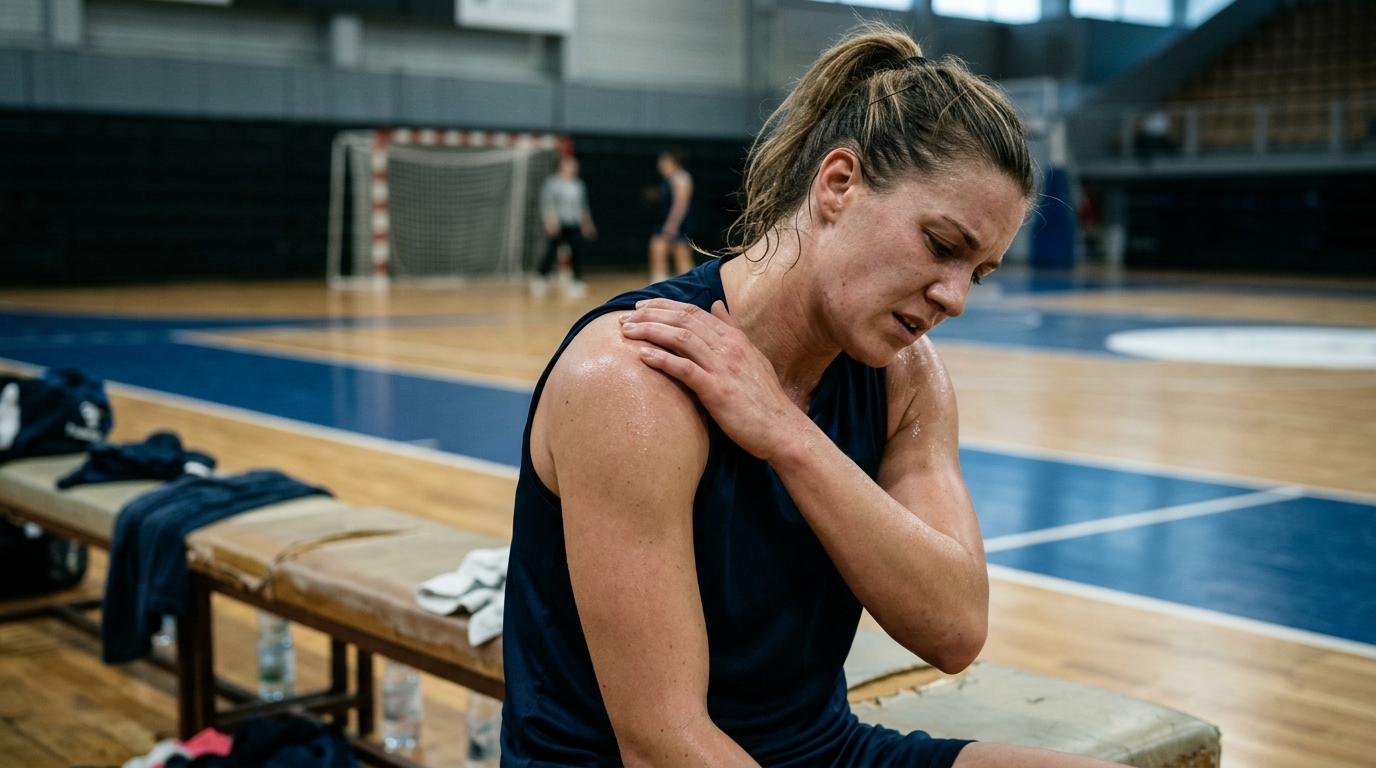
Shoulder pain affects nearly two-thirds of competitive handball players, with symptoms predominantly targeting the dominant throwing arm and frequently lasting for more than a year. A cross-sectional investigation published in BMC Sports Science, Medicine and Rehabilitation evaluated athletes across six competitive tiers to identify the prevalence, clinical characteristics, and multivariable factors independently linked to shoulder pain in competitive team handball.
The observational study recruited a cohort of 78 competitive handball players, consisting of 60 male athletes and 18 female athletes, with an overall mean age of 24.2 ± 6.8 years. The researchers aimed to characterize the multivariable profile of shoulder issues in overhead sports, specifically examining demographic measures, self-reported biomechanical characteristics, and sport-specific training factors that distinguish symptomatic players from their uninjured counterparts.
Data collection relied upon a researcher-developed 80-item self-administered electronic questionnaire designed to capture athlete background and physical routines. The measurement tool underwent structured expert evaluation to establish face and content validity, demonstrating acceptable internal consistency and test–retest reliability. The survey recorded detailed metrics covering competition experience, routine preparation habits, self-observed anatomical features, and the severity and duration of any ongoing shoulder symptoms.
Across the studied group, the overall prevalence
Across the studied group, the overall prevalence of shoulder pain reached 64.1 percent, representing 50 individual athletes. Pain was localized predominantly to the dominant right arm, which accounted for 72.0 percent (n = 36) of all reported cases. The condition also exhibited a high degree of chronicity, as 42.0 percent of symptomatic participants reported persistent shoulder pain lasting longer than 12 months.
Group comparisons between symptomatic athletes and uninjured peers revealed significant discrepancies in training schedules and preparatory routines. Players experiencing shoulder pain completed significantly higher weekly training volumes, logging an average of 4.5 ± 1.0 sessions per week compared to 3.7 ± 1.1 sessions among pain-free teammates (p = 0.003). Symptomatic players also participated in significantly more monthly matches (3.3 ± 0.9 versus 2.8 ± 1.1, p = 0.041), while exhibiting lower adherence to full warm-up routines (p = 0.010) and regular strength training (p = 0.024).
To determine independent risk indicators, the investigators executed a forced-entry multivariable binary logistic regression model alongside univariable evaluations employing independent t-tests, Mann–Whitney U tests, and chi-square tests. The multivariable regression revealed that a history of muscle cramping was strongly and independently associated with elevated odds of shoulder pain (odds ratio = 5.184, 95% confidence interval: 1.519–17.687, p = 0.009). Additionally, greater athlete height independently increased pain odds by 8.6 percent per centimeter (odds ratio = 1.086 per cm, 95% confidence interval: 1.018–1.158, p = 0.013), alongside an independent link with the absence of self-reported observable shoulder asymmetry.
The authors concluded that shoulder pain represents
The authors concluded that shoulder pain represents a widespread and frequently long-standing complaint among competitive handball players across competitive tiers. Because the research followed an observational cross-sectional design without prospective therapeutic interventions, it did not require entry into a clinical trial registry. The researchers noted that these findings reflect statistical associations rather than direct causal pathways, providing valuable baseline evidence regarding training workloads, muscle cramping, and physical stature in overhead athletic populations.
Subject of Research: Prevalence and multivariable risk factors of shoulder pain in competitive handball players
Article Title: Prevalence of shoulder pain and associated factors in handball players: a cross-sectional study
Article References: Panahi Ghaffarkandi, Y., Foroughi, M., Jafarnezhadgero,
Article References: Panahi Ghaffarkandi, Y., Foroughi, M., Jafarnezhadgero, A., & Piri, E. (2026). Prevalence of shoulder pain and associated factors in handball players: a cross-sectional study. BMC Sports Science, Medicine and Rehabilitation. https://doi.org/10.1186/s13102-026-02275-7
DOI:10.1186/s13102-026-02275-7
Keywords: handball, shoulder pain, sports medicine, overhead athletes, muscle cramping, athlete height, cross-sectional study, training load, warm-up adherence, strength training, dominant arm, athletic injuries, sports rehabilitation, musculoskeletal pain, competition tiers, shoulder asymmetry, binary logistic regression
News. Handball Study Links Shoulder Pain to Muscle Cramping and Player Height. Scienmag