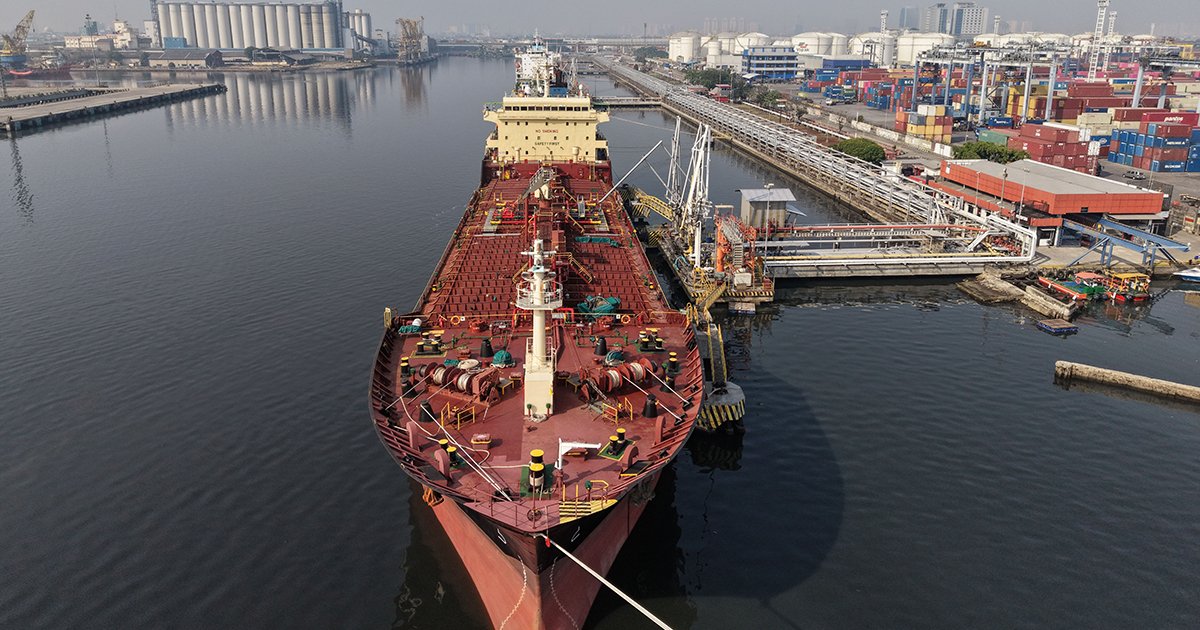
The West Point tanker arrived at the PT Pertamina facility at Tanjung Priok Port in Jakarta, Indonesia on July 3. (Dimas Ardian/Bloomberg)
key takeaways:
- Goldman Sachs said Brent crude could exceed $120 a barrel in the fourth quarter if disruptions in the Strait of Hormuz continue, although this is not its base case.
- The bank estimates Brent will be priced at $80 in the fourth quarter and $75 next year, but there is a risk of upside from Hormuz and Red Sea shipping disruptions.
- Analysts and energy companies said continued fighting, tanker attacks and Houthi threats to Red Sea exports could push oil prices higher without a ceasefire.
If disruptions in the Strait of Hormuz continue, Brent could rise to more than $120 a barrel by the fourth quarter, according to Goldman Sachs Group Inc., although that is not the bank’s base case.
“Oil prices have again been boosted by an increase in the Middle East and projected flows into the Persian Gulf falling below 45% of pre-war levels,” analysts including Dan Struven said in a July 20 note.
Currently, Goldman sees Brent at $80 a barrel in the fourth quarter and $75 next year, based on easing tensions in the Middle East. Still, analysts said risks to forecasts are “slanted to the upside” given shipping disruptions in Hormuz, as well as potentially in the Red Sea.
Global energy markets have been jolted this month – with Brent rising above $91 a barrel – as well as renewed fighting between the US and Iran as Tehran-backed Houthi rebels in Yemen threaten to block shipments from Saudi Arabia. Flows through the Red Sea have been critical in allowing disrupted Persian Gulf crude to reach customers.
While low global inventories in the second quarter affected the oil market more than supply shocks, a decline in Chinese imports coupled with higher demand elasticity could limit expected gains, he said.
For investors seeking protection from continued geopolitical shocks from the Middle East as well as Russia, Goldman suggested a long-run strategy on the European diesel time spread of December 2026 to March 2027.
UKMTO Alert 094-26 – Update 001
Click here to view full product⤵️https://t.co/bYWX7EUf2X#maritime security #MarSec pic.twitter.com/hbM1vG8Wbl
– UKMTO Operations Center (@UK_MTO) 21 July 2026
Diesel markets were very tight before the war, Ukraine was constantly affecting Russian refineries, and hurricanes, extreme heat and plant maintenance delays were additional risks to supply, he said.
Brent was at $89.41 a barrel, up about 47% from the year before. Prices reached above $126 in April, during the early stages of the US-Iran conflict.
Attacks and tensions have increased in recent days. In Hormuz, another tanker was attacked, the ship was identified as Kaifan by security consultancy EOS Risk Group. Meanwhile, a message sent by the Houthi rebels to ship owners has warned all ships not to come to Saudi Arabia’s ports.
Traffic through the Strait of Hormuz is now almost at a standstill, with the Houthi threat against crude oil flows meaning Riyadh’s Red Sea export route “is now directly in the line of fire”, Rystad Energy AS said in a note.
“If the ceasefire does not succeed, and Hormuz remains largely closed while the Houthi threat to Red Sea shipping increases, the risk of a significant surge in oil prices would be considerable,” said George Lyon, head of geopolitical analysis at Rystad.