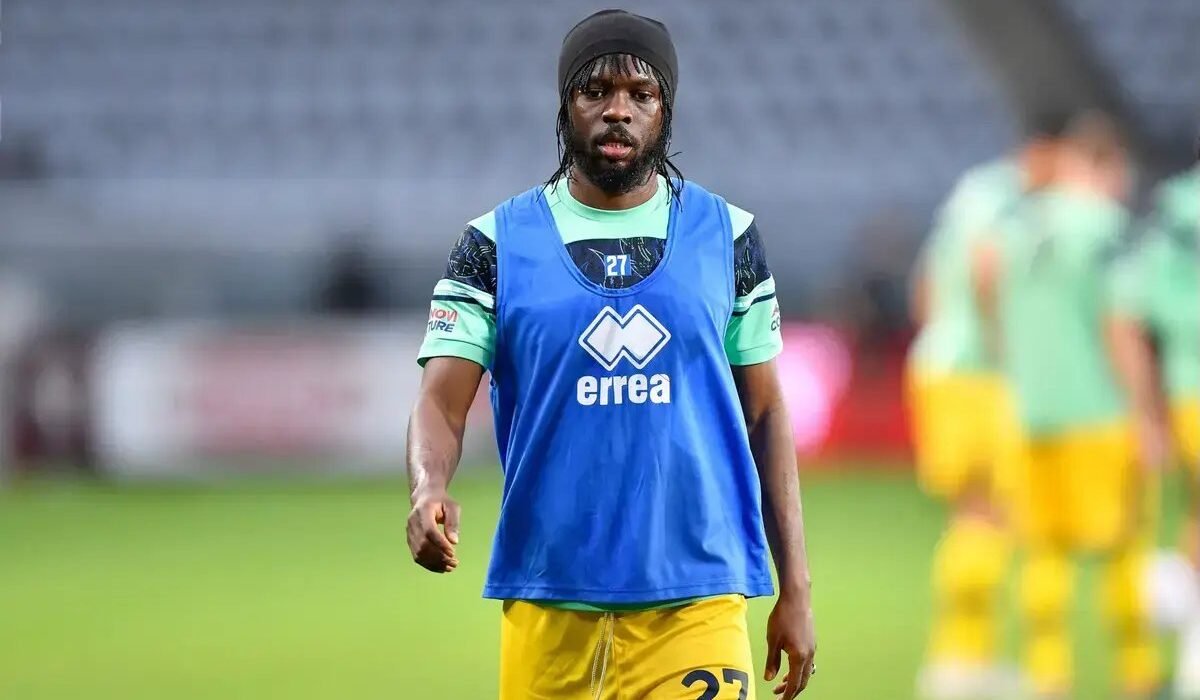
Gervinho’s career has been a breathtaking tapestry of highs and heartbreaks, but nothing beats the night he and Ivory Coast finally conquered Africa after years of painful near-misses and national trauma.
The electrifying winger, who made his way from the dusty streets of Anyama to the bright lights of Europe’s grandest clubs, sat down to reflect on his journey – a saga marked by fast pace, unforgettable partnerships and a relentless pursuit of glory. From the raucous terraces of Lille and the fiery cauldron of Rome to the intense scrutiny of Arsenal’s Emirates Stadium, Gervinho’s story is one of resilience and reinvention. Yet, despite all the club rivalries and roaring crowds, their peak remained draped in the orange of their homeland, and won the Africa Cup of Nations in 2015 after a difficult decade of disappointment.
Ivory Coast’s so-called “Golden Generation” – a team filled with superstars such as Didier Drogba, Yaya and Kolo Touré – was plagued by a legacy of failure, repeatedly stumbling at the final hurdle of the tournament, while their country struggled with civil war. But in Bata, Equatorial Guinea, under immense pressure, they broke the curse in a penalty shootout against Ghana. Gervinho, who was a key figure throughout the campaign with extraordinary goals and tireless drive, still talks about that night with awe. “Winning the Africa Cup of Nations in 2015 was an important moment in my career, certainly the greatest. To win such an important title with your country is something priceless. You can’t even imagine the joy and immense pride we felt in those days. It is an indelible moment in my memory. And it was also a fundamental milestone, a true liberation, because we had been chasing that trophy for years,” he says, his words filled with raw emotion.
That victory was more than a sporting victory – it was a balm for a nation, a symbol of unity when division seemed insurmountable. Gervinho acknowledges the heavy psychological burden on his generation. “We had an incredible national team, the best team in Africa on paper, but we always failed at the final hurdles in the Cup. To accomplish this was a dream come true.”
His club odyssey was no less dramatic, where one relationship defined his professional life: the unbreakable bond with coach Rudy García. In an era where loyalty is rare and transfers are routine, Gervinho and Garcia’s connection has bucked every trend. The French manager nurtured him at Le Mans, highlighted his potential at Lille, and then demanded his presence in Rome, trusting him to upset Serie A’s best defence. “Rudy managed me at three different clubs: Le Mans, Lille and AS Roma. Needless to say, this shared journey created a very strong, almost special bond between us. He always knew how to handle me; he was the manager who, more than anyone else, managed to bring out the best in me,” Gervinho explains. “Think about it, I played my best football under his guidance. It’s not just a tactical matter; it’s a relationship of trust. Even today, we are deeply connected.”
Lille’s 2010–11 side, organized by Garcia, was a revelation. Along with Eden Hazard and Moussa Sow, Gervinho formed an attacking trident that demolished Ligue 1, capturing both the league and the cup in a style that left fans and rivals gasping. He recalls, “I really enjoyed playing with Eden. And I’m sure he enjoyed playing with me too, partly because I was producing top level football at the time.” “With Moussa Sow, we formed a front three of the highest quality; we linked up amazingly, we played from memory. We caused a lot of damage in France that year with the cup and league double. We were unstoppable.”
Rome, with its enthusiastic supporters and gladiatorial atmosphere, proved to be an ideal stage for Gervinho’s adventurous style. They won at the Curva Sud with explosive runs and moments of magic, but nothing compared to sharing the pitch with Francesco Totti. “Ah, of course yes. Francesco Totti, the captain. He was a tremendous player in his own league. I loved playing with him at Roma; our understanding on the pitch was natural. Beyond being a champion on the pitch, however, I want to say that Francesco is also a fantastic person,” says Gervinho, struggling to highlight just one memory of their time together. “There are so many great memories that it’s really hard to choose just one. It’s for sure that I had an amazing time with him, both on and off the field. We had fun together and we thrilled the Roma fans by putting on a show.”
Yet, despite all the attacking firepower, Roma’s golden team of the mid-2010s failed to lift a single trophy, forever doomed to play second fiddle to Juventus’ continued dominance. “As you said, we had a fantastic team, full of great players. And we showed it on the pitch: we played beautiful football. We achieved excellent results and we had important seasons, but unfortunately, we lacked the luck needed to bring a major title. It’s disappointing, but still, that’s football,” Gervinho lamented.
And then there was Arsenal – the north London chapter of which Gervinho was brought in as Arsene Wenger’s next big hope. His spell in England was as unpredictable as his playing style: frustration was compensated for by moments of brilliance. Yet he dismisses the issue of tension with his manager. “In reality, there was never any real problem between me and the manager. Arsene Wenger is a great professional. It is true, I did not have the same spark and special relationship with Rudi García, but we had a completely normal relationship based on professional respect and the classic dynamic between a coach and a player,” he explained. For Gervinho, the Gunners’ latest Premier League win brings nothing but joy. “Extremely gratifying because the team had been chasing the Premier League title for many years. In recent seasons, there was a kind of curse. The team was always in the lead in the title race before losing at the last moment. But all that is in the past now. This title bridges a long wait and years of disappointment. The fans are right to be happy. They have deserved this title for a long time. Their patience has finally been rewarded.”
As he looks ahead, Gervinho is excited about the future of African football and his beloved Ivory Coast. “Ivory Coast has a beautiful team with very talented young players. There are also veterans who act as guides for these youngsters. If Ivory Coast plays its best football without any complications, it could surprise many teams at this World Cup,” he said, predicting, “I think African football is progressing at the same pace as European football. African national teams now get good results against the countries that play the best football. In addition, we see the African continent in the major European leagues. Although compared to recent eras, there are fewer big stars now.”
Gervinho’s journey is far from over. His legacy – rooted in speed, flair and a refusal to accept defeat – serves as a blueprint for the next generation. The question now is which rising Ivorian will seize this moment and make a name for himself on the world of African football? The world is watching.
Don’t miss a second with the new app where you can watch live timing of MotoGP, Formula 1, NASCAR, IndyCar and much more: just press – Here (Free for all users)