Pontiac operations officially ended in 2010. Do you know what else happened in 2010? Apple gave us the first iPad, Instagram was launched, and the Chevy Camaro was revived for the first model year of the fifth generation.
Sadly, Pontiac’s redesigned version of the Camaro, the Firebird, won’t be returning with it. The nameplate was retired when both fourth-generation F-bodies were discontinued in 2002. We suppose you could say the Firebird died so the Camaro could live. No? Too much reach? Well, today we have the pleasure of discussing the former, which will remain in the past while the latter is set to return as a seventh-generation model (and it may feature a new supercharged V8).
So, why are we talking about Pontiac in 2026? Perhaps everyone is feeling nostalgic about the return of the Camaro and the buzz about the Buick sedan. Perhaps this reignited the uproar that GM caused last year when it posted an amusing ad Instagram. that fake pontiac ad car and driver April Fool’s Day in 2024 probably has something to do with it too. Regardless of why or how it happened, we’ll rank the four Pontiac Firebird generations based on speed based on data recorded from verifiable equipment testing of factory-stock vehicles. This means that we are ignoring the numbers of modified examples as well as theoretical or calculated data. Our findings may confirm the obvious, but no one needs a reason to learn about Pontiac history.
4. First Generation Firebird – 115 mph

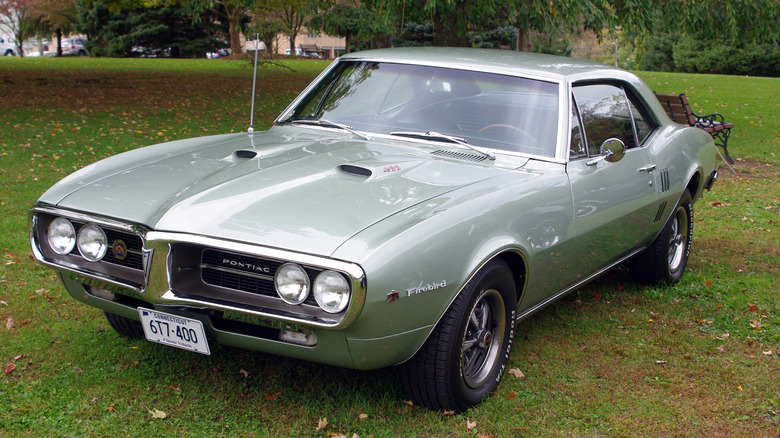
Not surprisingly, the oldest Pontiac Firebirds – like the one that spent a decade in a shipping container – have the lowest top speed of the group. Remember, we based this on verified top speeds observed in device testing rather than claims or estimates. For the first generation Firebird, data shows a top speed of 115 mph for a 1967 Firebird 400 with a four-speed manual, although this was limited to quarter-mile runs for vehicles that were completely unmodified.
As a fun exploration, we looked for the first-generation model that would give us our best shot at reaching top speed in a factory-stock vehicle in an ideal test environment with as much pavement as needed. At first glance, the 1969 Firebird Trans Am Ram Air IV seemed like a safe bet, with its 400-cubic-inch V8 producing approximately 350 horsepower and 430 pound-feet of torque. With so much power on tap, it can reach triple-digit speeds at the dragstrip.
More than one source cited a calculated top speed in excess of 130 mph, including an estimate of 140 mph for a 1969 Firebird 400 HO with an automatic transmission and a 2.78:1 rear ratio. hemmings. You would be hard-pressed to achieve such speeds with a factory-spec vehicle due to various limitations including aerodynamics and tires. That said, when it comes to deciding which first-generation Firebird will actually deliver the highest speeds in a real-world comparison test, what will be your choice? Feel free to choose different types for different goals, such as quarter- versus half-mile sprints, although we’re not so sure we have the stones to run a full half-mile in these things.
3. Second Generation Firebird – 132 mph
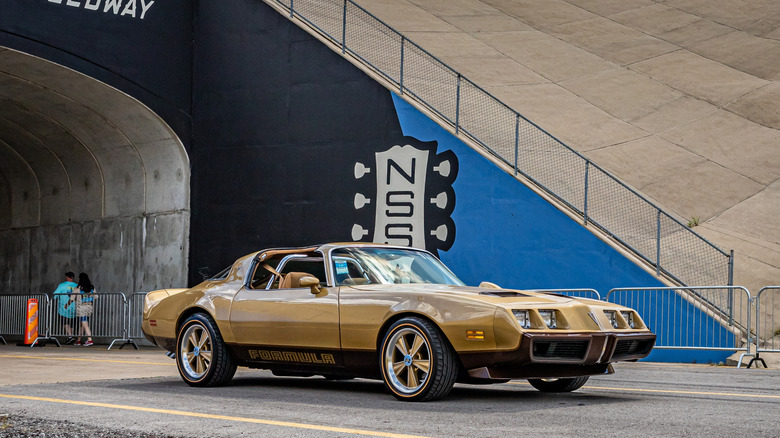
Although others may be partial to the first-generation model, it’s easy to understand the appeal of Pontiac’s second-generation pony car. Who doesn’t love seeing a screaming chicken on the hood? Random Take: Billy from “Stranger Things” should have driven a Trans Am instead of a Z28.
But, generally, the Firebird is seen living in the shadow of the Camaro. In at least one underdog story, the Trans Am actually beat the Camaro Z/28, Corvette L48, Mercury Capri, and Phoenix SJ in a conclusive comparison. car and driver And when it comes to speed, another Car and Driver test saw a 1979 Firebird Trans Am reach a top speed of 132 mph at 5,400 rpm with a 3.23 final drive, which was 400 rpm above redline.
For reference, the Firebird used in that test was equipped with the WS6 package and its 400-cubic-inch V8 sent a claimed 220 horsepower and 320 pound-feet of torque to a four-speed manual transmission. Its sticker price was $7,285, which is equivalent to about $32,500 in today’s money. According to the Hagerty valuation tool, a 1979 Trans Am hardtop coupe with the same V8 in good condition is worth less than $26,000 today.
2. Third Generation Firebird – 162 mph
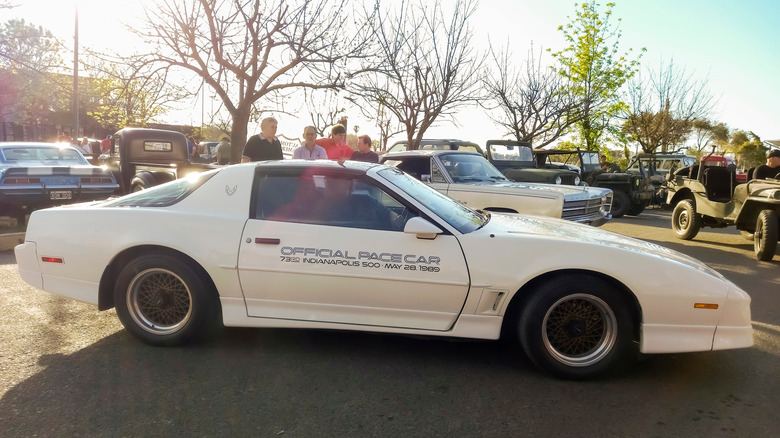
You may have heard about the Banks Pontiac Trans Am, which went 283 mph at the Bonneville Salt Flats. You may also be familiar with Knudsen Automotive’s TOGEN. If you have, you will know why we are mentioning it. If you haven’t seen, well, it was a coach-built third-generation Firebird that reportedly managed to hit 206 mph with a twin-turbo V8 that was originally built for a boat. This is not verified and was not stock, but the Togen was originally available from Pontiac dealerships with a factory warranty (on remaining factory components). None of these 200 mph or more data points qualify, but they’re worth mentioning nonetheless.
Also notable was the SLP Firehawk, which was a race-ready variant equipped with a 5.7-litre V8, 1LE suspension package, and available to order with the same front Brembo brake calipers that Ferrari used on the F40. SLP claimed a top speed of 160 mph, and Car and Driver recorded 158 mph in a unit that had already endured 20,000 test miles. These crazy machines were sold to the public through dealers, but only 25 were made.
Interestingly, the recorded top speed for the factory-stock third-gen Trans Am is even higher, at 162 mph. Motor Trend captured that extreme figure via radar while testing a 1989 Turbo Trans Am. During a separate test, Car and Driver reported that the TTA accelerated to 130 mph in just 30.2 seconds and had a reported top speed of 153 mph. Those top speeds are nothing to scoff at, and probably feel pretty intense from behind the wheel of a 40-year-old Pontiac. For comparison, the new Corvette ZR1X hit a top speed of 159.57 mph while completing the quarter mile in just 8.675 seconds.
1. Fourth Generation Firebird – 163 mph
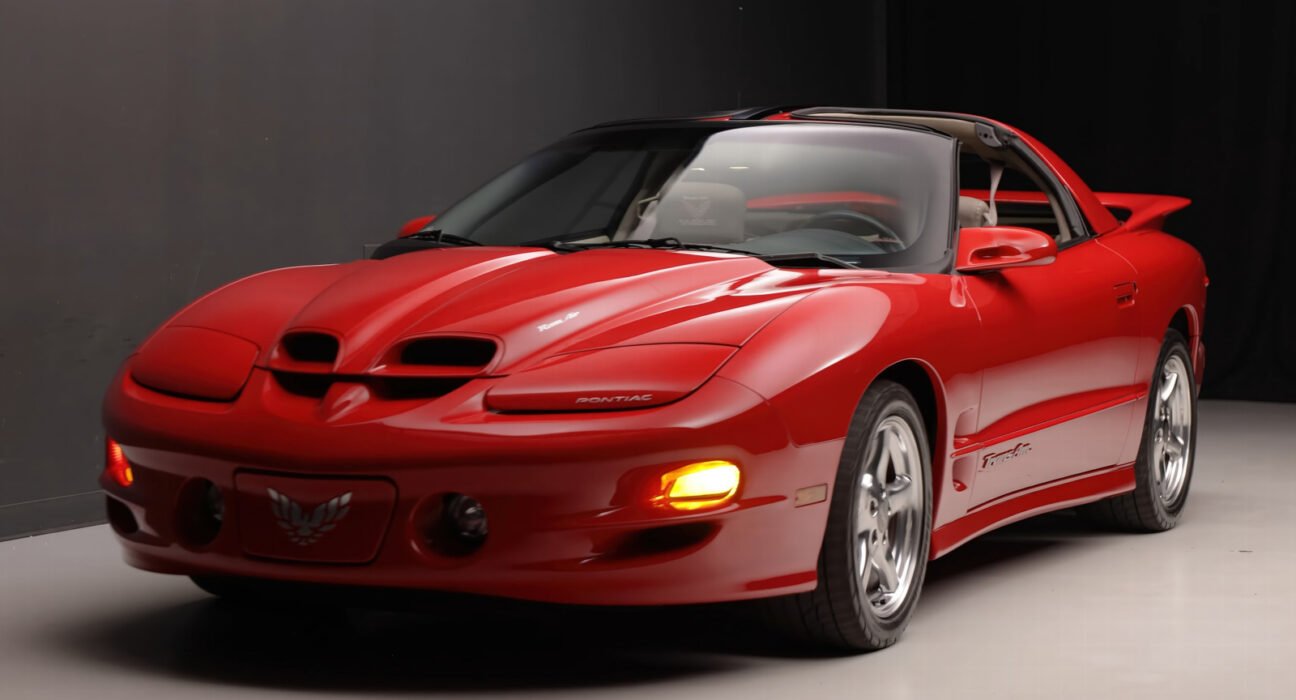
So, according to our findings, the top speed recorded for the fourth-generation Firebird is only one mile per hour higher than that of the third-generation Firebird: 163 mph. However, it’s worth noting that the 30th Anniversary Edition model used in the referenced Car and Driver test was electronically limited to that top speed. And in a three-way comparison between the Camaro SS and the Ford Mustang Cobra – which were all convertibles – it came in last place, despite having the fastest top speed.
Nevertheless, other outlets praised the fourth-generation Firebird in WS6 guise, praising it as fun hooliganism. Its advanced 320 horsepower and 345 pound-feet of torque provide more than enough entertainment, and it will definitely be a good time even today.
This comparison highlights how close things can look on paper. For example, the difference between the third and fourth generation models based on acceleration time may appear to be negligible. But by that logic, a third-generation turbo Trans Am isn’t that far off a sixth-generation Camaro SS because it’s only three-tenths of a second faster to 60 mph and because the top speed isn’t that far off. For reference, one of the only verifiable stock top speed runs for the sixth-generation Camaro came courtesy of John Hennessey, creator of the Hennessey Performance Venom F5. hennessy performance There’s also a video on the YouTube channel of a stock unit topping out at 170 mph, though the guy himself responded to a comment saying it felt like the car could have kept climbing.