….Milestone positions Nigeria as Africa’s first assembly location for Sinotruk electric trucks
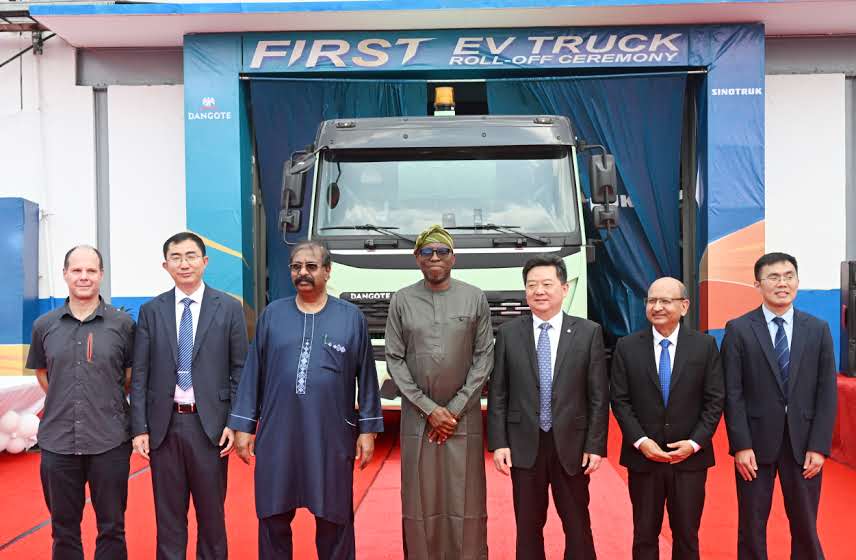
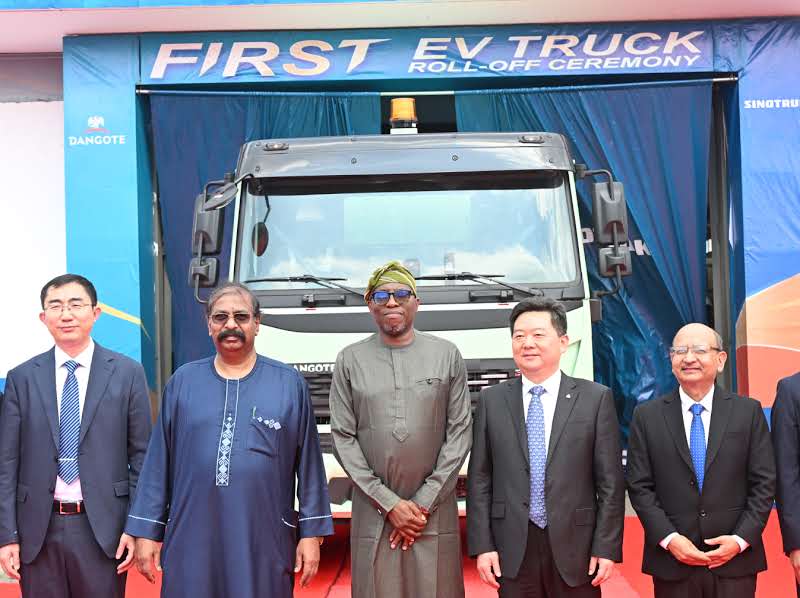
Dangote Sinotruk West Africa Limited has unveiled Nigeria’s first locally assembled electric heavy-duty truck, marking a major development in the country’s automotive manufacturing industry and efforts to promote cleaner transportation.


KANO FOCUS reports that the electric truck was unveiled at the company’s assembly facility in Ikeja, Lagos, at an event attended by senior officials of the Dangote Group, Sinotruk Group, Lagos State Government, industry stakeholders, customers and business partners.
The development marks the expansion of the Dangote-Sinotruk joint venture into new-energy mobility, adding electric heavy-duty trucks to its existing range of commercial vehicles, including trucks, tippers, pickups and buses.
Speaking at the event, Group Vice-President of Dangote Industries Limited, Devakumar V.G. Edwin, said the introduction of electric commercial vehicles reflected the group’s commitment to adopting emerging technologies and supporting Nigeria’s environmental objectives.
He said the partnership with Sinotruk was established to build a world-class commercial vehicle business in Nigeria through local assembly, technology transfer, job creation and industrial development.
Edwin explained that the group had moved from conventional vehicle production into alternative-energy technologies, including compressed natural gas (CNG) and electric vehicles.
“Today, we are taking an important further step as the global economy is looking for sustainable business, that is, vehicles which will also be protective of the environment. So, we went into CNG technology and now we are going into the electric technology. This is a technology which is revolutionising the whole world,” he said.
He said electric commercial vehicles could reduce operating costs and tailpipe emissions, depending on electricity prices, charging infrastructure and the nature of their deployment.
“The electric commercial vehicle offers the potential for lowering the operating cost and reducing the tailpipe emissions. Depending on the application, the electricity cost and the charging infrastructure, it is going to be highly beneficial to the people,” he said.
Edwin added that the company was preparing the technical support and infrastructure required to facilitate the adoption of electric trucks in Nigeria.
He said the initiative would include the provision of charging facilities, spare parts, technical expertise and after-sales services to support customers.
“We recognise that this successful adoption will also require reliable charging facilities, technical expertise and spare parts and a strong after-sales support. So, we are already getting ready with a strong after-sales support. We are setting up our team,” he said.
The Dangote executive described the rollout as more than the introduction of a new product, saying it demonstrated the group’s commitment to innovation, green energy and the future of transportation.
He also disclosed that the company’s long-term ambition was to become one of West Africa’s leading automotive assembly and manufacturing businesses through increased local production, technology transfer and employment generation.
According to him, Sinotruk would provide training opportunities for Nigerian engineers and technicians, including practical exposure at its facilities in China.
President of Sinotruk Group, Liu Wei, described the rollout as a historic milestone for Nigeria and the African automotive industry.
He said the electric heavy-duty truck was the first new-energy truck assembled on the African continent, representing progress in local manufacturing and the transition towards cleaner commercial transportation.
“Today, we gather in the beautiful city of Lagos to witness the official roll-off of the first electric heavy-duty truck from the joint venture. More importantly, it represents a substantial step forward for Nigeria and West Africa in driving localised manufacturing and the green transition of new-energy commercial vehicles,” Liu said.
He said the development aligned with Nigeria’s energy-transition plans and long-term carbon-neutrality objectives, particularly efforts to reduce emissions from transportation and strengthen local industrial capacity.
Liu said the partnership between Dangote Group and Sinotruk had evolved since its establishment, with increasing emphasis on local manufacturing.
He recalled that the partnership began in 2010, while the joint venture was formally established in 2014. Its first heavy-duty truck rolled off the assembly line in 2017, while a commercial vehicle welding and e-coating paint line became operational in 2024.
He disclosed that the joint venture had assembled more than 8,000 vehicles locally and would continue upgrading its production facilities to serve Nigeria and the wider West African market.
The Lagos State Government also welcomed the development, describing it as a significant step for the country’s industrial and transportation sectors.
The representative of the Commissioner for Transportation said the locally assembled electric truck demonstrated Nigeria’s capacity to participate in the global transition towards cleaner transportation rather than depend entirely on imported automotive technology.
He said the initiative could help reduce emissions, lower long-term operating costs for transport and logistics operators, create jobs and equip Nigerian engineers and technicians with advanced skills in electric vehicle technology.
He also commended Dangote Sinotruk for combining international automotive technology with local industrial capacity, urging the company to sustain its investment in skills development and local manufacturing.
The rollout marks a new phase in Dangote Sinotruk’s operations as it expands its manufacturing capabilities and product range to meet the growing needs of Nigeria’s transportation and logistics industry.
The company said its broader ambition was to position Nigeria as a strategic automotive manufacturing hub for West Africa, with locally assembled commercial vehicles serving the region’s construction, infrastructure, logistics and transportation sectors.


Uganda woos Dangote for $billions oil refinery, fertiliser, salt investments


…Seeks partnership to process crude oil, phosphate and other mineral resources
The Ugandan government has approached the Dangote Group to invest in its proposed multi-billion-dollar oil refinery and fertiliser and salt production projects as part of efforts to accelerate industrialisation, create jobs and reduce dependence on imports.
KANO FOCUS reports that the East African country presented the investment opportunities during a visit by a high-level delegation to the Dangote Petroleum Refinery and Petrochemicals and Dangote Fertiliser Limited in Lagos.
The delegation was led by Uganda’s Minister of Energy and Mineral Development, Dr Monica Musenero Masanza, and Minister of State for Finance, Planning and Economic Development (Privatisation and Investment), Hajjat Amina Mukalazi.
The ministers pledged their government’s support for the proposed partnership, saying Uganda was seeking to transform its crude oil and mineral re
President and Chief Executive of Dangote Industries Limited, Aliko Dangote, received the delegation alongside senior executives of the group.
Presenting Uganda’s proposals, Mukalazi invited the conglomerate to play a leading role in the country’s planned 60,000-barrel-per-day refinery in the Hoima area.
She said the project would benefit from Dangote Group’s experience in engineering, construction and the operation of large-scale industrial facilities.
“You have shown that an African company can build world-scale industry in Africa and run it by Africans themselves,” she said.
Mukalazi said the proposed refinery could complement Dangote Group’s planned refinery investment in Lamu, Kenya, with the Ugandan facility serving inland markets while the coastal project caters to maritime and coastal markets.
She also identified opportunities in fertiliser blending, phosphate processing and salt manufacturing, noting that the projects could share infrastructure and distribution networks.
“Our crude, our phosphate, our salt are waiting to be turned into fuel, fertilisers and chemicals here in Africa and in Uganda by Africans,” she said.
The minister invited Dangote to visit Uganda for further discussions, assuring him that the government would work to remove potential investment bottlenecks.
“Uganda needs Dangote, and now is the right time. Our country is ready and moving rapidly towards industrialisation,” she said.
She added that the proposed investments would bring not only capital but also technology transfer, skills development, employment and opportunities for local businesses, particularly young people.
“As the minister responsible for investment, I want to assure Alhaji Dangote that the government will support his investment and work to remove bottlenecks,” Mukalazi said.
Also speaking, Musenero said the delegation visited the facilities to learn from the group’s experience and explore practical areas of collaboration in developing Uganda’s petroleum and fertiliser industries.
She identified fertiliser production as a major opportunity, explaining that although Uganda possessed minerals suitable for manufacturing fertilisers, the country had faced challenges in converting the re
“We also have minerals that can be used to produce fertilisers, but our efforts to convert those reave seen a very large fertiliser manufacturing facility,” she said
“This is Africa-to-Africa collaboration. We believe Dangote can operate very successfully in Uganda.”
The minister described the facilities as a new benchmark for African industrial development, saying the visit had demonstrated the scale of investment African businesses could undertake.
She expressed the hope that discussions would lead to an early follow-up visit by the Dangote Group, adding that the proposed partnership had political backing in Uganda.
In his remarks, the Managing Director and Chief Executive Officer of Dangote Petroleum Refinery and Petrochemicals, David Bird, said the presence of two cabinet ministers demonstrated Uganda’s commitment to exploring an industrial partnership with the group.
“Uganda has incredible natural re this visit, there is also no shortage of ambition or political will to pursue industrialisation,” he said
Bird said the engagement provided an opportunity to identify shared interests and explore areas of collaboration as the group expands its operations across Africa.
“The visit demonstrates the strength of the relationship and the importance attached to identifying common ground, exploring opportunities and strengthening our expansion into East Africa as part of Vision 2030,” he said.
Kano developing media policy to strengthen journalists’ role in governance
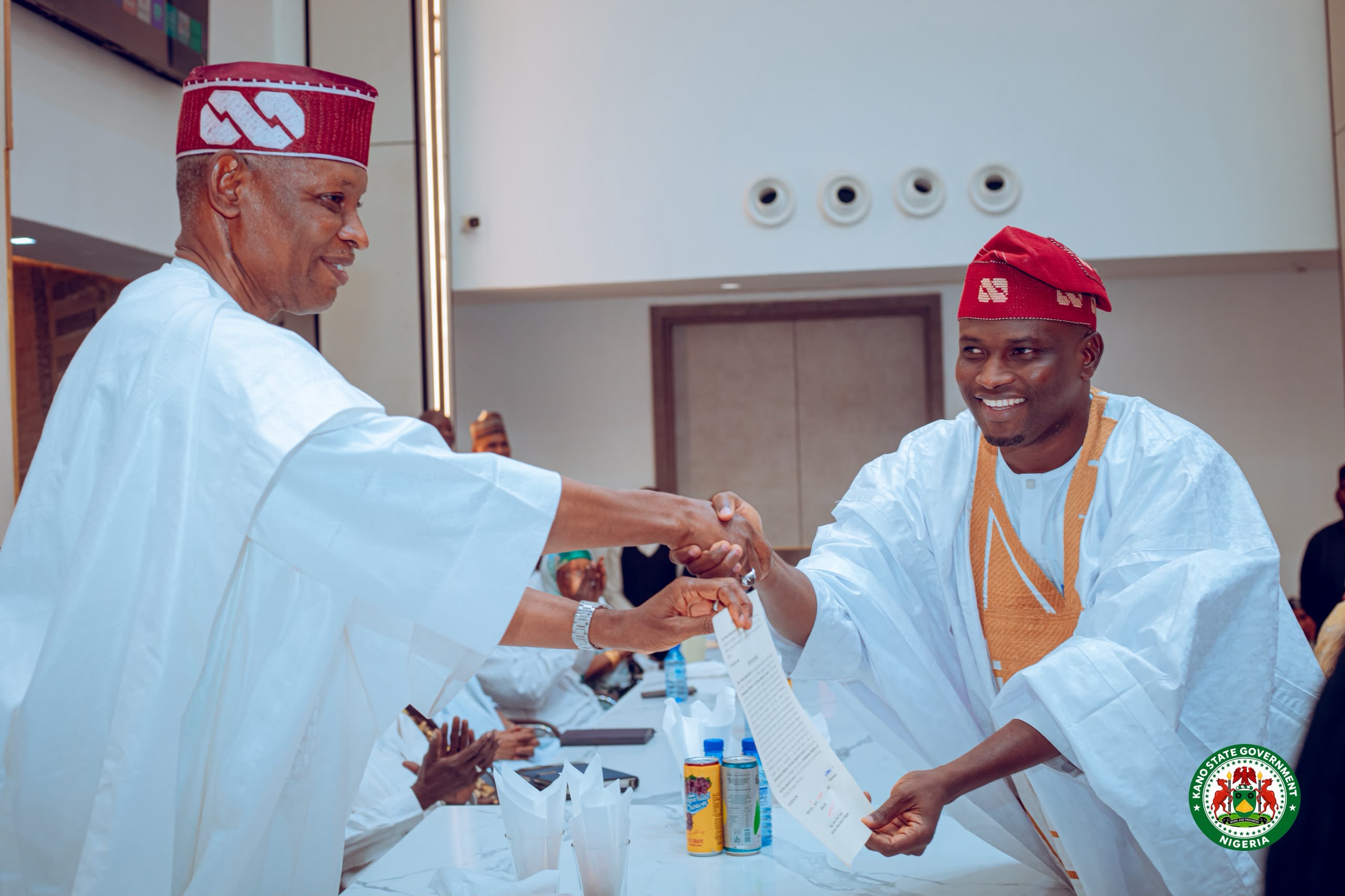

The Kano State Government is developing a Media and Communications Policy to strengthen journalists’ participation in governance, promote press freedom and improve access to public information.
KANO FOCUS reports that the State Commissioner for Information, Alhaji Sunusi Bature Dawakin Tofa, disclosed this at a one-day sensitisation workshop on the Open Government Partnership (OGP) organised by the Kano State OGP Secretariat for media practitioners in Dutse, Jigawa State, on Saturday.
Represented by the Director of Information in the ministry, Aminu Yassar, the commissioner said the proposed policy would protect journalists, promote media freedom, improve access to government information and encourage greater citizens’ participation in governance.
He disclosed that government agencies had also been directed to establish functional websites and social media platforms to ensure wider public access to official information.
Dawakin Tofa further said the process of domesticating the Freedom of Information Act in Kano State had reached an advanced stage, adding that the committee responsible for the process was expected to be inaugurated in the coming weeks.
He also announced plans by the Ministry of Information to establish a legal services department for the first time to facilitate access to justice for media practitioners and strengthen the principles of open governance.
In her remarks, the Acting Chairperson of the Kano State Public Complaints and Anti-Corruption Commission (PCACC), Hafsat Kutama, described the media as a critical partner in the fight against corruption and the promotion of transparency and accountability.
Kutama, who is also a member of the OGP State Steering Committee, said effective public participation and accountability depended on citizens having access to accurate information about government activities.
“The media is the bridge between the government’s commitments and the citizens’ expectations. You are the mirror that reflects the reality of governance to the people,” she said.
She urged journalists to move beyond sensational reporting and embrace investigative and data-driven journalism to expose governance gaps, hold public officials accountable and highlight government interventions.
Similarly, the Commissioner for Public Procurement and Project Monitoring, Dr Nura Ma’aji, urged journalists to take a more active role in monitoring government budgets, procurement processes and project implementation.
Represented by the Permanent Secretary, Alhaji Abdulrazaq Haruna, the commissioner said media practitioners needed adequate knowledge and professional skills to scrutinise public expenditure, track constituency projects and assess the implementation of government commitments.
“The media is not a bystander in this partnership. You are a critical stakeholder. You are the bridge between government and the governed. You are the watchdog that holds power to account,” he said.
Dr Ma’aji reaffirmed the state government’s commitment to ensuring timely access to information, publishing budget and procurement data, promoting beneficial ownership transparency and creating an enabling environment for responsible journalism.
The workshop featured presentations on the Open Government Partnership and the role of the media in translating OGP commitments into public-interest news reports.
Participants also discussed the importance of technology, effective monitoring and evaluation, citizens’ participation and collaboration among government institutions, civil society organisations and the media in improving public service delivery.
They were encouraged to adopt professional journalism practices that amplify citizens’ voices, particularly those of underserved communities, while promoting transparency, public trust and inclusive development.
The Open Government Partnership is a global multi-stakeholder initiative that brings governments and civil society organisations together to promote transparency, accountability, citizens’ participation and the use of technology to improve governance.
Dangote deepens Northern Nigeria agribusiness investments, sponsors 2026 National Agric Show
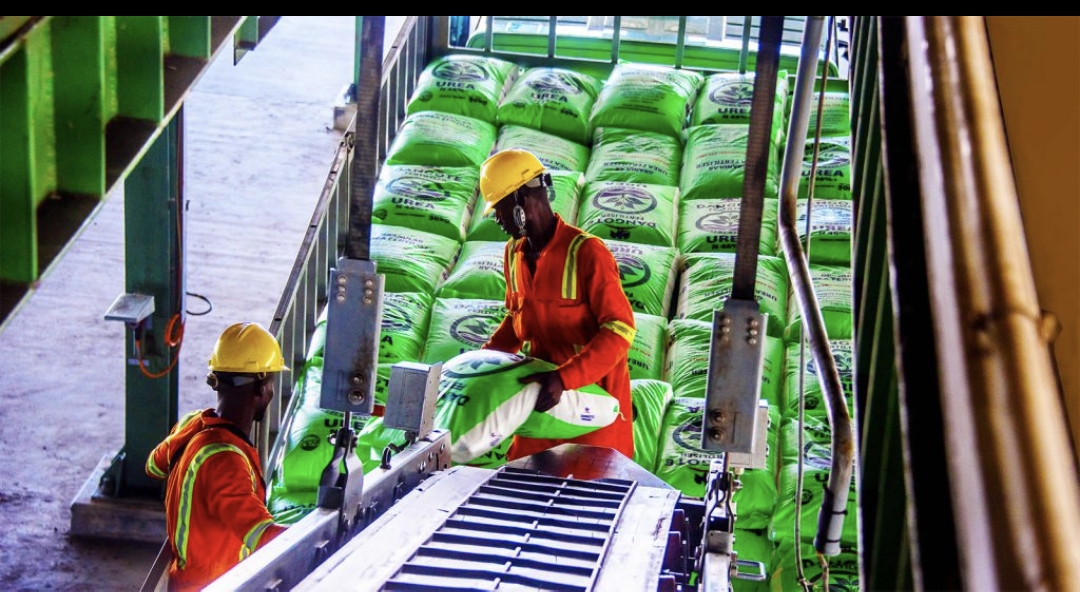

Dangote Industries Limited has reiterated its commitment to expanding investments in Northern Nigeria’s agricultural sector, with a focus on boosting food production, improving agricultural productivity and creating employment opportunities.
KANO FOCUS reports that the company said its investments were aligned with government efforts to strengthen food security and transform the country’s agricultural sector.
In a statement issued by the Group Chief, Branding and Corporate Communication Officer, Anthony Chiejina, the conglomerate said it was deepening its commitment to agricultural transformation through investments in mechanised farming, rice milling projects in northern states and sugar backward integration.
The company’s Regional Director and Senior Adviser to the Group President, Fatima Wali-Abdurrahman, said the initiatives were designed to strengthen domestic food production, promote agro-industrial development and unlock the agricultural potential of Northern Nigeria.
She said the Group’s fertiliser business was also contributing to agricultural development by providing locally manufactured inputs to help farmers improve soil fertility, productivity and crop yields.
Wali-Abdurrahman disclosed that Dangote Industries Limited was sponsoring the 2026 National Agricultural Show, scheduled to commence on Monday, November 16, as part of its support for agricultural development.
The event, organised by the National Agricultural Foundation of Nigeria (NAFN), is expected to be formally declared open by the Minister of Agriculture and Food Security, Senator Abubakar Kyari.
She said the Group’s agricultural interventions also prioritised inclusive participation, particularly by encouraging women and young people to take advantage of opportunities in agriculture and agribusiness.
According to her, the company’s vision is to support a productive, competitive and self-sufficient agricultural sector capable of strengthening food security and positioning Nigeria as a major player in Africa’s agricultural economy.
Meanwhile, the National Coordinator of NAFN, Hajiya Aishatu Rufa’i Ibrahim, said the 2026 edition of the Agricultural Show would provide a platform for connecting farmers, investors, policymakers, technology providers and other stakeholders.
Speaking with journalists in Abuja, Ibrahim said the event was organised under the theme, “Building a Resilient Nigerian Agrifood System: Empowering Farmers, Mobilizing Investment and Driving Innovation for Food Security and Shared Prosperity.”
She said the show would go beyond the traditional exhibition of agricultural products by providing opportunities for stakeholders to develop practical solutions to Nigeria’s food security challenges.
“This year’s Agric Show is unique because it goes beyond the traditional exhibition of agricultural products. It provides a strategic platform for connecting farmers, investors, policymakers, technology providers and other stakeholders to develop practical solutions to Nigeria’s food security challenges,” she said.
Ibrahim described the partnership between NAFN and Dangote Group as instrumental to the foundation’s efforts to promote private-sector participation in agricultural development, industrialisation and food security.
She commended the conglomerate’s contributions to Nigeria’s economic development, describing it as an important reference point in the country’s investment landscape.
The NAFN coordinator also urged the President of Dangote Group, Aliko Dangote, to expand his investments in Nigeria’s agricultural sector, saying his experience in large-scale industrial investment could help transform the industry.
She identified mechanisation, agro-processing, storage, logistics and commodity production as areas requiring increased investment.
“The country needs more indigenous investors of his calibre to see agriculture not merely as farming but as a major business opportunity capable of generating wealth, creating jobs and securing Nigeria’s food future,” she said.
- News7 years ago
- News8 years ago
- News8 years ago
- KANUN LABARAI6 years ago
Budurwa ta kashe kanta a Kano ta hanyar rataya