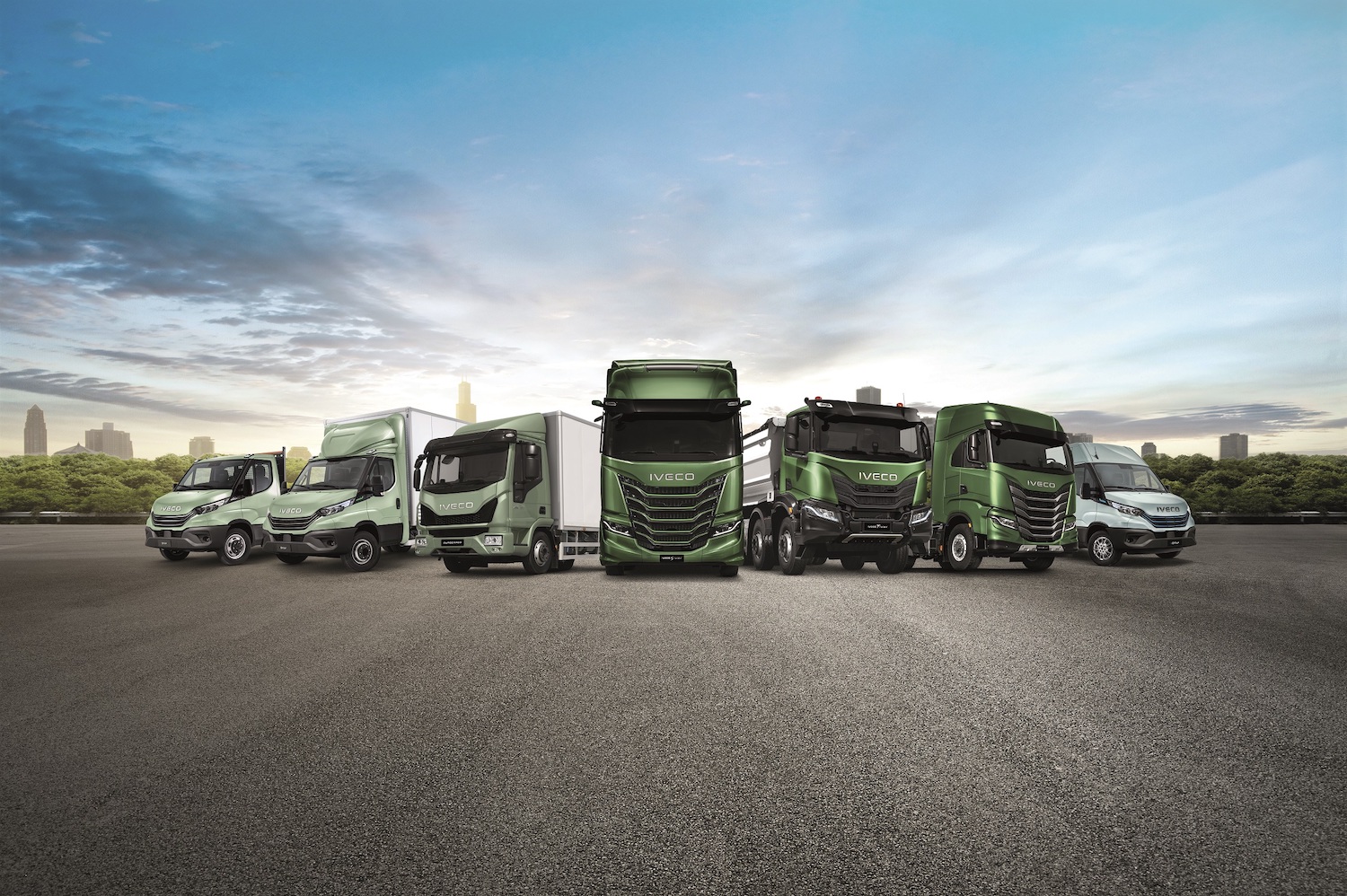
Tata Motors has completed the first settlement stage for the acquisition of Iveco. Through its Dutch subsidiary TML CV Holdings, the Indian group now holds approximately 89.42 percent of share capital. This means the Italian commercial vehicle manufacturer officially belongs to Tata Motors.
In July 2025, Tata Motors announced that it intended to acquire the commercial vehicle business of the Iveco Group. Officially, the offer was made by a Netherlands-based company fully owned by Tata. Last year, both parties signed a final agreement, declaring their intention to create a “global champion” in the commercial vehicle sector, with a presence in Europe, India and the Americas, focusing on sustainable and emission-free transport.
The acquisition is now complete. A majority of shareholders have accepted Tata Motors’ voluntary takeover offer. Additionally, this week (until and including 6 November) marks another deadline for shareholders who have not yet sold their shares but still wish to do so at a price of €14.40 per share. The acceptance rate for the offer currently stands at 87.8 per cent. At the Iveco general meeting on 16 October, a minimum acceptance threshold of 80 per cent of ordinary shares was set – which has now been exceeded. Thus, Iveco now officially belongs to Tata Motors.
Tata increases share offer
As a reminder: in mid-2025, Tata Motors submitted an initial offer of €14.10 per share, which it later raised to €14.40 in October. This increased the total transaction value from approximately €3.8 billion to around €3.91 billion. The settlement of the current second acceptance period, running from 2 to 6 November, is scheduled for 13 November. This could further increase Tata’s ownership stake.
Meanwhile, Iveco has announced that the acquisition will also change its leadership structure. The Iveco Group’s Board will now consist of six members. Natarajan Chandrasekaran, CEO of the Tata Group, will serve as Chairman. Olof Persson, the former Iveco CEO, will join the board as Executive Director. Additional members include P. B. Balaji and Girish Wagh from Tata Motors, as well as independent board members Günter Butschek and Charles Nichols. In parallel, Damiano Cretarola was appointed as the new CFO on 21 October. He took over the role from Anna Tanganelli on 2 November.
Iveco’s defence business now belongs to Leonardo
Prior to the current acquisition by Tata Motors, Iveco had already spun off its defence business at the beginning of the year, selling it to the Italian defence and technology group Leonardo for approximately €1.6 billion.
In the commercial vehicle sector, the merged Tata and Iveco group is now expected to achieve annual sales of over 590,000 vehicles and a projected revenue of around €21 billion, distributed across Europe (46 per cent), India (32 per cent), South Amercia (8 per cent) and the rest of the world (14 per cent). These figues have been shared today at a press conference:
Tata and Iveco to share factories, among other things
The partnership is primarily aimed at advancing innovations in emission-free transport. Tata and Iveco plan to leverage their respective supplier networks and industrial capacities to expand electromobility solutions worldwide. Iveco’s powertrain division, FPT Industrial, will play a key role in this. Previously, Iveco was primarily controlled by the Agnelli family through the Exor holding, which held 27.1 per cent of the shares but 43.1 per cent of the voting rights.
In the passenger car sector, Tata Motors already controls Jaguar Land Rover but had virtually no presence in the European commercial vehicle industry and no production facilities. The acquisition of Iveco thus also means gaining factories and market share in Europe. Iveco itself generated 74 per cent of its revenue in Europe and is expected to benefit from internationalisation under Tata.
Iveco was considered a takeover candidate
“By merging with Tata Motors, we unlock new potential to further enhance our industrial capabilities, accelerate innovations in emission-free transport and expand our reach in key global markets,” said Olof Persson, CEO of the Iveco Group, when the acquisition plans were announced just over a year ago. However, the manufacturer, one of the smallest in the European commercial vehicle industry, had long been considered a takeover target.
Iveco’s Board of Directors unanimously recommended the Tata offer, stating that it was in the best long-term interest of the company and its stakeholders. In return, Tata Motors committed to preserving Iveco’s factories and jobs and keeping the company’s headquarters in Turin. Both parties have also signed a series of non-financial commitments that will remain valid for two years after the transaction’s completion, covering areas such as working conditions and investment plans. Iveco employs around 33,325 people (as of end-2025), including nearly 14,000 in Italy.
“Commitment to sustainable transport solutions”
Girish Wagh, Executive Director at Tata Motors, highlighted the strategic importance of the merger a year ago: “By integrating the strengths of both organisations, we are unlocking new avenues for operational excellence, product innovation and customer-centric solutions. This partnership not only enhances our ability to serve diverse mobility needs across markets, but also reinforces our commitment to delivering sustainable transport solutions that are aligned with global megatrends.”
The Indian company itself spun off its passenger car and commercial vehicle businesses in 2024 to allow each to pursue its own strategies and achieve higher growth with greater flexibility. Natarajan Chandrasekaran, Chairman of Tata Motors, stated that the acquisition of Iveco was “a logical next step” and would “allow the combined group to compete on a truly global basis with two strategic home markets in India and Europe.”