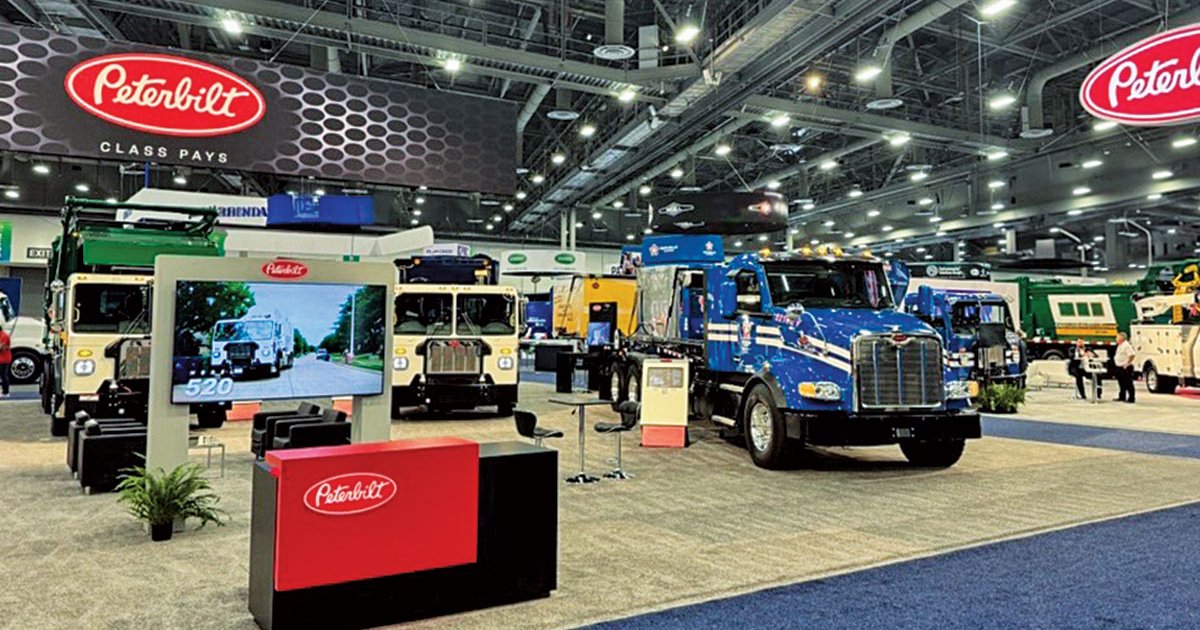
Peterbilt sales declined 15.9% to 2,611 trucks in May from 3,105 in the year-ago period. (Peterbilt Motors Company)
key takeaways:
- Class 8 retail sales fell 8% year on year in May but rose 8.4% from April, indicating a modest improvement amid continued caution.
- Despite improving fundamentals of manufacturing activity and freight movement, buyers are hesitant due to inflation, geopolitical uncertainty and weak profitability.
- Manufacturers have increased inventory levels, while most major truck makers have reported declines in sales, highlighting the gap between supply and demand.
US Class 8 retail sales are facing hesitancy from buyers, although improving market conditions are increasing optimism in May.
Sales in the month fell 8% year-on-year to 17,280 from 18,778, but were up 8.4% from 15,941 in April, Omdia Automotive data showed. Year-on-year, sales fell 16% to 73,419 units from 87,447.
“We’re starting to see those signs of recovery, and they’re translating into the freight and commercial vehicle sector,” said Steve Tam, vice president of ACT Research. “But there’s still this reticence, or this reluctance, or this nervousness, I’m not sure, on the part of many buyers to really commit.”
The ISM Manufacturing PMI report expanded for the fifth consecutive month, coming in at 54% in May, the highest reading since May 2022.
ICYMI The May ISM® PMI® report makes it clear: Demand is real. Manufacturing reached a four-year high, services inventories reached record levels, and orders remain strong. the questions? Geopolitics and appointment.
Production https://t.co/IXGqYy489q
services https://t.co/NtHRINLQVf pic.twitter.com/cu9abybuEH– Institute of Supply Management (@ism) 15 June 2026
Noting that positive fundamentals have been slow to translate into truck sales, Tam also said manufacturers are moving to increase production.
“In fact, we’ve added inventory toward Class 8 — at the North America level, not just the U.S. level — by about 6,000 or 6,500 units since the beginning of the year,” Tam said. “This is not where we want to go. If you’re hedging against price increases on ’27 EPA-compliant stuff I can understand the strategy. But we need to look at demand.”
Steve Tam of ACT Research says the biggest reason for slow Class 8 sales could be inflationary pressures. (ACT Research)
Tam sees the gradual increase as a positive sign, as seasonal moderation typically begins to end at this time of year. He says this is especially encouraging, as the gap from the previous month is typically closer to May.
However, there are reasons for caution: There is an Iran war, Tam said.
“This is still the situation in Iran and it will actually have a broader impact on the macro economy,” he said. “Inflation data are not going well, and if you pointed to a single thing that makes them worried about their prospects, I think, that’s it.”
Omdia data showed that sales of six of the seven major truck makers declined. Daimler Trucks North America’s brand Freightliner claimed the largest market share with 6,617 trucks sold or 38.3% of total sales. This also represents a sole increase of 8.9% from 6,076. Sales of Western Star, another DTNA brand, declined 33.7% to 657 units from 991.
“Retail sales continued to improve month-over-month in May, although year-over-year comparisons remain soft as fleets work through ongoing profitability constraints,” said Jonathan Randall, president of Mack Trucks North America. “Strengthening activity in the industrial and construction sectors is a positive sign for freight demand in the near term, even if consumer spending remains low.”
Randall expects the momentum of the recovery to continue as freight volumes slowly pick up and prebuy activity increases. Volvo Trucks North America sales declined 4.2% to 1,604 units from 1,675. Sales of Mack trucks declined 10.3% to 1,469 units from 1,637.
“As expected, Class 8 retail sales in the U.S. and Canada were strong in May, marking the fifth consecutive month of growth in North America,” said Magnus Koeck, vice president of strategy, marketing and brand management at VTNA. “We expect retail sales to be even stronger in the third and fourth quarters. At the same time, fleets remain cautious.”
Koeck said carriers are becoming more optimistic, but overall profitability is still not where it should be. Although capacity has left the market, he said, freight volumes need to improve for fleets to see meaningful growth in profitability.
“On top of that, higher operating costs, including higher diesel prices, are putting pressure on their bottom line, which is impacting the pace of retail recovery,” Koeck said. “Fuel efficiency and total cost of ownership remain key priorities for customers in this environment.”
International sales declined 3.5% to 1,953 units from 2,024. Peterbilt Motors Co.’s truck sales declined 15.9% to 2,611 from 3,105. Kenworth Truck Co. sales declined 27.5% from 3,267 to 2,368.