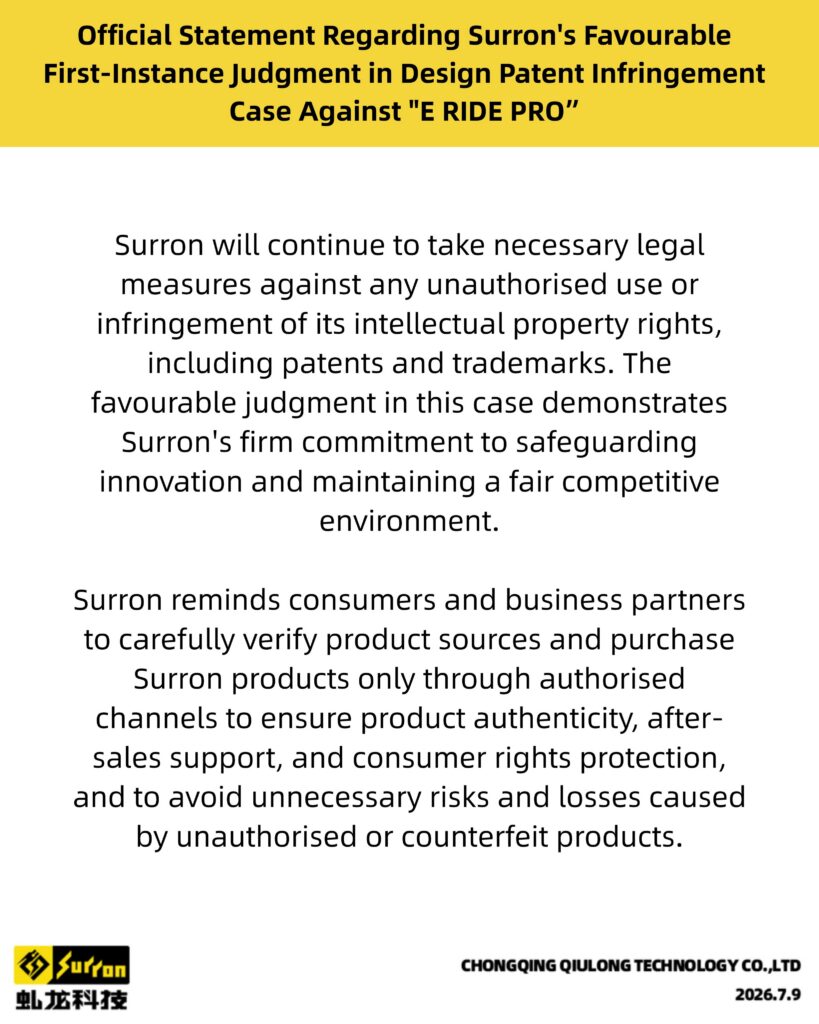
Source: Official statement, Chongqing Qilong Technology Co., Ltd. (2026.7.9) | Sur-Ron hasn’t cleaned the house. Just months after crushing Talaria in a landmark US patent case, the Chinese electric off-road pioneer has secured another favorable judgment, this time on home turf, and this time against the ‘e Ride Pro’ brand.
ruling
The Ningbo Intermediate People’s Court in Zhejiang Province has issued a first instance judgment in the design patent infringement case brought by Sur-Ron (Chongqing Qilong Technology Co., Ltd.) against Ningbo Yingfu Technology Development Co., Ltd. and Ningbo Engineering Imp & Exp Co., Ltd.
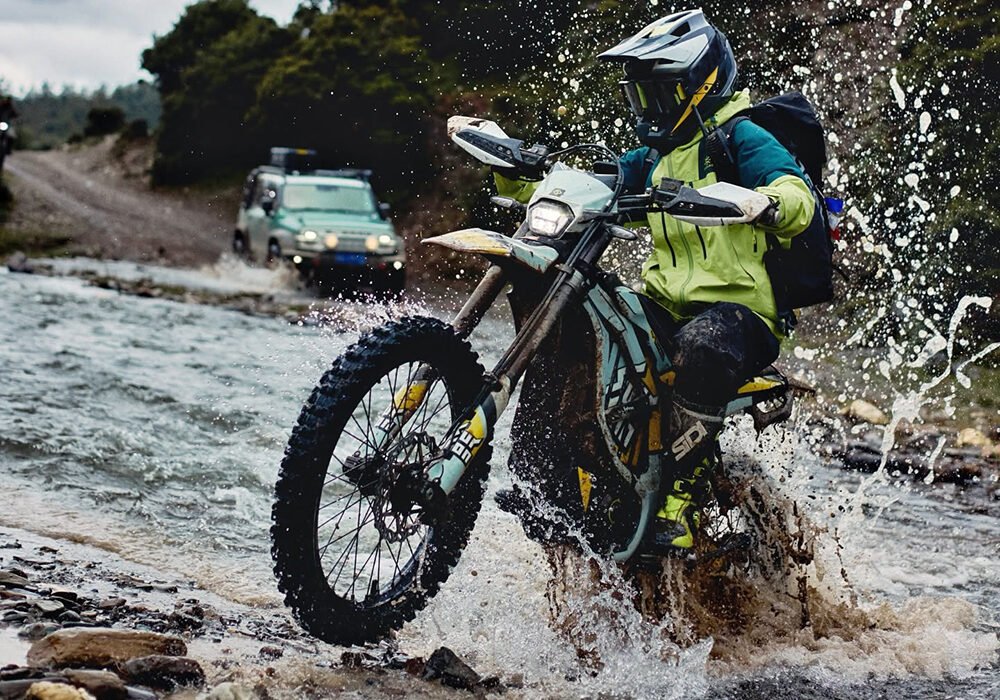
The court found that the defendants manufactured, sold and offered for sale the ‘e Ride Pro’ lineup – which includes the e Ride Pro S, SS 2.0, SS 3.0, SR and Mini models – and that these bikes fell within the scope of protection of Sur-Ron’s design patent for a “light electric off-road motorcycle” (patent number ZL201730077820.5). That patent, in particular, was recognized with the Outstanding Design Patent Award at the 20th China Patent Awards.
The defendants are ordered to immediately stop the violations and to jointly pay Sur-Ron RMB 5,441,829.51 (approximately €700,000) in damages and legal costs. This is a first instance decision, so an appeal is still possible, but the direction of travel is clear.

Part of a pattern, not a one-off
This is Sur-Ron’s second major IP win in 2026. In January, a Texas jury ruled unanimously against Talaria Technology in a US patent case focused on the same basic design: the Light B. That case, filed by two former Sur-Ron sales executives after they allegedly left to help create a rival product, ended in January with $10 million in damages, amended to $12,969,110 in a final judgment in May, as well as a permanent US injunction barring Talaria from manufacturing, selling or even marketing the infringing bikes.
Put the two cases together and a strategy emerges: Sur-Ron is no longer treating ‘clone’ competition as background noise. It’s suing multiple targets, on multiple continents, in multiple legal systems… and it’s winning.
Why it matters to the broader LEV space
Sur-Ron effectively created and defined the lightweight electric off-road category with the Lite B in 2018. Success invites imitation, and the category has since been filled with bikes that borrow heavily from that basic silhouette: swingarm-mounted motor, minimalist frame, moto-style ergonomics – all while wrapping it in a different badge. Some of these are legitimate parallel designs that focus on smart engineering solutions. Some of it is closer to the straight mark.
What is changing is the cost of guessing wrong. A brand that relied on Sur-Ron-adjacent designs as a shortcut to market now has two very expensive precedents sitting on the table – one American, one Chinese – that show Sur-Ron is willing to pursue both damages and an injunction, and courts on both sides of the Pacific are willing to give them.
For manufacturers building their own lightweight e-off-road platforms, the message is simple: design language matters, and ‘close enough’ is a legal risk, not just an aesthetic choice. For consumers and dealers, it is worth repeating Sur-Ron’s own reminder – verify the source before buying, as products of infringing lineage could deprive buyers of parts, service and warranty support if the seller is forced to go out of business.
More such cases are expected to emerge. Sarrone has clearly stated that it will continue to take ‘the necessary legal measures’ against unauthorized use of its patents and trademarks – and now with two wins on the board in the same year, it has both the appetite and the case law behind it to continue.
All images © Facebook Sur-Ron UK