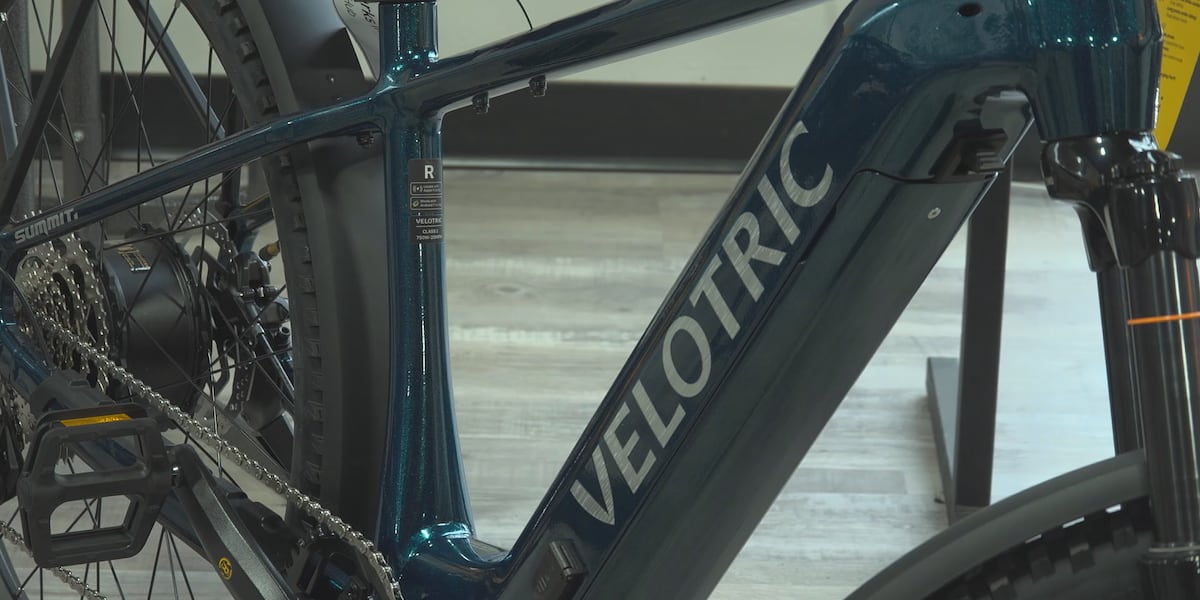
Wis. (WBAY) – The Center for Childhood Safety is encouraging parents to research age-appropriate e-bikes and e-scooters and to buy the right protective gear before giving one to a child this holiday season
Kimberly Hess, executive director of the center, said parents should make sure they are buying a device made for children. The center said in a news release that e-bikes and e-scooters can travel faster than traditional bicycles and scooters, and that their speed and weight can make crashes more dangerous, especially for young or inexperienced riders.
“E-scooters offer kids and families a fun and convenient way to get around, but they also come with risks that shouldn’t be overlooked,” Hess said in the release.
A lot of the times those devices
“A lot of the times those devices are made for adults, not necessarily children,” Hess said.
Hess said there are different classes of e-bikes and e-scooters, based on how fast they go and the type of throttle they have. She said the devices are heavy and children need to be able to balance them. “The faster the speed, the higher the risk of injuries,” she said.
According to the center’s release, Wisconsin recognizes three classes of e-bikes:
- Class 1: Provides electric assistance only while pedaling, up to 20 mph.
- Class 2: Uses a throttle to provide motor assistance, up to 20 mph, without requiring the rider to pedal.
- Class 3: Provides pedal assistance up to 28 mph. Riders must be at least 16 years old to operate a Class 3 e-bike in Wisconsin.
The release said where e-bikes can be ridden depends on their classification and local regulations. It said sidewalks, bike paths and trails may have different restrictions.
Hess said different cities and municipalities have different
Hess said different cities and municipalities have different rules. She said riders may be allowed on sidewalks in some places, while others require riders to be on the road. She said some devices require riders to be at least 16.
Hess said a bike helmet protects a rider only up to 20 mph. She said riders need a more advanced helmet above that speed and a motorcycle helmet if the device goes above 28 mph.
She said the center has seen more accidents involving children who are not wearing proper gear. She said the center has received phone calls about children with injuries.
You need to go buy a specialized helmet,
“You need to go buy a specialized helmet,” Hess said. She said a bike helmet will not protect a rider on an e-bike.
The center’s release listed three helmet types:
- Traditional bicycle helmets, which are CPSC-certified, are designed for conventional bicycles and lower-speed riding.
- NTA 8776-certified helmets are designed for higher-speed e-bikes.
- DOT-certified motorcycle helmets are appropriate for higher-speed motorized devices.
The release said helmets should fit properly and be securely fastened every time a child rides.
Hess said children need to know the rules of the road. She said an e-bike or e-scooter is motorized and on wheels, so it is considered a vehicle and riders must obey the same rules as vehicles.
She said e-scooters have smaller wheels and will
She said e-scooters have smaller wheels and will hit cracks, bumps and rocks. She said e-bikes should have lights, and children should know how to use hand signals to show drivers which direction they are going.
“If they can’t pick up the rules of the road and you can’t trust them, then they’re just not ready for it, which is okay,” Hess said.
Hess said parents should know the local rules so they can teach them to their children.
The center’s release said parents should do the following before letting a child ride an e-bike or e-scooter:
- Make sure the child is old enough and mature enough to operate the device safely.
- Review state and local riding regulations.
- Teach children to follow traffic signs and signals and to watch for vehicles and pedestrians.
- Wear bright clothing and use lights when riding in low-light conditions.
- Keep phones and headphones put away while riding.
- Never carry additional passengers.
Copyright 2026 WBAY. All rights reserved.