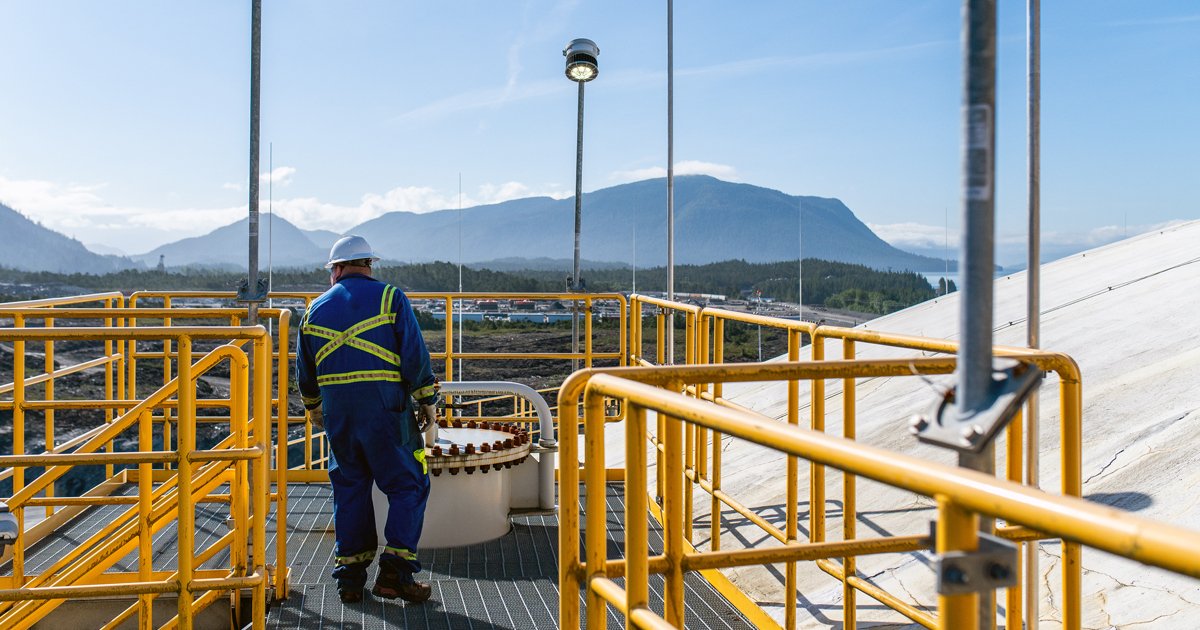
“Today’s data shows that the Canadian economy is back on track,” Grantham said. (James Macdonald/Bloomberg)
key takeaways:
- Canada’s GDP expanded 0.1% in May after a 0.5% increase in April, bringing annual growth to 2.3% in the second quarter.
- The rebound was driven by oil and gas, manufacturing, construction and real estate, defying claims of a prolonged recession.
- CIBC’s Andrew Grantham said the rebound would not erase the first-quarter output gap, and projected no change in Bank of Canada rates this year.
Canada’s economy is set to recover sharply in the second quarter amid a surge in oil production, ending a half-year of stagnation.
Gross domestic product expanded 0.1% in May, according to a flash estimate from Statistics Canada released June 30. It rose 0.5% in April, more than the 0.4% rise expected by economists in a Bloomberg survey and the fastest pace since July 2025.
Assuming no growth in June, industry-based output data shows Canada’s economy will grow at an annualized pace of 2.3% in the second quarter, a big pickup after a half-year of flat industrial output.
The data would refute claims that Canada is in a prolonged recession. In May, the statistics agency reported that expenditure-based gross domestic product shrank for two consecutive quarters starting late last year, meeting one of the criteria for a recession.
While most economists and the central bank have rejected that label, US trade policy and a sudden slowdown in immigration of non-permanent residents have led to weak, unsustainable growth. The Bank of Canada expects the economy to remain in excess supply for most of 2026.
premium price:The freight market has finally changed
Two-year Canadian government bond yields rose to 2.73% after the release as of 8:58 a.m. in Ottawa. The loonie was about 0.1% weaker at C$1.42 per US dollar.
“Today’s data shows that the Canadian economy is back on track,” Andrew Grantham, senior economist at the Canadian Imperial Bank of Commerce, said in an email.
While the estimated rebound in the second quarter would be above the Bank of Canada’s latest estimate of 1.5%, it still would not offset the first-quarter shortfall in the output gap, Grantham said.
“Our estimate is that there will be no change to the Bank of Canada’s overnight rate this year,” he said.
Statistics Canada reports that goods-producing industries expanded 1.2% in April, driven by oil and gas extraction. The rise in petroleum output was driven by a surge in synthetic crude oil output, the agency said, adding that growth slowed during the first three months of the year due to longer-than-expected unscheduled maintenance.
With the global increase in petroleum prices due to the war in the Middle East, extraction of oil and gas from the country’s Atlantic coast also increased.
The country’s manufacturing sector grew by 0.6% in April. Construction output rose for the first time in five months. Real estate activity also increased, reflecting an increase in housing resale activity, particularly in Toronto, the agency said.