“The idea that the Chinese would invest in full assembly in Canada, while they haven’t done it anywhere else in the world, while they now have a a 13 million unit deficit for home consumption and an ability to make an extra 20 million at home is absurd,” said Flavio Volpe, president of the Automotive Parts Manufacturers’ Association.
Published November 16th, 2026 at 4:56pm
Canadian automakers are dousing cold water on Prime Minister Mark Carney’s claim that Canada could turn to Chinese manufacturers if U.S. President Donald Trump chooses against preserving an integrated North American auto industry in ongoing trade negotiations.
Chinese automakers operating internationally typically use knock down kits that allow for limited assembly to bypass tariffs in host countries. Critics say these kits won’t come close to matching the economic footprint or create the same number of jobs of plants already operating in Canada.
Brian Kingston, president and CEO of the Canadian Vehicle Manufacturers’ Association, said European countries that have lowered tariffs on Chinese cars have seen their auto industries decimated despite promises of Chinese companies relocating production.
He said the continent has lost 104,000 auto jobs in 2024 and 2025, and Germany’s auto industry lost 42,300 jobs in the first six months of 2026.
“There is no auto industry in Canada without US market access,” he posted on X.
Carney made the comments in Cambodia ahead of a planned meeting with Chinese President Xi Jinping this week in Shenzhen, China, where Chinese auto manufacturing is expected to be discussed. The two leaders reached an agreement in January allowing tens of thousands of Chinese electric vehicles into Canada at reduced tariffs.
“We have the best auto workers in the world, and we want them fully deployed, full opportunity, in an integrated North American market,” Carney told reporters in Cambodia. “That market has become less integrated because of U.S. trade actions.”
Carney said Saturday in Manila, Philippines, that any trade agreement with Washington must leave Canada with a United States remain his priority, but their outcome could determine whether Canada pursues alternatives involving European, Chinese or Japanese automakers
Asked whether potential Chinese investment was leverage in the U.S. negotiations, Carney replied: “It’s not leverage. But action, reaction.”
“If they’re not fully utilized in a North American context, that provides other opportunities,” Carney said of Canada’s auto workers and manufacturing assets. “Canada is going to move forward either way.”
Carney said any Chinese investment would have to involve substantial manufacturing in Canada rather than simply assembling imported parts. He said it would require proper labor standards, manufacturing facilities and domestic supply chains that expand over time, including Canadian critical minerals used in electric vehicles.
“It’s not just about kit cars,” he said. “There has to be a manufacturing aspect involved.”
Under the January agreement, Canada reduced its 100 per cent tariff on Chinese electric vehicles to 6.1 per cent, initially allowing up to 49,000 vehicles annually, with the cap increasing over time. In exchange, China agreed to lower tariffs on Canadian agricultural products, including canola.
Flavio Volpe, president of the Automotive Parts Manufacturers’ Association, said a Chinese company has never actually manufactured cars outside of that country and doubts that would happen with the industry currently producing millions of vehicles more than needed for their domestic market.
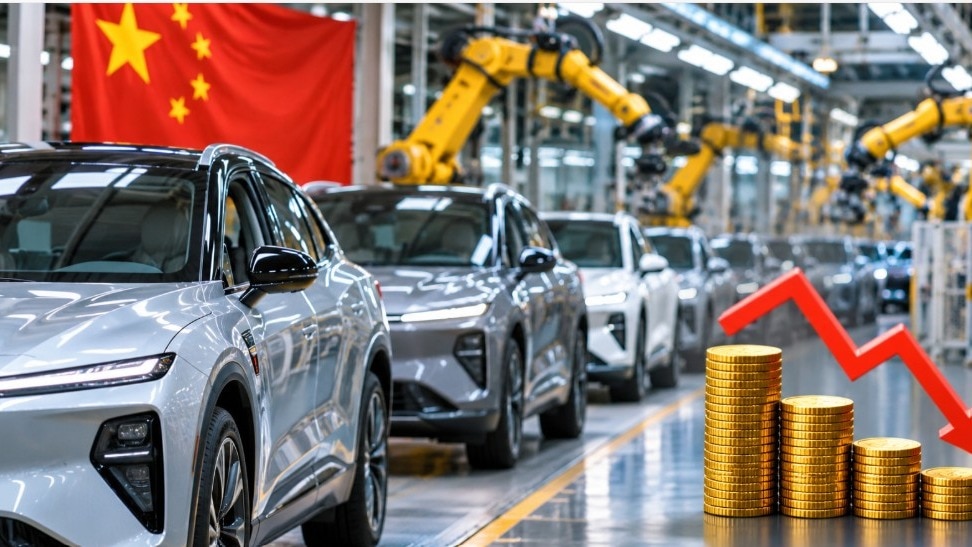
The International Organization of Motor Vehicle Manufacturers said China built around 35 million cars last year. But domestic sales dropped from 19.4 million in the first ten months of 2025 to 14.5 million units over the same period this year, according to the China Association of Automobile Manufacturers.
The industry association predicts that China exported around 7 to 8 million cars last year, and wants to bump that figure to 10 or 12 million this year to make up for falling domestic sales.
“The idea that the Chinese would invest in full assembly in Canada, while they haven’t done it anywhere else in the world, while they now have a a 13 million unit deficit for home consumption and an ability to make an extra 20 million at home is absurd,” he said.
Volpe pointed to the experience in Brazil as a warning sign for Canada. In 2025, the country gave China’s BYD tariff-free access for the company’s knock down kits for a six-month period. During that span, BYD was supposed to start the work towards beginning full production in Brazil.
That didn’t happen and Brazil suspended its exemption in February. But Brazil eventually relented and created a new exemption period that will last until the end of the year.
“BYD, the world’s biggest, fastest-growing [car company] has access to all kinds of Chinese capital has no real intention of [overseas] production, and we see what’s happened in Brazil,” Volpe said.
Asked by iPolitics about the industry’s criticism on Monday, Finance Minister François-Philippe Champagne says Canada is fostering closer ties with China to support efforts to diversify trade away from the United States.
“This is part of our trade diversification strategy. It’s obviously normal and important to talk to your second largest trading partner, which happens to be the second largest economy in the world,” he said during a press event for an unrelated announcement.
“Prime Minister Carney will be seeing President Xi, and… I will let him reflect on the discussions they may have when they’re going to meet in Asia in the coming day.”
It’s expected that Canada will announce a new tariff agreement with China — potentially include new vehicles — tomorrow.
with files from the Associated Press