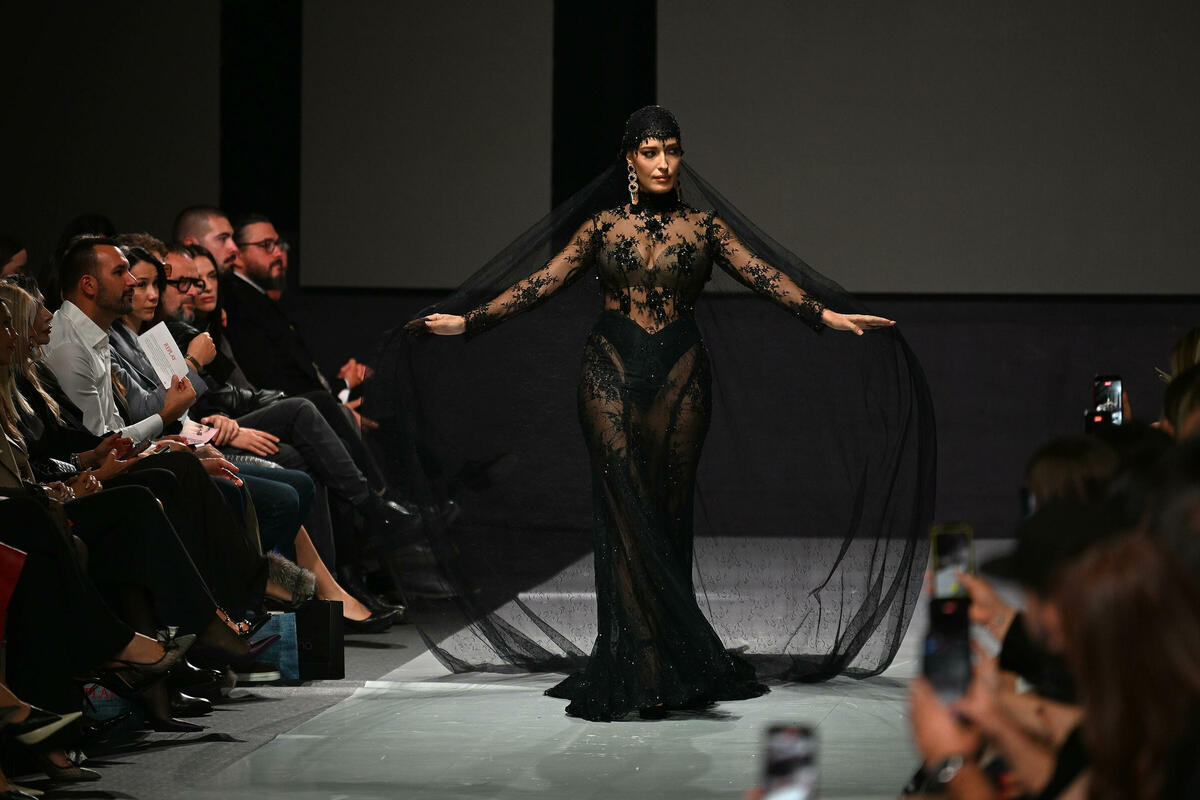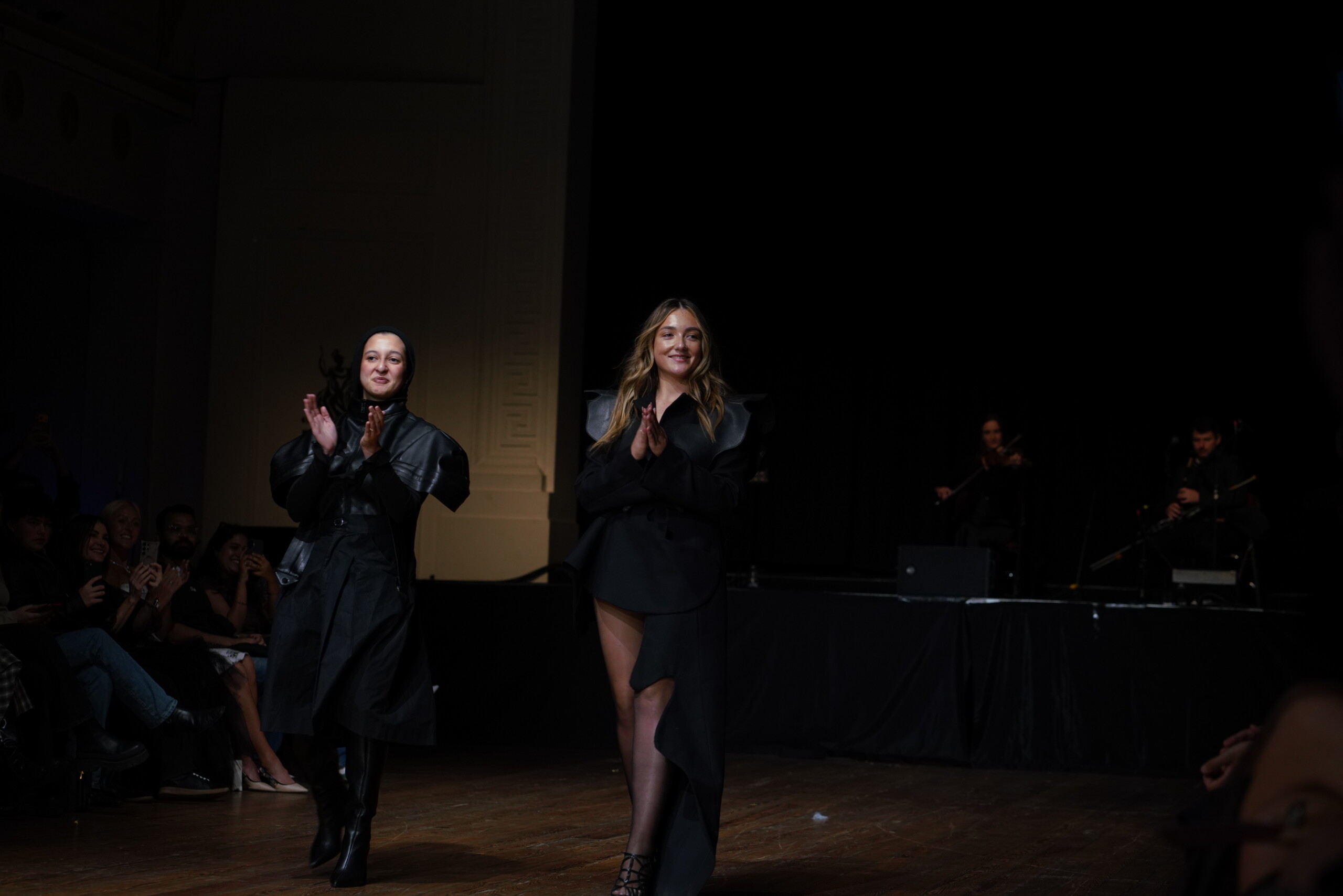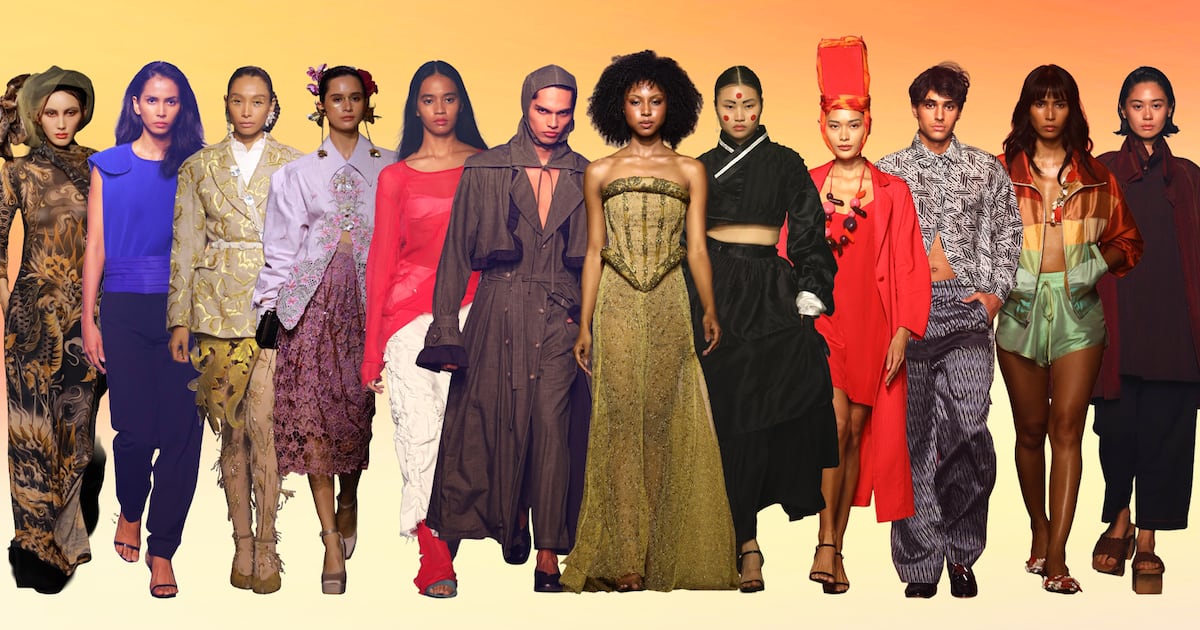
The Philippines — Last week, designers, creatives and media players from across Asia’s fashion industry, alongside international buyers, convened in Manila for the first-ever edition of Fashion Week Asia. Taking place over five days from October 20 to 24, the programme spanned runway shows, educational forums, a brand showroom, and networking opportunities — closed by a gala event
This inaugural edition was spearheaded by Archie Carrasco, founder and chairman of Fashion Week Asia, and chairman and CEO of AGC Power Holdings Corp. The event aims to connect designers from across the region with the wider industry, turning creative talent into commercial opportunities.
“I’ve been in the industry for more than 40 years, and one thing I’ve witnessed is the tremendous talent we have here. Unfortunately, a lot of that creativity goes unseen,” shared Apples Aberin, co-founder and co-chair of Fashion Week Asia. “There’s a lack of visibility and, beyond that, a lack of connection to commerce.”
For Aberin, the opportunity lies in building
For Aberin, the opportunity lies in building a more connected, end-to-end fashion ecosystem across the region. “We wanted to set that in motion here. It’s just the beginning, of course, and there’s still a lot to do, but we have high hopes that through collaboration, it can grow and better serve the community,” she told BoF.
Designers from across Southeast and East Asia presented their collections over the first three days at Palacio de Memoria, a restored 1930s mansion. The line-up included Vietnam’s Duc Studio and Kilomet 109; South Korea’s Bajuyo; Indonesia’s Toton; Malaysia’s Plazä; Taiwan’s Sophie Hong; Thailand’s Wisharawish; and Hong Kong’s Ponder.er, a 2024 LVMH Prize semi-finalist, among others. Filipino labels Rosanna Ocampo, Maligaya, Novèl and Kelvin Morales also took part.
While established national fashion weeks take place across the continent — from Seoul and Bangkok to Shanghai — Fashion Week Asia aims to platform the broader market by investing within and sharing re
China remains a key growth market for luxury
“China remains a key growth market for luxury. Then there’s Korean culture, which has become a massive global phenomenon. And Japanese craftsmanship continues to define what luxury is all about,” Aberin told BoF. “When we speak individually, the world hears us, but it’s like a whisper. When we bring everyone together
The programme also included press events, dinners, a guided city tour in collaboration with the Tourism Promotions Board of the Philippines, as well as a jewellery showroom visit hosted by Jewelmer, a brand that has championed the Filipino national gemstone, the Golden South Sea Pearl, on the global stage.
On Friday, attention turned to the commercial challenges facing emerging regional brands, with a day-long re-see offering buyers the opportunity to view collections up close, alongside the “Fashion Forward Asia Forum” — a series of educational panel discussions featuring regional industry experts — both hosted at the Manila Marriott Hotel.
Over a cocktail reception and dinner
Over a cocktail reception and dinner on the last day, guests reflected on the outcomes, connections and learnings from the week. The evening culminated in a final showcase: a presentation by Filipino designer Rajo Laurel entitled Archivo — an introspective celebration of the designer’s 33-year career, bringing reworked archival pieces together with newer designs.
Celebrating Regional Craft and Local Materials
A recurring theme throughout the event was the use of locallyh of the Western fashion industry. Vietnamese designer Thảo Vũ, founder of Kilomet 109, opened her showcase with a short film tracing the collection’s origins, including the sustainable harvesting of bamboo in collaboration with a rural Indigenous community in Vietnam
Kilomet 109 works with eight such communities across Vietnam to sustain specialist crafts and the know-how within them. All the dyes used by the brand are natural. A pink waistcoat, for example, was coloured using resin derived from black beetles, while several pieces, including a jacket, were made from silk dyed with ebony fruit to achieve a deep charcoal-black hue. The labour-intensive process takes two to three months, with the silk dyed, wrung and sun-dried more than 45 times to achieve the desired colour.
Malaysian designer Anisah Farid, founder of Plazä, works
Meanwhile, Malaysian designer Anisah Farid, founder of Plazä, works with artisans to embroider Italian wool and cotton-blend shirts. The technique, known as Nyonya Peranakan embroidery, is created by a third-generation artisan in Penang, Malaysia — and adorns Plazä’s box-cut, pinstripe women’s shirts. Farid gave the artisans creative freedom over the designs, drawing on a labour-intensive craft that is difficult to replicate by machine.
Sophie Hong, the Taiwanese designer, works primarily with Hong Silk, a textile she has spent decades developing from the ancient Chinese tradition of Xiangyun silk. Made using natural dyeing techniques involving plant extracts, river mud and sunlight, the fabric develops distinctive, lacquer-like textures and earthy tones.
The Philippines itself is widely recognised for its naturally derived fibres. Another popular material used across designs in the market is piña — made from fibres extracted from pineapple leaves, as seen on micro-shorts and balloon-sleeved jackets created by Roko Arceo of Maligaya.
Platforming Identity and Culture Through Collaboration
Gone are the days that one designer creates
“Gone are the days that one designer creates a look that everyone needs to follow. Today it is about collaboration,” shared Desmond Lim, editor-in-chief of Vogue Singapore during “The Creative Code” talk, the first session of Friday’s educational forum.
Across the week, collaboration emerged as a way for creatives to exchange perspectives, reinterpret cultural references and build a stronger regional fashion identity, reflecting the collective ambition behind Asia’s first centralised fashion week.
During a panel discussion co-moderated by BoF client strategist Annabel Bolton and Mega Global Group chief content officer Bea Valdes, Vogue Philippines editor-in-chief Trickie Lopa joined actress and television host Anne Curtis-Smith to explore the role of culture and identity in fashion.
Lopa shared how the publication seeks to connect
Lopa shared how the publication seeks to connect Filipinos around the world by championing the country’s culture, heritage and identity. She pointed to the magazine’s September cover featuring musician Oli, one of fashion’s most in-demand photographers
“What’s interesting is that we weren’t trying to impose a Filipino interpretation on him,” Lopa shared onstage. “Our conversations about art led him to [Filipino painter] Fernando Amorsolo and the landscapes that eventually inspired the backdrops. So you had these different artistic traditions coming together in a contemporary fashion image. For me, that’s the beauty of collaboration.”
As a prominent figure in Filipino pop culture, Curtis-Smith said she uses her platform to spotlight local talent. “Each country or region — even within the Philippines — has its own personality. In my position, the best way I can tell stories through fashion is by collaborating with them and providing a blank canvas for their creativity.”
Lopa added the importance of listening: We often
Lopa added the importance of listening: “We often speak about giving communities a voice, but these communities already have voices. What matters is listening to them, collaborating with them and bringing their work to wider audiences without diluting what makes it distinctive.”
Building on Creativity With a Commercial Approach
The week’s programme also addressed the fundamentals required to translate a creative point of view into a tangible business model.
For Aberin, this represents a key message behind Fashion Week Asia’s purpose: “The runway is where the conversation begins, but we have also invited consultants who can advise designers on how to take their businesses forward,” she told BoF.
During a forum session entitled Making it Work,
During a forum session entitled “Making it Work,” Marina Lyritzi, wholesale and brand consultant at FWS2, emphasised the importance of a clear brand identity and point of view: “Know who you are and […] what makes your brand different. Don’t try to become everything to everyone — for brands, their collection cannot be in every store.”
She also stressed the importance of starting small, launching a focused capsule collection and testing demand across retail touchpoints before committing to larger production volumes.
Amal Sultan, director of partnerships and international development at L’Adresse Paris Agency, which connects regional brands with opportunities at Paris Fashion Week, similarly emphasised the importance of commercial discipline. She encouraged designers to balance statement pieces that establish a distinct brand identity with wearable, scalable products that can underpin a sustainable business.
“Creativity opens the door; structure keeps it open,” she said.
Creative ambition must be matched by the ability
But creative ambition must be matched by the ability to deliver. “A beautiful sample is not a business,” Sultan added. “One brand came to Paris with stunning samples and the buyers loved them, but when it was time to produce, they couldn’t do it. Their materials depended on suppliers they couldn’t control and the orders were never delivered.”
Rajo Laurel on Championing Filipino Fashion
The closing gala culminated in a final runway show – a spectacle of 46 looks held in the Manila Marriott Hotel ballroom. As the show began, a diamond-shaped screen suspended at the centre of the runway displayed a slideshow of photographs charting Laurel’s career and personal life.
“The intention was to tell the story of my 33 years in 15 minutes. We wanted to take you on a journey through our 7,107 islands. This collection is the product of all the research, discussions and dialogues I’ve had since I began my career,” he told BoF.
The structure was lifted to reveal a model
The structure was lifted to reveal a model wearing the opening look. The first few that followed were restyled from a collection Laurel displayed earlier this year in Bangkok, before he delved into his archives, reworking and reimagining pieces from across his career.
Personal references ran throughout Laurel’s collection, including designs made from barong tagalogs — traditional Filipino men’s formal shirts — that belonged to his father and grandfather.
“There’s a saying in the Philippines that you can only truly move forward if you look back,” he said, backstage.
One recurring detail across the collection was thin,
One recurring detail across the collection was thin, rope-like tassels, a technique Laurel learned from a weaver in the Filipino mountains. “It’s made from pieces of thread that I braided together. The technique is called nayan, which means connection. It is literally about the ties that bind us.”
He went on to share that in the Philippines, there are many barriers to creating a collection and presenting it on this scale: “We’re a developing nation, and fashion is far from our biggest concern,” he said. “Yet fashion can offer hope and a way to celebrate our culture. The way we know how to do that is by celebrating the beauty of the hand and the handmade.”
The show closed to Erasure’s 1988 hit “A Little Respect,” a song whose lyrics particularly resonated with the designer: “It’s not just about respecting me; it’s about respecting every single person who creates.”