It seems self-evident that a sunshade on the inside of a car windshield would be quite effective, for the same reason that blinds or curtains in your home keep the interior from getting too hot. Even ancient people understood cooling, and accordingly smithsonian magazineThe Romans used wooden shutters to keep their palaces cool. But what about your chariot? What’s the best way to keep the interior of your beloved ride from roasting?
Way back in 1988, scientists University of Central Florida Solar Energy Center A pair of identical Toyota Tercels (not Chariots, of course) were parked at Cape Canaveral to measure the effects of using simple cardboard behind the windshield and foil reflector sunshades. They found that the interior temperature of a car parked in the sun can reach 150 degrees Fahrenheit and the dashboard temperature can reach 200 degrees Fahrenheit. But placing a piece of cardboard behind a car windshield can reduce interior temperatures by an average of 15 degrees Fahrenheit and dashboard temperatures by as much as 40 degrees Fahrenheit. Using foil-back shades as blockers reduces interior temperature and steering wheel temperature by a further three to five degrees. The dashboard temperature dropped further to 6 to 11 degrees. Bottom line, sunshades help. But other methods prove even better.
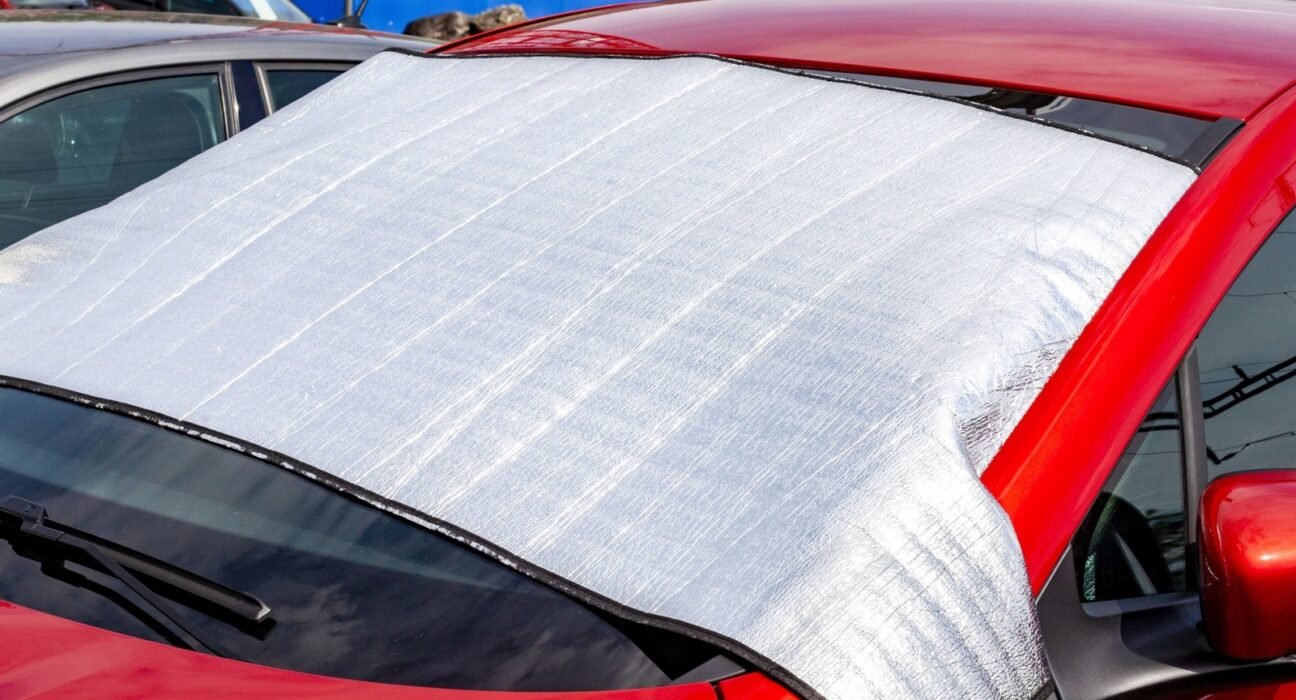
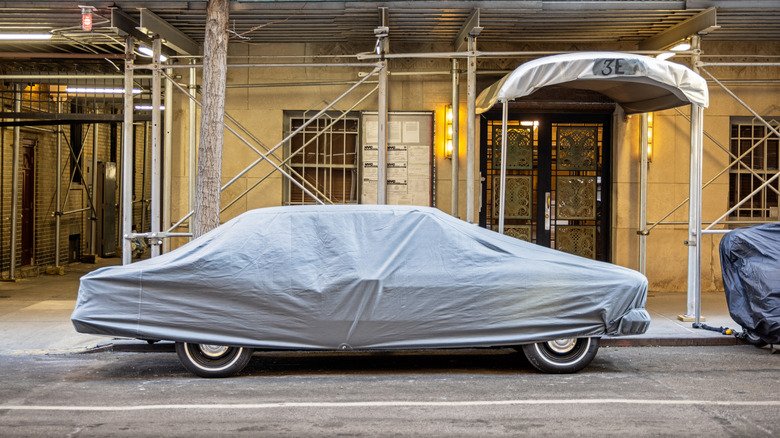
A sunshade is more effective on the outside of your windshield – and so is a car cover.

Malaysia is a fairly hot place, so it makes sense that they would spend time studying sunshades there. A paper presented at the 2012 International Conference on Mechanical, Automobile and Robotics Engineering in Penang argued that using a basic nylon shade in the front windshield – not much different from what one of our own journalists advocates as a cheap hack for window shades – could significantly reduce dashboard temperatures. In their tests, using a nylon sunshade reduced a 189.5 °F dashboard temperature by 32.6 °F.
However, if you’re going to park in the sun for a while, better solutions exist, at least according to Germany’s Allgemeiner Deutscher Automobil-Club (ADAC) (General German Automobile Club), which is Europe’s largest automotive club, like AAA. ADACA 2026 study of various passive cooling methods found that a partial exterior car cover reduced interior temperatures from 127 degrees Fahrenheit to 109.4 degrees Fahrenheit. This was the most effective method. Placing a reflective sunshield on the outside of a car’s windshield was far more effective than the inside, reducing the temperature from 127 °F to 113 °F and essentially preventing as much heat as possible from entering the windshield.
Putting that shield inside the windshield glass overheated the car by up to 120 degrees F. That temperature rose to 122 degrees F with a simple white cloth on the interior, which did little to stop the cabin temperature from rising.
Park in the shade and save gas
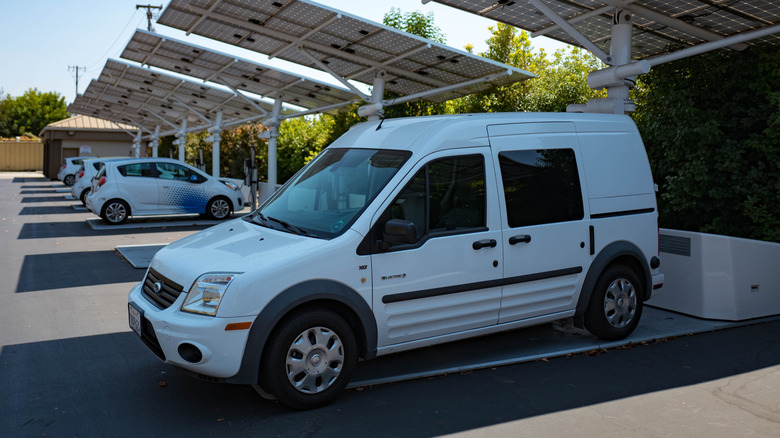
Department of Energy It’s said that maxing out your car’s air conditioning can cut your car’s fuel economy by up to 25% – so try this science tip instead, right when you’re climbing into your sizzling ride. and pay attention Oak Ridge National LaboratoryAnd to keep the temperature in your car down and avoid running your AC at full speed, park in the shade first.
Other factors that determine how hot your car gets may already be in play. ADAC found that the surface temperature of a black car parked in the hot afternoon sun reached 149 degrees F, while a white car was, relatively, cooler at 111 degrees F. This means the black car was 127 degrees F inside, compared to 118 degrees F for the white car. By the way, the color of the car also matters in terms of fuel economy. Research done by scientists in 2011 Lawrence Berkeley National Laboratory Found that cooling a hot silver car to a comfortable 77 degrees via A/C required 13% less energy than an identical black car. And for your information, dark colored cars can also increase the urban air temperature where they are parked.
Also, all parked, unattended cars are a danger to children. Certainly never leave a child in a parked car, even on a mild day. consumer Reports showed that even if the temperature was a relatively mild 61 degrees, the car’s interior could reach 105 degrees Fahrenheit within an hour. This can lead to fatal heatstroke, and Consumer Reports states that more than half of the deaths of children in a hot car have occurred in this manner. Don’t let this happen; Ideally use sunshades outdoors.