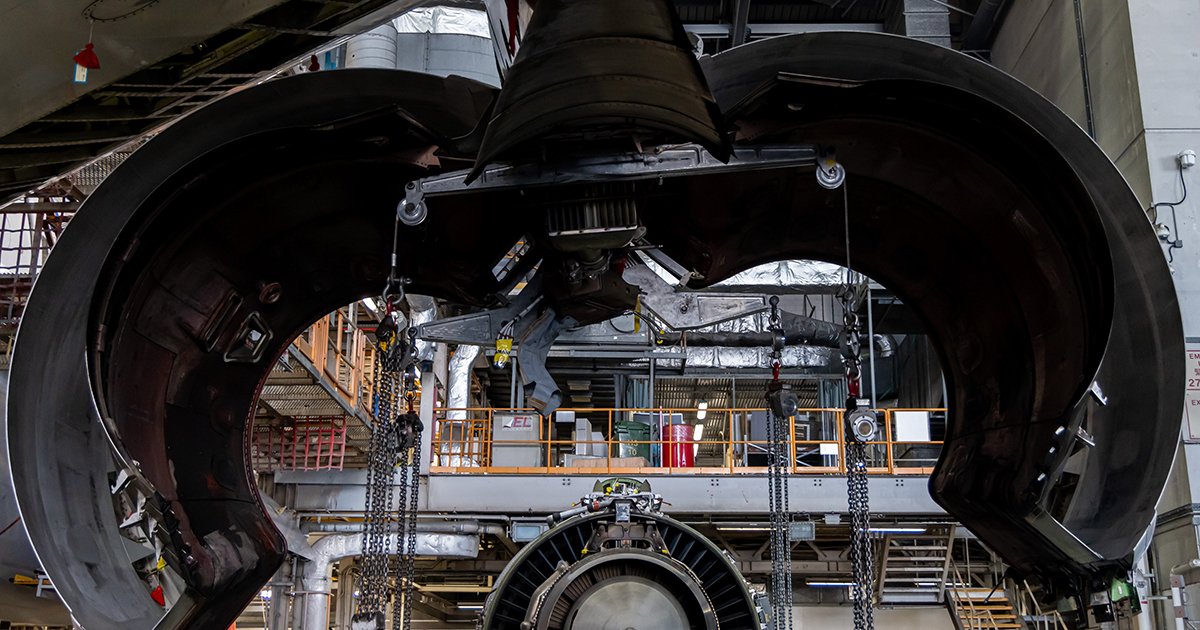
The engine cowling and a General Electric engine nozzle of a Boeing 777-200 aircraft in the Heko hangar in Hong Kong. (Paul Yeung/Bloomberg)
key takeaways:
- The United States said it would not immediately impose tariffs on commercial aircraft, jet engines and parts after President Donald Trump ordered a Section 232 investigation.
- Commerce Secretary Howard Lutnick, citing concerns over foreign subsidies, predatory practices and supply chain controls, found that such imports pose a threat to national security.
- Trump directed agencies to negotiate with trading partners, warning that tariffs or other actions could be taken within 180 days if agreements are not reached or prove ineffective.
The US will not immediately impose tariffs on commercial aircraft, jet engines and parts following the investigation, with President Donald Trump instead directing the administration to negotiate with trading partners to adjust imports of those products.
Read more: Forced-labor hearing paves the way for more charges against Trump
Trump signed a proclamation on July 9 ordering the U.S. Trade Representative and the Commerce Department to begin negotiations. The move came after a report by Commerce Secretary Howard Lutnick found that imports of commercial aircraft, jet engines and related parts pose a national security threat.
The conclusion of the investigation leaves the door open to future duties if the US does not reach an agreement with trading partners to resolve the issue. According to a White House fact sheet on the proclamation, Trump can also take other actions he deems necessary to eliminate the threat if the relevant agreements are not entered into within 180 days or are “ineffective.”
The Commerce Department began the investigation in May 2025 under Section 232 of the Trade Act of 1974, which allows investigation into whether foreign imports pose a national security threat to the US.
The original investigation requested comments from stakeholders on “the impact of foreign government subsidies” and “predatory trade practices” that affected the competitiveness of the industry. It also sought comments on the potential for foreign industries to weaponize their control over commercial aircraft and jet supplies.
Along with commercial aircraft and parts, the US has investigated about a dozen other areas, including steel, semiconductors and critical minerals.