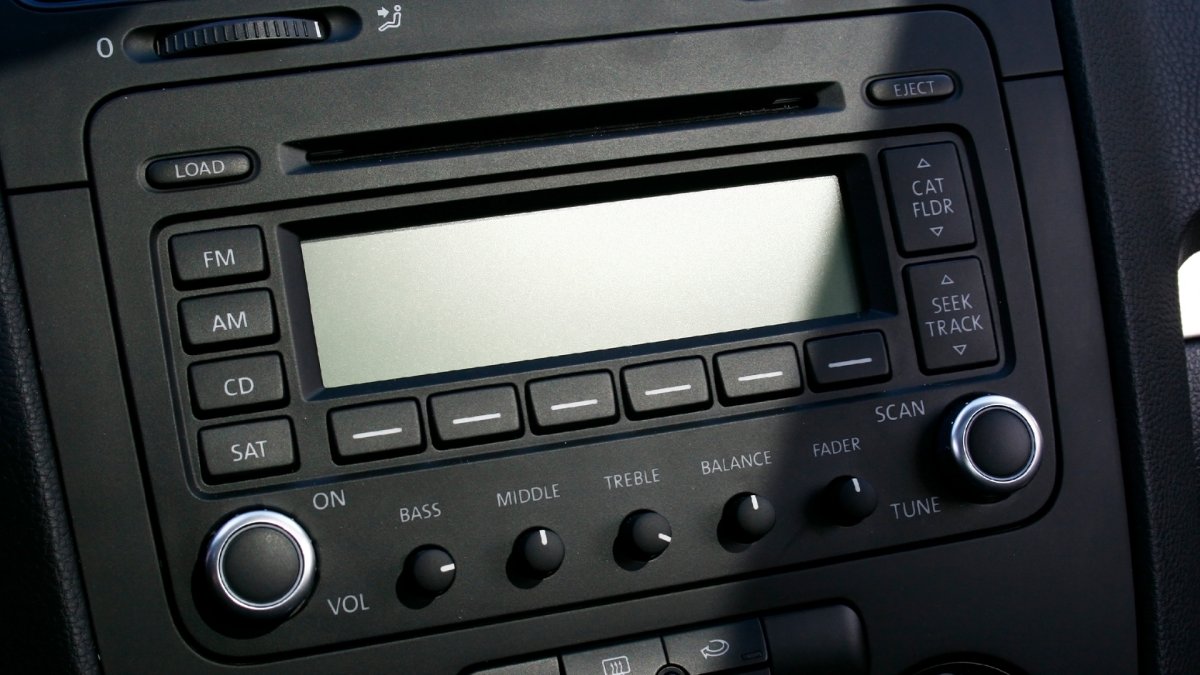
Almost every conversation about AM radio starts like this: “When was the last time you used it?” It’s a fair question, but there’s a whole group of people who believe it’s wrong. Instead, they are convinced that how often you use a tool does not define its usefulness; It has effectiveness. That’s why there’s a new bill moving through Congress attempting to lock AM radio out of every new car, whether automakers want to offer it or not.
It’s called the AM Radio for Every Vehicle Act, and it’s part of a larger bill called the Motor Vehicle Modernization Act of 2026 by the House Committee on Energy and Commerce. There is talk of it being absorbed by another proposal-Build America 250 Act-Includes a variety of other transportation-related information, from highway safety programs to bridge rehabilitation. The latter bill was introduced on May 18, and the House Transportation and Infrastructure Committee advanced it just days later with a bipartisan 62–2 vote. It still hasn’t passed the House of Representatives, meaning it’s in the early stages, but support for the bill seems strong so far.
This is not the first time MPs have pushed for an AM mandate. If you recall, a bill with a similar name was proposed in 2023, but it faced strong opposition from automakers. The Alliance for Automotive Innovation – a group that represents Ford, VW, Toyota and others – filed a joint response with the Center for Automotive Research saying high-voltage EV powertrains interfere with AM signal reception. Additionally, he cited high cost as a significant factor in the removal of AM, with receivers costing up to $70 a piece. The total cost to car companies will be $3.8 billion by 2030.
As long as it can be packaged with the Build America 250 Act, this effort for essential AM has a high chance of passing. It has bipartisan support, which is huge, not to mention the accelerated timeline. Republicans and Democrats alike want the bill passed before Sept. 30, when current highway and transit funding authorities expire under the previous surface transportation law. If the House, Senate and President do not approve it first, federal funding for highways, bridges and transit programs could end.
The only objection to AM radio in cars is the price. Others in favor of the AM mandate cite it for a broader list of reasons. Instead of asking people how often they use a low-tech feature, he believes a better question is, “What would you do if the alternatives don’t work?” Much of the enthusiasm supporting the legislative effort boils down to just this: What if? If all other communications are destroyed due to a natural disaster, or large-scale unrest due to government meltdown, or any number of disasters occur, they are forced to weigh whether it is worth saving money as a producer or as a consumer – to abandon AM.
At present it is in Washington’s hands to decide.
Have a suggestion or question for the author? Contact him directly: caleb@thedrive.com