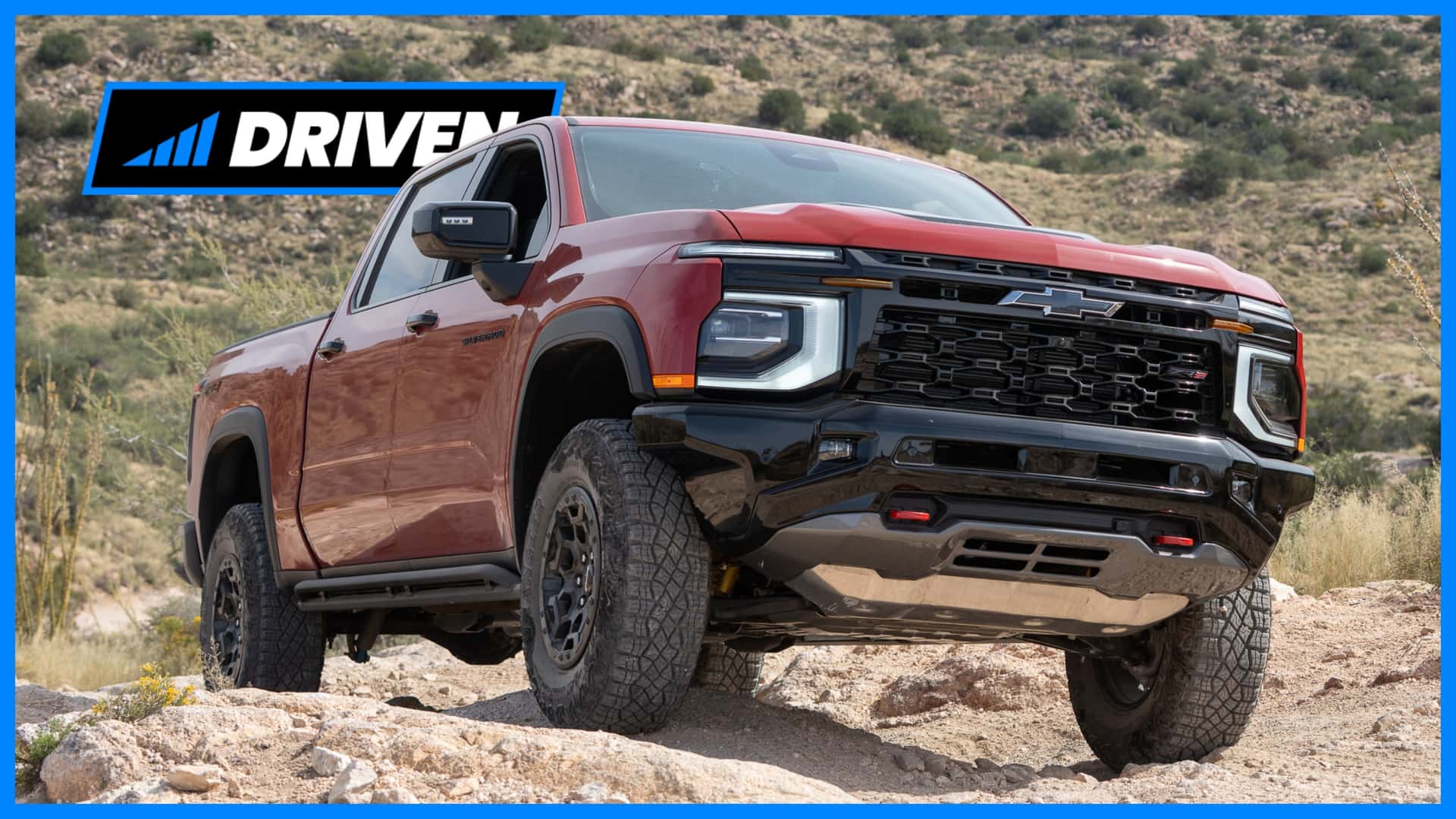
A Chevrolet Silverado EV owner with 47,000 miles on his truck has a blunt answer for anyone planning to tow a camper: expect about half the range. He says roughly 5,000 of those miles were spent pulling a 23-foot camper, and he has never had a problem towing it. The range penalty and the satisfaction belong in the same sentence.
In a new Reddit discussion about Silverado and Sierra EV ownership, the driver, posting as Longjumping-Store106, identifies his truck as a 2025 Silverado LT. He reports 300 to 350 miles of range during interstate driving at 75 mph without describing a trailer attached, and roughly 1 mile per kilowatt-hour when towing. “Real world range is always, it depends,” he wrote.
At that towing efficiency, the electricity price becomes unusually easy to understand. Every cent charged per kilowatt-hour is approximately a cent per mile of energy used by the truck. A low home rate and an expensive highway charger can turn the same towing result into very different bills.
The short answer
- The LT owner’s reported towing efficiency is about 1 mile per kilowatt-hour. Use it as a planning example, not a guaranteed result for another trailer.
- At that efficiency, 100 miles consumes about 100 kWh: $15 at an illustrative 15-cent rate, or $50 at 50 cents, before charging losses and other fees.
- Another Silverado owner says about 95% of his towing stays in-state. For him, smoother everyday towing outweighs extra stops on occasional longer trips.
For the cost comparison, see “What 100 towing miles could cost” below. For charging-stop advice, see “Check the parking space as well as the plug.”
The truck that fits most of the year
The second owner, posting as huntsvillekan, describes a 2024 Silverado EV WT Extended Range with about 25,000 miles of ownership, including roughly 7,000 miles pulling trailers. His reported range is more than 300 miles empty and approximately 225 while towing.
Those are different trucks and different towing accounts. The WT owner’s 225-mile estimate should not be pasted onto the LT owner’s camper trip. Neither commenter provides a complete trip log, loaded trailer weight and charging receipts in these comments, so the figures remain their reported experience.
The WT driver’s reason for keeping the truck is more revealing than a maximum-range number. Compared with his previous combustion-powered trucks, he describes immediate response and an absence of transmission gear hunting. He writes that 95% of his towing is in-state: “to us it’s worth the extra stops on the occasional road trip to have a nicer experience 95% of the time.”
That is a sensible way to judge an expensive vehicle. A truck used for nearby jobs all year and a handful of distant camping trips has a different assignment from one pulling a camper across state lines every week. Buying around the longest trip alone can mean paying for capability rarely used. Ignoring that trip can leave an owner with a frustrating vacation.
What 100 towing miles could cost
The LT owner’s 1-mile-per-kWh figure supplies the starting point, but not his bill. The following prices are examples selected to show the calculation, not his actual rates or a claim about today’s national average.
| Electricity price | Energy cost for 100 miles at 1 mile per kWh |
|---|---|
| 15 cents per kWh | $15 |
| 30 cents per kWh | $30 |
| 50 cents per kWh | $50 |
| 60 cents per kWh | $60 |
The formula is distance divided by miles per kWh, multiplied by electricity price. Actual billed energy can be higher because charging involves losses; session, parking, idle or subscription fees can also change the total.
For a gasoline comparison, a truck returning an assumed 10 mpg would burn 10 gallons over those same 100 miles. At an assumed $3.50 per gallon, that is $35. On this deliberately simplified energy-only comparison, the EV’s break-even electricity price would be 35 cents per kWh before charging losses and extra fees. Use the actual towing economy of the truck you would replace, not its empty-highway figure.
That distinction matters for combustion trucks too. An F-150 PowerBoost owner reported a steep economy drop with an empty enclosed trailer. His uncorrected larger tires complicated the dashboard numbers, but the account illustrates why a familiar no-trailer fuel bill is a poor substitute for a towing comparison.
None of this settles the purchase decision by itself. Purchase price, financing, insurance and depreciation still count. It does show why “electric is cheaper” and “public charging is too expensive” can both miss the household in question. The share of miles powered at home is consequential.
Illustrative energy costs, not an owner’s charging bill. Excludes charging losses and extra fees. Graphic: Noah Washington / Torque News.
A towing rating does not promise towing range
Chevrolet’s 2025 Silverado EV announcement lists the LT at 408 EPA-estimated miles, or 390 with the LT Premium Package. Those are full-charge estimates, not a promise to cover that distance with a camper. The manufacturer says actual range varies with loading, terrain, temperature and other conditions.
Chevrolet also advertised up to 12,500 pounds of towing capacity for appropriately equipped LT and WT models. That is a separate question from how far a truck travels between charging stops. The specific vehicle’s ratings, passengers, cargo and equipment still determine what it can carry and pull.
Different trailers can also make apparently comparable owner reports diverge. A Lightning towing a Pebble Flow returned 1.5 miles per kWh, but the trailer had its own battery-powered tow assistance. Counting only the truck’s energy would miss part of that system. Another Lightning owner took a horse trailer along a route below 50 mph, a different assignment from an interstate camper run.
Before borrowing anyone’s range number, match the trailer, speed, route and battery version as closely as possible. Then leave a reserve instead of planning to arrive empty.
Rear three-quarter view of a 2025 Chevrolet Silverado EV LT. Photo: Chevrolet / © GM.
Check the parking space as well as the plug
Asked whether he has to disconnect his trailer to charge, the WT owner says he has not needed to yet. He credits regional pull-through sites and uncrowded locations where he can maneuver without bothering other drivers. He also acknowledges that his luck may eventually run out.
There is manufacturer-backed evidence that the network is improving. In August 2026, Pilot, GM and EVgo announced more than 300 charging locations and 1,300 stalls across 40 states. The announcement specifies pull-through stalls at several locations, not all of them.
That wording matters. A charging stop can have an available connector and still be awkward for a truck with a camper. In a previously reported Sierra EV family trip, even a station described as trailer-friendly required unhitching. A total stall count cannot tell a driver whether the one usable space for a long rig will be free.
For the next trip, check recent station photos, the direction of entry, cable reach and an alternative stop. Look at the rate as well as the map pin. A cheaper station that requires a detour and repeated unhitching may not be the better family stop.
The two Silverado owners offer a useful answer without pretending their trucks suit every trailer. One reports substantial mileage and accepts roughly halved towing range. The other prefers the experience enough to tolerate occasional extra stops. Their strongest argument is the work their trucks do regularly. A buyer’s strongest check is to price and map the trips their own truck will actually take.
If you tow with an electric pickup, what did your last trip cost per 100 miles, and could you charge with the trailer attached? Include the truck, trailer and charging rate so other owners can make a useful comparison.
Know someone comparing electric pickups for towing? Share this story with them.
Vehicle photos: Chevrolet / © GM, from the 2025 Silverado EV newsroom gallery. Manufacturer publicity vehicles, not the commenters’ trucks.
About the author
Noah Washington is a young automotive journalist based in Atlanta, Georgia, covering sports cars, luxury vehicles, electric vehicles, and the ownership realities behind them. His reporting for Torque News connects engineering and design with what drivers experience, from towing and charging to reliability and the character that makes a car worth caring about.
His work includes interviews with Jaguar F-TYPE designer Matt Beaven and former Lucid Gravity chief engineer Zach Walker, plus firsthand reviews of the Nissan Z Nismo and Mitsubishi Mirage G4.
A BMW E36 M3 owner and former Miata owner, Noah has written for TopSpeed, HotCars, and Cointelegraph. He is a member of the Southeast Region Automotive Media Association (SERAMA) and the International Motor Press Association (IMPA). His favorite car remains the Fiat 500 Abarth.