View illustration full size ↗
The voices on Andrew Michael Hurley’s folk-horror collection Barrowbeck belong to Gabriella Pond and Matt Jamie. Lucie McNeil produced the audiobook in Newcastle for John Murray Press, part of Hachette. Hachette put the audiobook on sale in October 2024. On 25 November, Northumbria University announced an £11.6m publishing programme that includes a fund to help smaller presses try audio.
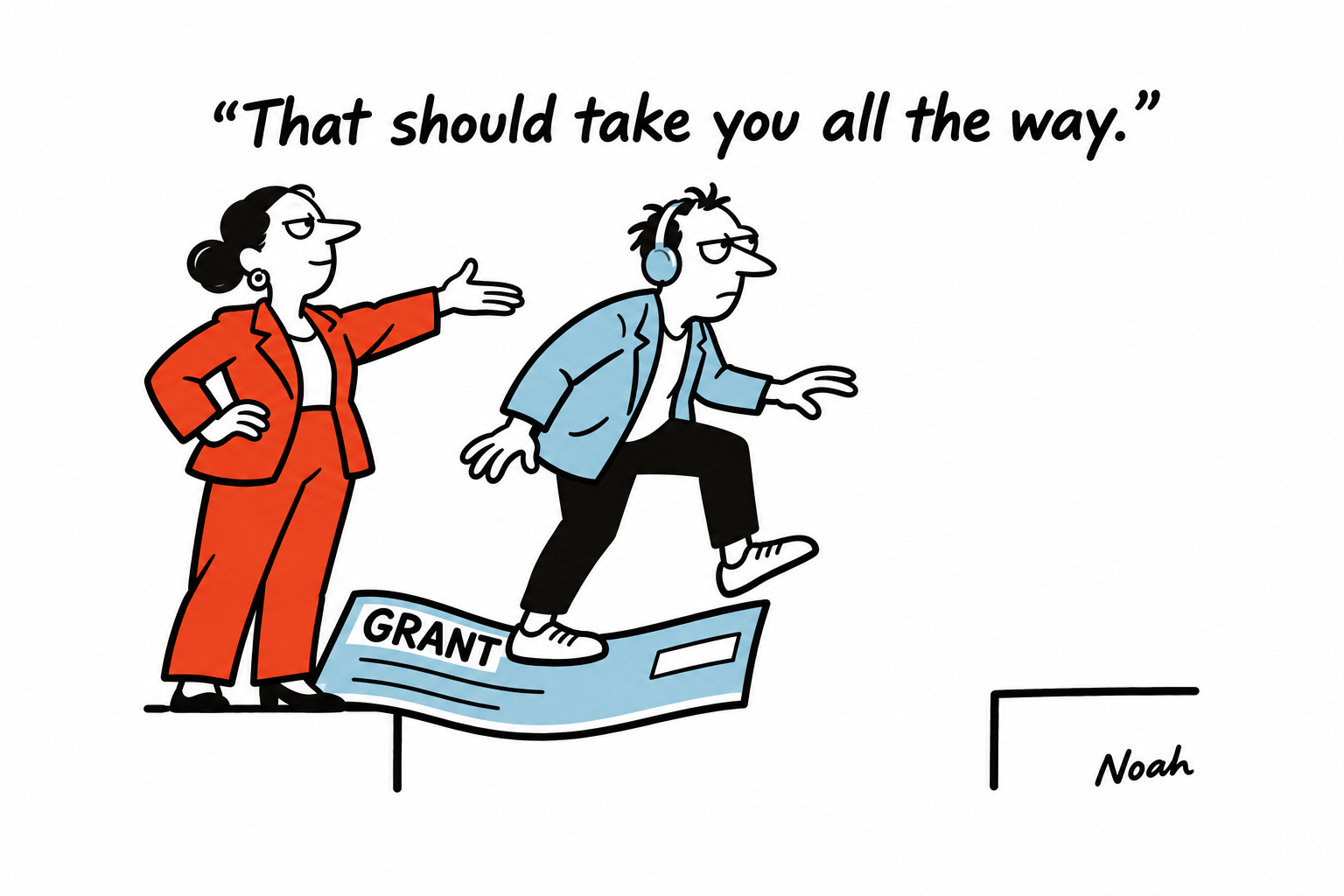
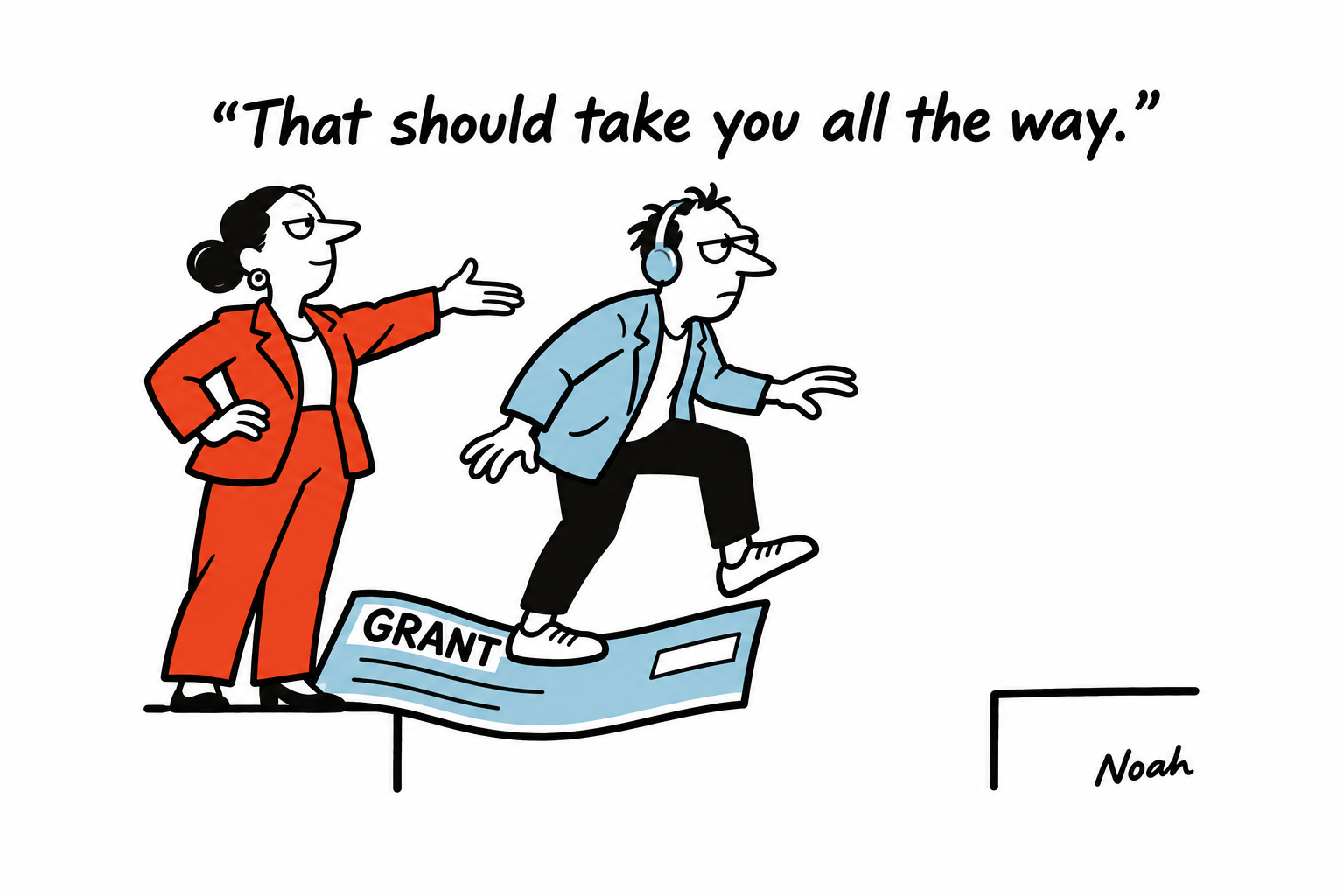
For local producers, freelancers and authors, the programme can open a door to paid work. Publishers can try new suppliers and formats with some of the cost covered, but their teams will still have to select, supervise and sell the work. The decision that matters comes after the first commission. Is the publisher willing to buy the next one out of its own production budget?
The public award is £6.75m from UK Research and Innovation through the Arts and Humanities Research Council. The £11.6m total also counts support from the North East Mayoral Strategic Authority and partners’ investments, some of which can be in kind. The announcement puts around £2.1m into grants and skills programmes for small and medium-sized North East businesses and freelancers. It gives no cash breakdown for individual publishing partners. A day of an editor’s time can help a project, but it cannot pay the narrator’s invoice.
Katy Shaw, who leads UK Publishing Futures, said in Northumbria University’s announcement that the work aimed to change “who gets to write, who gets published and who gets to build a career in publishing”. The partner list includes Faber, Granta, Bonnier, Pan Macmillan and Hachette. Its value will depend on which of them put people with authority over real lists and budgets into the projects.
What the first audiobook proves
Barrowbeck predates the new grant. It shows that a Newcastle team could deliver a frontlist audiobook, meaning the audio edition of a newly published title, for a large publisher. A small press weighing up its first audio edition faces a different decision. It might have to negotiate the audio rights, pay for casting and studio time and arrange distribution before it knows what listeners will buy. A shared studio can remove the need to build that capability in-house. The sales risk sits with whoever pays for the edition.
New Writing North, which runs the studio as Sounds Good, lists Hachette, Faber, Pan Macmillan and Audible among its clients. Narrator Jonah York recorded Anders Bodelsen’s Freezing Point there for Faber, which released the audiobook in November 2025. Its catalogue also includes Saltwash, another Hurley title that Hachette released in 2025. Two titles in a portfolio show what a continuing relationship can produce. The listings leave open when and how the work was contracted and what the studio earned. Market growth helps explain why a publisher might try. The Publishers Association reported that audiobook revenue grew 10% in 2025 and made up 10% of the consumer publishing market. A small press still needs the income from its own edition to cover its share of production and distribution.
Take a hypothetical group of eight subsidised audiobook pilots. Five reach listeners and two of those presses commission audio for a second title at their own expense. Two out of five is a useful measure of repeat buying among the publishers that reached market. Two out of eight tells the funder how often support led all the way to another order. Both figures matter. The three that stalled might reveal problems with rights, distribution or production costs that a list of completed projects would miss.
A supplier also needs to know what the publisher paid and how much work went into delivering the title. A second order at a price that leaves the studio or freelancer covering overruns is fragile. Tracking the price, turnaround time and corrections alongside the volume would make clear whether the local supplier can keep taking the work.
Who can say yes in Newcastle?
Hachette began opening offices outside London in 2021, including one in Newcastle. In September it said that more than 175 people worked across five regional hubs. The figure has no Newcastle breakdown and covers employment, a different measure from how many books those teams acquire or what they spend locally. A commissioning editor with an acquisition budget would give a North East writer a different route in from a training session. A producer with delegated authority to select studios can create work even when the acquisition decision sits elsewhere.
Independent presses offer another comparison. Bloodaxe runs editorial, rights and publicity from Hexham and manages finance and sales data from Bala in Wales. Newcastle-based Inpress handles sales and marketing for more than 60 independent publishers in the UK, Ireland and beyond. A region can retain valuable publishing decisions without housing every function. Equally, a large publisher can employ people in a city while its suppliers still have to build relationships with buyers elsewhere. The programme should report where decisions and spending happen, alongside where participants live.
New Writing North’s existing First Edition scheme has already offered paid placements, including in Hachette’s Newcastle office. A new placement would give someone a way into the trade and the publisher a chance to assess talent on real work. That is a different decision from giving a role control of a budget. The new programme will need to show what follows the placement as well as who gets one.
Noah estimates only a 39.8% chance by 31 May 2027 and a 54% chance by 28 November 2027 that at least one person starts a paid North East England placement after 28 November 2026 under UK Publishing Futures, doing publishing work for Hachette UK, Faber, Bonnier or Pan Macmillan. Unpaid experience and bursaries just to attend training fall outside the estimate. Existing placements offer a route to get started. The new programme still has to fund and fill its own places.
Two days before the funding announcement, Northumbria University announced that it and New Writing North had bought Newcastle’s Old Post Office. In January, New Writing North’s ambition was to open by 2028. The partners now aim to open it fully to the public in 2029. The partners plan to base the programme there, with work due to begin in 2027. Small presses and freelancers will need some of the commercial benefits before the doors open. They can make the next audiobook or sell the next set of rights without waiting for a building to be ready.
Put the orders in the annual report
UK Publishing Futures plans an annual Publishing State of the Nations report with the Creative Industries Policy and Evidence Centre and the Publishers Association. It has a chance to show how money and authority are moving. The report should record how many projects were supported, how many reached customers and how many led to another paid order. It should distinguish grants, publishers’ purchasing budgets and cash paid to freelancers. For acquisitions, the telling figures would be contracts signed and money committed, with a clear account of which teams could approve that spending.
A large publisher could make its involvement concrete by naming a buyer, giving that person a budget and asking for a second purchasing decision after the trial. A smaller press could use the first audio project to find out which rights it can negotiate, what a finished edition costs and which route to listeners can repay the investment. If a format earns little, that is useful evidence for the next supplier and the next press.
Newcastle already has a studio that can make a national publisher’s audiobook. The funding can help more companies try the same thing. Its bigger achievement would be to make buying from those suppliers an ordinary decision that publishing teams make again when there is no grant attached.
Sources
- Northumbria University, UK Publishing Futures launch and funding
- UK Research and Innovation, 25 November creative industries funding announcement
- UKRI, full-stage Creative Industries Clusters Round 2 funding terms
- New Writing North, Sounds Good studio launch and Barrowbeck credits
- New Writing North, Sounds Good Audiobooks client list, title catalogue and production credits
- Faber & Faber’s Freezing Point audiobook listing on Apple Books
- Publishers Association, Publishing in 2025 industry revenue figures
- Hachette UK, opening of its national offices
- Hachette UK, September announcement with headcount across five hubs
- Bloodaxe Books, locations and responsibilities
- Inpress Books, its independent publishing clients and Newcastle base
- Northumbria University, Old Post Office purchase and planned timetable
- Hachette UK audiobook listing and publication date for Barrowbeck
- Hachette UK audiobook listing for Saltwash
- New Writing North, existing First Edition paid publishing placements and participating employers
- New Writing North, Centre for Writing and Publishing FAQ, January 2026
- Research notes and forecast definitions