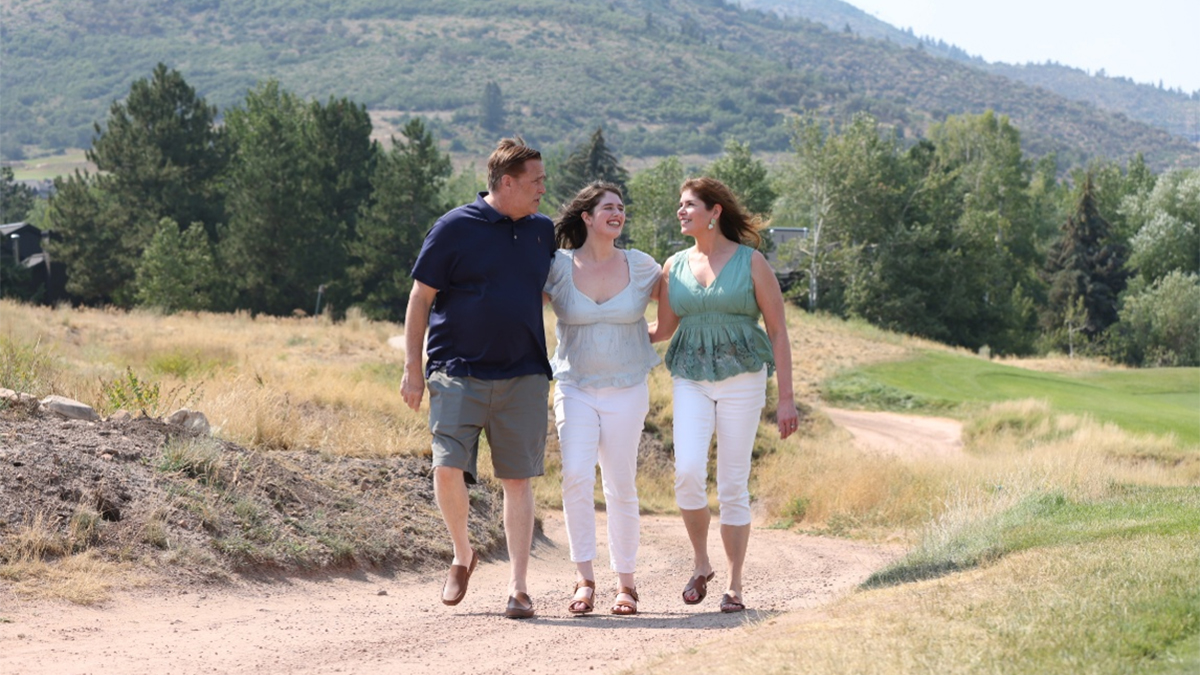
Vivien Knox has lived with epilepsy her entire life. Today, the 19-year-old college student studies communication and creative writing, writes short stories, and advocates for greater understanding of epilepsy. But her journey began when she experienced her first seizure at age 2.
Because her early seizures were not immediately recognizable, Knox wasn’t formally diagnosed until she was 3. Between the ages of 2 and 8, she was frequently in and out of the hospital as doctors worked to manage her seizure activity. She often experienced partial-focal seizures at night or in the morning.
Despite taking several anti-seizure medications, Knox’s seizures continued. Some required rescue medication or a trip to the hospital. Each seizure left her exhausted, with brain fog and memory loss that made it difficult to remember what had happened before the seizure or what she had learned in school.
“I couldn’t be me. I couldn’t live the life that a child should be living,” Knox said.
After trying multiple medications without achieving sustained seizure control, Knox’s doctors diagnosed her with drug-resistant epilepsy. For Knox and her parents, the diagnosis opened the door to exploring treatment options beyond medication.
Finding another treatment option
Knox’s parents and doctors discussed several possibilities, including additional medications and brain surgery. Eventually, one of her doctors recommended VNS Therapy™, an add-on implanted device to reduce seizures for people age 4+ with drug-resistant focal onset seizures.
The VNS Therapy™ device is placed under the skin of the chest and connected to the left vagus nerve in the neck during an outpatient procedure. It delivers mild electrical pulses to areas of the brain associated with seizures.
Knox received VNS Therapy™ at age 8. A few weeks after being implanted, her device was turned on. At first, stimulation felt strange and caused her voice to modulate, but she gradually became accustomed to it.
Not long after implantation, Knox experienced a seizure and used her magnet. Initially, she was upset because she thought the seizure meant VNS Therapy™ would not help. But then she realized something: She remembered the seizure and everything leading up to it. Before receiving VNS Therapy™, she had never remembered her seizures.
Over the next two years, Knox began recovering more quickly after seizures. Instead of feeling groggy for days, she was able to return to her life sooner. Her memory and school performance improved, too.
Turning experience into advocacy
While Knox continues to take one medication, she says her quality of life is significantly different from what it was before VNS Therapy™. Greater control over her seizure activity helped her go from struggling academically to becoming an honors student with hobbies and extracurricular activities.
Her experiences also shaped her passion for epilepsy advocacy. Growing up, Knox often encountered misconceptions at school. Some teachers assumed she wasn’t applying herself — they didn’t understand how seizures and memory loss affected her ability to learn. She missed school because of seizures and medical appointments, and her family had to advocate for both her education and her safety.
Rather than staying silent, Knox chose to educate others. She spoke with her classmates about epilepsy and seizure first aid, discovering that many of them had relatives or friends with epilepsy but had never learned about the condition.
Knox and her parents also supported California Assembly Bill 1810, which established requirements for epilepsy training and seizure recognition in schools. Today, she has seen teachers become more informed and more likely to ask about her VNS Therapy™ device and seizure action plan.
Knox encourages people living with epilepsy to work with their healthcare providers to find the treatment approach that best supports their quality of life. She also hopes people will ask questions, listen to those with epilepsy, and remember that no two people experience the condition in the same way.
To learn more about VNS Therapy™, visit VNSTherapy.com/safety