
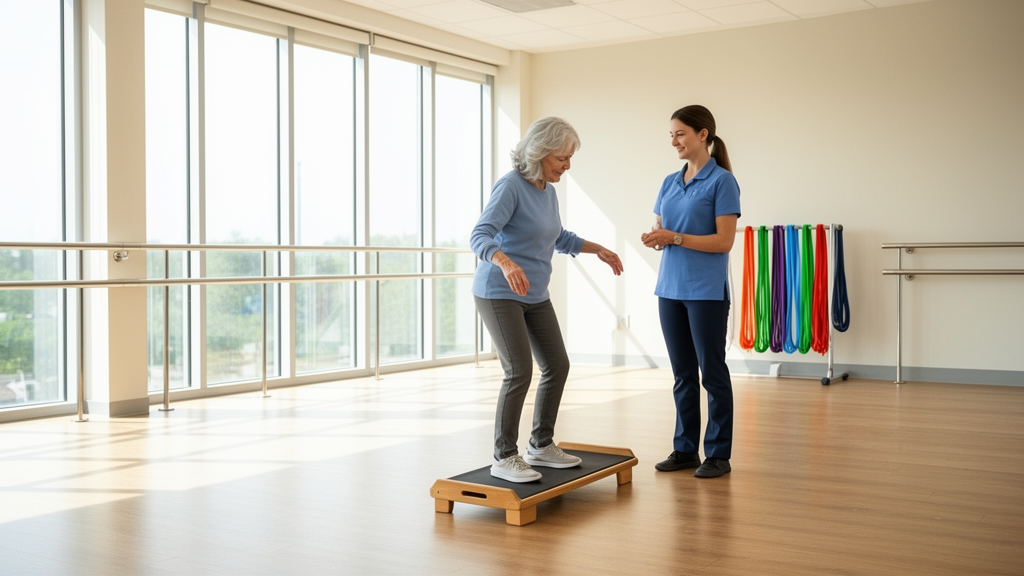
Structured exercise interventions produce statistically significant and clinically meaningful improvements in physical function and quality of life among individuals living simultaneously with multiple long-term conditions and frailty, according to a systematic review and meta-analysis published in eClinicalMedicine. Analyzing data from 30 randomized controlled trials encompassing 3,684 participants, investigators examined how structured movement regimens influence individuals navigating both chronic illness and decreased physiological reserve. The global prevalence of multiple long-term conditions—defined as the coexistence of two or more chronic physical, mental, or long-duration infectious conditions—is estimated at approximately 37 percent and continues to rise amid population aging and socioeconomic inequality. Frailty, characterized as a multidimensional syndrome of decreased physiological reserve that heightens susceptibility to minor health stressors, affects between 12 and 24 percent of the global population and frequently co-occurs with multimorbidity.
Although multiple long-term conditions and frailty represent interrelated and bidirectional constructs, they are not synonymous phenomena in clinical practice. Clinical guidance increasingly emphasizes that the clinical management of multimorbidity must explicitly integrate the assessment and management of frailty. Historically, therapeutic strategies directed at multiple long-term conditions have prioritized disease self-management, treatment burden mitigation, and care coordination, whereas frailty interventions have placed primary emphasis on physical resilience, capacity preservation, and everyday independence. Because each additional chronic condition significantly increases the odds of frailty, identifying whether targeted physical activity interventions can simultaneously address both challenges has emerged as an urgent priority for healthcare systems.
To evaluate the contemporary evidence base, the research team prospectively registered a systematic review protocol on PROSPERO and systematically searched ten major biomedical and scientific databases—including MEDLINE, EMBASE, CINAHL, Web of Science, Sport Discus, PsycINFO, PEDro, AMED, CENTRAL, and Scopus—from January 1, 2000, through June 30, 2026. This timeframe was established because frailty was not broadly recognized as a distinct clinical entity prior to 2000. Eligible studies were restricted to randomized controlled trials involving adult populations aged 18 years or older where at least 50 percent of the study cohort lived with both multiple long-term conditions and frailty, verified through validated frailty assessment tools or functional proxies with established clinical cut-offs. The review considered physical activity, structured exercise, and sedentary behavior interventions delivered across any setting or mode, provided the intervention lasted at least one week and evaluated chronic adaptations rather than immediate, acute physiological responses.
Across the 30 included randomized controlled trials, 29
Across the 30 included randomized controlled trials, 29 employed individual participant-level randomization, while one study utilized a cluster-randomized design. Study cohorts displayed a median sample size of 71 participants, with interquartile ranges spanning 48 to 221 individuals. In total, the pooled trials recruited 3,684 participants with an average age of 74 years, and women constituted 71 percent of the collective population, in part because five individual trials recruited female cohorts exclusively. Reporting on broader demographic characteristics was notably sparse across the compiled evidence base; 23 trials omitted participant ethnicity entirely, while the seven studies that reported race indicated that 73 percent of participants were White. Thirteen studies recorded educational attainment, indicating that 42 percent of participants had completed university-level education. Control conditions primarily consisted of usual medical care with routine activities in 21 trials, general health education in eight trials, and a wait-list control design in one trial.
The vast majority of evaluated protocols examined multicomponent structured exercise regimens incorporating progressive resistance training, aerobic conditioning, balance drills, and flexibility exercises. Aerobic modalities commonly included treadmill walking or cycle ergometry, whereas resistance training utilized elastic resistance bands, weight machines, or bodyweight exercises adjusted through perceived exertion scales or repetition maximum calculations. Four distinct studies focused entirely on aerobic training, four evaluated isolated resistance training protocols, and three examined specialized movement modalities, including line dancing, Tai Chi combined with hydrotherapy, and Sign Chi Do. In contrast to the abundance of structured exercise investigations, only a single randomized controlled trial explicitly tested an intervention targeted at reducing sedentary behavior, which evaluated standing weight-transfer exercises delivered alongside health education and scheduled telephone support. Program adherence was documented across 17 studies, ranging from 46 to 98 percent.
The meta-analysis of primary outcomes demonstrated substantial improvements in physical function across intervention arms compared to control groups. Pooling 21 trials comprising 1,802 participants using a random-effects model yielded a statistically significant standardized mean difference of 0.78, with a 95 percent confidence interval ranging from 0.54 to 1.02. When back-transformed to aid clinical interpretation using the most frequently reported measurement scale, this effect equated to an average improvement of 2.20 seconds on the Timed Up and Go test relative to control participants. Secondary analyses of specific functional measures similarly demonstrated positive intervention effects across the Short Physical Performance Battery, six-minute walk distance, habitual gait speed, handgrip strength, and repeated sit-to-stand performance tests. Between-study statistical heterogeneity was substantial for the pooled physical function outcome, recording an I-squared value of 81.22 percent.
Post-hoc meta-regression analyses explored potential sources of between-study
Post-hoc meta-regression analyses explored potential sources of between-study variability, revealing that intervention duration accounted for approximately 12 percent of the variance and exercise intensity accounted for 7 percent, while other covariates—such as participant age, sex distribution, delivery setting, and provider type—did not account for the observed heterogeneity. Sensitivity analyses evaluating an alternative hierarchical selection of functional tests confirmed the robustness of the primary result, yielding a standardized mean difference of 0.79 with a 95 percent confidence interval between 0.57 and 1.01. Publication bias assessments for physical function via Egger’s regression test indicated slight asymmetry, though sensitivity analyses using trim-and-fill techniques suggested that small-study effects did not alter the fundamental direction or clinical significance of the primary findings.
Quality of life, the co-primary outcome of the investigation, was assessed across 14 trials using generic instruments—such as the EQ-5D, Short Form-12, Short Form-36, and Sickness Impact Profile—or disease-specific questionnaires. Meta-analysis of six trials reporting suitable data from 760 participants revealed a statistically significant pooled standardized mean difference of 0.31, with a 95 percent confidence interval of 0.04 to 0.59. This pooled effect translated to a 0.73-point increase on the EQ-5D index scale compared to control groups, alongside significant positive shifts in the Short Form-36 physical functioning domain and physical component summary scores. However, statistical heterogeneity across quality of life trials was moderate to high, registering an I-squared value of 66.66 percent. When sensitivity analyses excluded two trials deemed to have a high overall risk of bias, the effect size remained comparable at 0.33, though the wider confidence interval crossed null boundaries, yielding a p-value of 0.08.
Secondary outcome analyses revealed that structured exercise interventions successfully increased overall physical activity levels, producing a statistically significant standardized mean difference of 0.73 with a 95 percent confidence interval from 0.40 to 1.06, equivalent to an improvement of 82 metabolic equivalent of task minutes per week. Regarding body composition parameters, interventions achieved a non-significant reduction in absolute fat mass of 1.78 kilograms, representing a standardized mean difference of minus 0.25 with a 95 percent confidence interval of minus 0.53 to 0.03. Analysis of lean mass and fat-free mass showed a non-significant mean gain of 0.97 kilograms, while total muscle mass showed a non-significant increase of 0.36 kilograms relative to controls, indicating that while structured exercise preserves function, it may not produce substantial anthropometric remodeling in this frail cohort.
Methodological quality assessments conducted under the Cochrane Risk
Methodological quality assessments conducted under the Cochrane Risk of Bias 2 tool indicated that among trials reporting physical function, 52 percent exhibited moderate concerns and 47 percent exhibited high risk of bias, with only one study judged to have a low risk of bias. The predominant drivers of bias were missing outcome data, observed in 45 percent of trials, and deviations from intended interventions, observed in 24 percent. Evaluation under the Grading of Recommendations Assessment, Development and Evaluation framework determined that the overall certainty of the body of evidence ranged from low to very low across all primary and secondary outcomes, driven down by methodological bias, indirectness, and statistical imprecision. Investigators emphasized that future clinical trials must expand beyond structured gym-based regimens to evaluate habitual movement and sedentary behavior displacement while actively recruiting socially and ethnically diverse cohorts.
Subject of Research: Structured exercise and physical activity interventions for adults living with multiple long-term conditions and frailty
Article Title: The effects of physical activity and sedentary behaviour interventions on health-related fitness and quality of life in people living with multiple long-term conditions and frailty: a systematic review and meta-analysis
Article References: Vadaszy, N., Fisher, L., Billany, R
Article References: Vadaszy, N., Fisher, L., Billany, R. E., Hong, A., Gray, L. J., Henson, J., Dempsey, P. C., Willis, S. A., Curtis, F., Greenwood, S. A., Herring, L. Y., Highton, P., Kelsey MNutr, R. J., Lock, S., March, D. S., Patel, K., Sargeant, J., Sathanapally, H., Sayer, A. A., … Young, H. M. L. (2026). The effects of physical activity and sedentary behaviour interventions on health-related fitness and quality of life in people living with multiple long-term conditions and frailty: a systematic review and meta-analysis. eClinicalMedicine, 102, Article 104323. https://doi.org/10.1016/j.eclinm.2026.104323
DOI:10.1016/j.eclinm.2026.104323
Keywords: multimorbidity, frailty, physical activity, structured exercise, systematic review, meta-analysis, randomized controlled trials, quality of life, physical function, timed up and go, short physical performance battery, sedentary behaviour, rehabilitation, geriatric health, chronic disease management, exercise therapy
News. Exercise Interventions Improve Physical Function and Quality of Life in Frail Multimorbidity. Scienmag