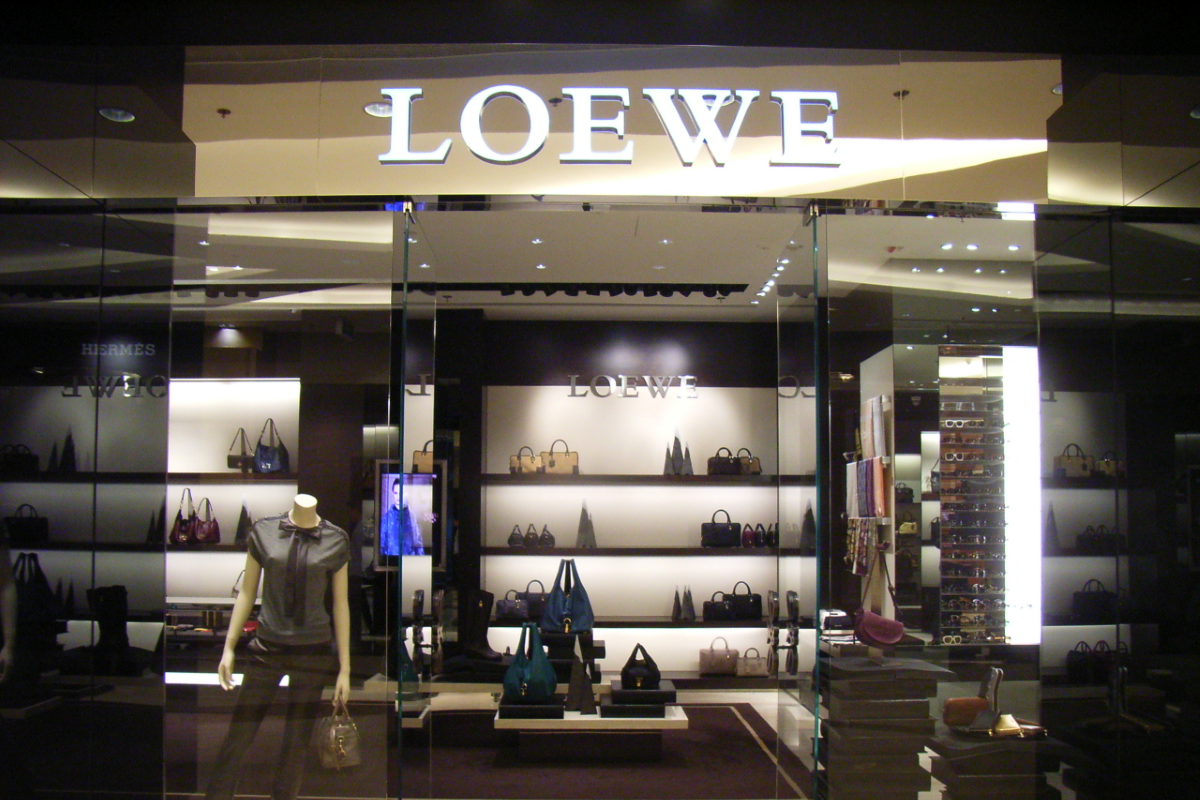
Loewe has successfully defended its Whisker handbag against a copyright infringement claim brought by Amsterdam-based accessories label Wandler, after a Dutch court rejected the rival brand’s request to block sales of the luxury house’s design in the Netherlands. The dispute centred on similarities between Loewe’s Whisker and Wandler’s earlier Ida handbag. Although the court recognised copyright protection for the Ida’s combination of design features, it found insufficient grounds to conclude that Loewe had infringed those rights.
The Amsterdam District Court delivered its decision on 11 November 2026, following Wandler’s application for urgent legal measures. However, the outcome was not entirely one-sided, as Loewe also failed to establish its counterclaim against the smaller label. The ruling concerned preliminary injunction proceedings rather than a final determination following a full trial.
Why Did Wandler Accuse Loewe of Copying Its Handbag?
Wandler’s Ida bag formed part of its autumn 2025 collection and was designed by the brand’s founder alongside an assistant. According to the court judgment, it was presented to buyers in Paris in January 2025 and during New York Fashion Week in February, before appearing at the brand’s Paris fashion show in May. The first Ida bag was sold on 4 July 2025. Loewe presented its Whisker during Paris Fashion Week in March 2026, with the design subsequently launched globally in August.
Wandler argued that Loewe had reproduced a combination of 10 creative design choices from the Ida, including its curved silhouette, shaped sides, upper edges and distinctive overhanging zip elements. The label sought to prevent Loewe from selling the Whisker in the Netherlands and requested information about its production and sales. The court recognised copyright protection for the combination of the 10 features, finding that their arrangement reflected the designer’s free and creative decisions. However, it left open whether the individual elements were independently protected.
Why Did the Court Reject Wandler’s Copying Claim?
Despite recognising the Ida’s copyright protection, the court found insufficient grounds to conclude that Loewe had reproduced its protected creative expression. It identified differences in the Whisker’s construction, including its more pronounced waist and asymmetrical shape, which causes the bag to tilt forwards.
The court also questioned Loewe’s claim that it had been unfamiliar with Wandler’s work, finding it implausible that the luxury house had been entirely unaware of the smaller label. However, it did not need to establish whether Loewe had drawn inspiration from the Ida or developed the Whisker independently. Wandler’s request for an injunction was consequently rejected, allowing Loewe to continue selling the Whisker in the Netherlands at this stage.
Loewe Also Loses Its Counterclaim Against Wandler
Loewe had separately accused Wandler of infringing its copyright in an overhanging zip-strip design used in earlier handbags, including the Madrid and Strip Shoulder Bag. It sought restrictions on Wandler’s use of the disputed elements across the European Union. The luxury house also asked the court to prevent Wandler from publicly suggesting that Loewe had copied the Ida. Both requests were rejected.
The court found that Wandler had made its own creative choices in shaping the zip detail, including its curve, overhang and rounded ends. It also declined to restrict the brand’s public statements, noting that Wandler had not made such allegations outside the proceedings and that there was no reason to expect it would do so. Wandler and its associated company were held jointly and severally liable for Loewe’s €2,101 (£1,757) legal costs. Costs relating to Loewe’s counterclaim were assessed at zero.
Wandler Is Considering Its Next Legal Move
Wandler described the outcome as mixed, welcoming the recognition of copyright protection for the Ida while disagreeing with the court’s infringement assessment. Speaking to FashionUnited, chief executive Joost Doeswijk said the company believed the similarities between the designs should have carried greater weight. Wandler said it was reviewing the judgment with its legal advisers and considering possible next steps, including an appeal, although no final decision had been announced in the latest report.
The dispute highlights the limits of copyright protection in fashion. A handbag design can qualify for protection because of its original combination of features without automatically preventing competitors from using similar elements. The central question remains whether the protected creative expression has been recognisably reproduced.