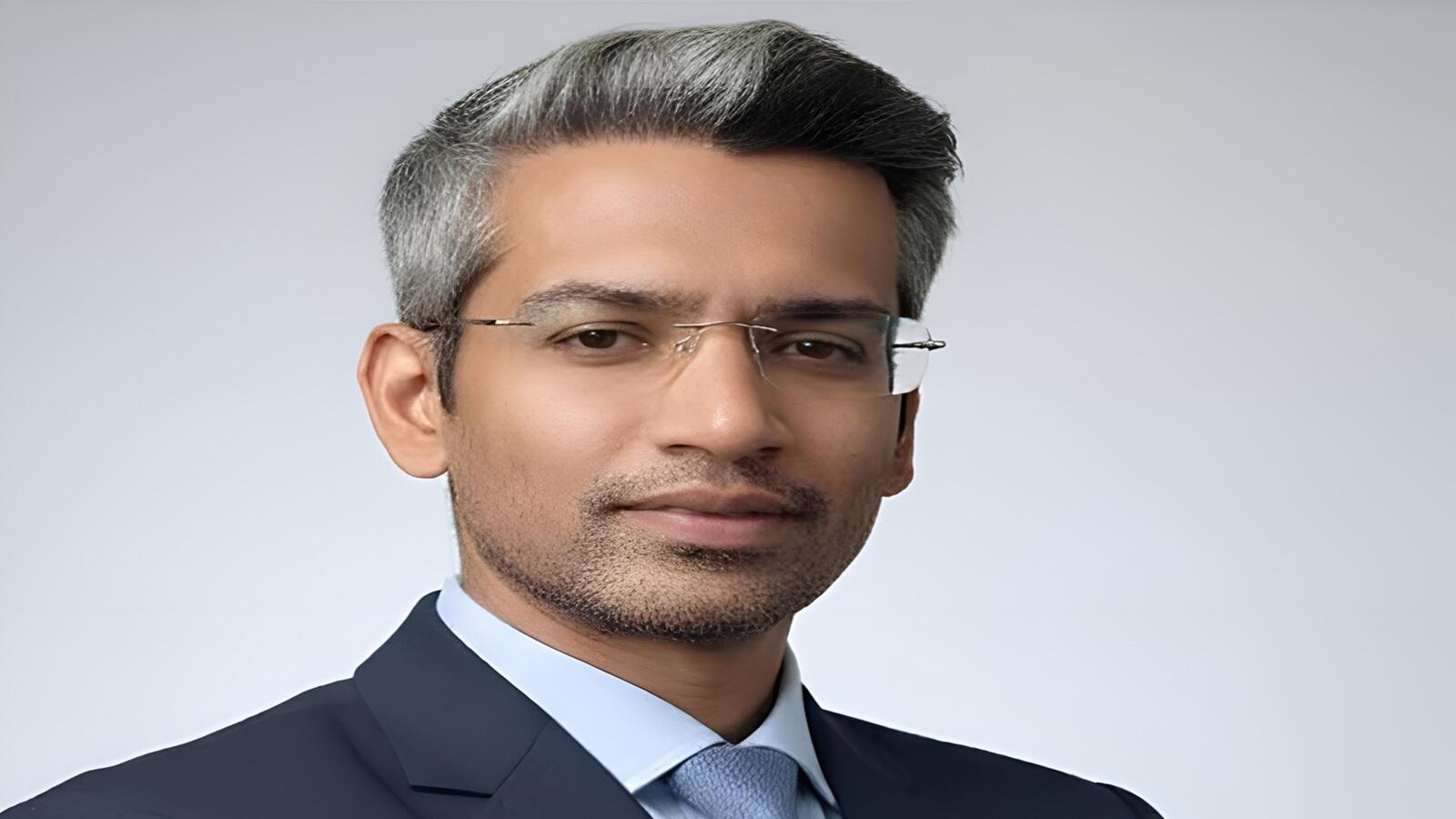
Arjit Shukla, Head of Business (Enterprise), Cult for CorporatesBy Arjit Shukla If you look at India’s urban landscape today, you would be forgiven for thinking we are in the middle of a fitness revolution. Smartwatches blink on every second wrist, longevity podcasts top the charts, preventive blood panels are booked on apps, and modern gyms and sports arenas—including cult.fit—are steadily reshaping metro neighbourhoods.
Awareness has never been higher.Yet, look at actual sustained physical activity across urban India, and a stark contradiction emerges: we know more about health than ever before, and we are struggling harder than ever to stay active. Market estimates put overall paid fitness penetration at under 1 percent.To understand why, we need to stop viewing fitness as a lifestyle choice and look at it through an economic lens.
The human body is an asset on a personal balance sheet. Over a lifetime, individuals constantly value, buy, hold, or sell this asset based on time, maturity, social conditioning, and immediate priorities. India’s silent fitness gap is not an information deficit; it is a capital-allocation and institutional-design failure driven by six distinct behavioural and structural traps.First is the illusion of baseline fitness.
A large section of urban India genuinely believes
A large section of urban India genuinely believes it is already fit. A 20-minute evening stroll in the apartment garden, walking from basement parking to the office lift, or climbing two flights of stairs gets mentally logged as exercise. Because metabolic decline is silent until a lipid profile or HbA1c test flashes red in our late thirties, we confuse the absence of immediate illness with physical conditioning.
In financial terms, nobody deploys capital to repair an asset they do not realise is depreciating.Second is the status-asset crowding-out effect. In our twenties and early thirties, ambitious Indians are cash-poor and time-rich, so we aggressively short our own biology—taking it entirely for granted—to fund career and social velocity. As the great Indian middle class crosses into upper-middle income, newfound surplus money and attention flow first into socially legible assets: the 3 BHK in an upcoming corridor, the upgraded SUV, fine dining, travel built for social validation, and an aggressive mutual fund SIP book—or crypto book, depending on which city you work in.
Financial and real-estate assets offer instant mark-to-market validation at a dinner party and dominate conversations at family tea gatherings with parents, aunties, and uncles; cardiovascular endurance does not.By the time a 38-year-old becomes a VP of Engineering and finally decides to prioritise health, they hit a brutal time-liquidity crunch. Squeezed between project delivery deadlines, children’s exam cycles, and family responsibilities, they have the money to buy fitness, but they are bankrupt on hours.
You can get a ₹3 crore home loan
You can get a ₹3 crore home loan for a luxury apartment sanctioned in an afternoon, but you cannot lump-sum buy back a decade of missed physiological compounding. Health, unfortunately, cannot be banked—or, fortunately, imagine the repo if it could.Third is the measurement trap. Much of today’s booming health awareness stops at passive consumption. Buying a wearable tracker, debating macros over coffee, or running an annual diagnostic check creates the psychological comfort of action without the physical cost of exertion.
Urban Indians are mistaking tracking the asset for investing in it—treating fitness like a periodic audit rather than a daily systematic investment plan.Fourth is our cultural framing of fitness as episodic heroics rather than an everyday norm. For decades, mass fitness waves in India were triggered by rare theatrical spectacles—Salman Khan taking his shirt off on screen in the late nineties, or Hrithik Roshan transforming for an action blockbuster.
That framing turns fitness into a superhero stunt: extreme, aspirational, and temporary. Contrast this with how fitness became a mass middle-class habit in the United States during the 1980s and 1990s. Arnold Schwarzenegger and Sylvester Stallone were the Hollywood equivalents of Bollywood action stars, yet what actually drove everyday gym penetration across suburban America was ubiquitous, regular pop culture—weekly television like Baywatch and WWF, beach culture, and mainstream lifestyle media—that made physical aesthetics an everyday social baseline rather than a movie-star miracle.
India has plenty of cinematic aspiration, but very
India has plenty of cinematic aspiration, but very little everyday visual reinforcement.Fifth, even when intent finally arrives, execution runs straight into an infrastructure and friction tax. Broken footpaths, peak-hour traffic crawls, and sparse neighbourhood facilities turn a 45-minute workout into a two-hour logistical ordeal. There are unmistakable green shoots—better-standardised gyms, pickleball and football arenas, and structured training studios are expanding across Indian cities.
Still, until proximity strips away the daily commute tax, willpower will keep losing to fatigue after a ten-hour workday.Sixth is the institutional co-investment vacuum. In developed economies, individuals rarely carry the entire financial and behavioural burden of staying fit alone. Nearly 75 percent to 80 percent of large employers across the US and UK actively fund workplace health and wellbeing programmes, using multi-venue aggregators like Wellhub (formerly Gympass) and ClassPass to subsidise access and nudge daily habit formation.
In a market where overall paid fitness penetration remains stuck in the sub-1 percent bracket, Indian corporate co-investment is heavily under-indexed: outside a handful of global capability centres and large tech firms, fewer than 10 percent of eligible enterprises subsidise active fitness memberships. Most Indian employers still treat health as reactive insurance—paying for hospitalisation after breakdown rather than subsidising prevention before it.Ultimately, India has not yet tied physical intensity to economic competitiveness.
Consider the transformation of the Indian cricket team
Consider the transformation of the Indian cricket team over the last twenty years. Two decades ago, physical conditioning was treated as optional overhead compared to raw batting talent. Everything changed when competing head-to-head with Australia and South Africa forced the team to dive on hard outfields, convert ones into twos, and survive a relentless year-round calendar.
Making fitness non-negotiable competitive infrastructure unlocked both player longevity and the commercial juggernaut Indian cricket is today. Today’s ICC cricket calendar—even without the singular, god-like superstars of a bygone era—is a far fitter, faster, and more compelling commercial product.Corporate India is standing at that exact inflection point. Our workforce is competing in a 24/7 global economy—building for the world out of capability centres and high-velocity enterprises—while running on a 1990s personal health operating system.
Closing the silent fitness gap requires a fundamental shift in how we price time and capital: treating physical conditioning not as a late-life luxury purchase after the house and portfolio are built, but as the foundational asset that makes every other return possible.The author, Arjit Shukla, is Head of Business (Enterprise), Cult for Corporates.DISCLAIMER: The views expressed are solely of the author and ETHRWorld does not necessarily subscribe to it.
ETHRWorld will not be responsible for any damage caused to any person or organisation directly or indirectly.