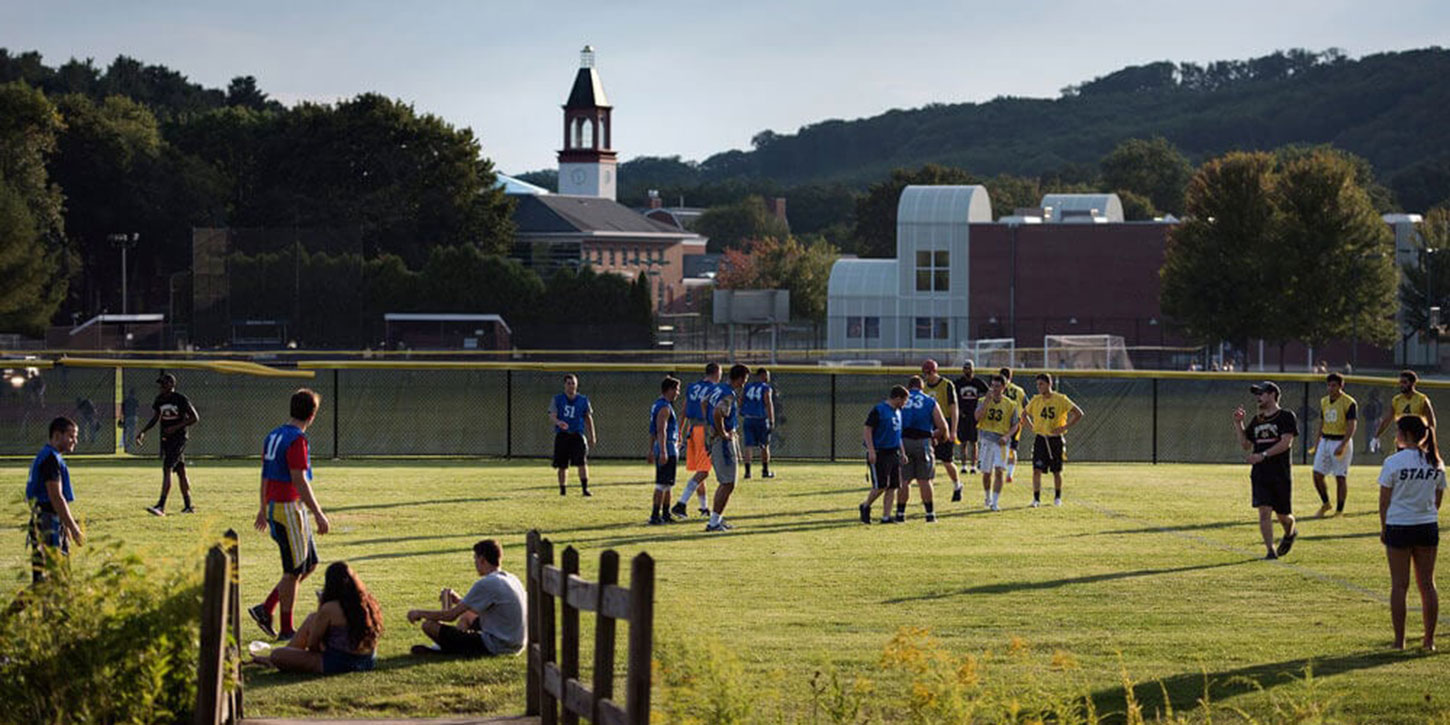

From connected fitness equipment to automated reporting, technology helps campus recreation departments streamline operations and make more informed decisions.
Campus recreation professionals have no shortage of responsibilities. Between managing facilities, overseeing staff, maintaining equipment, coordinating programs and meeting student expectations, there are countless moving parts to keep a rec center running smoothly.
Technology can help but with limited budgets, competing priorities, and a growing selection of software and equipment, determining which investments will make the biggest difference isn’t always straightforward.
For campus rec leaders, the opportunity lies in finding technology that solves everyday operational challenges, connects information across departments and provides data that can guide decisions.
According to Thomas Meury, the product manager
According to Thomas Meury, the product manager of digital solutions at Life Fitness, one of the biggest developments in facility operations is the growing adoption of connected equipment and digital ecosystems.
“Historically, operators had limited visibility into what was happening on their fitness floor unless staff were physically present,” said Meury. “Today, connected equipment can automatically provide real-time insights into utilization, equipment status and member activity.”
These capabilities are changing how rec departments approach everything from staffing and maintenance to purchasing and long-term facility planning.
Where Technology Is Making an Impact
While connected fitness equipment is one area
While connected fitness equipment is one area of innovation, technology is improving operations throughout campus rec facilities.
At CENTERS, technology supports a wide range of campus rec responsibilities, including memberships, facility access, program registration, rentals and retail sales.
Julie Ray, the systems and operations manager at CENTERS, said the organization has been moving away from paper forms, stand-alone spreadsheets and processes that require employees to enter the same information in multiple places.
We still use spreadsheets for things like planning
“We still use spreadsheets for things like planning and data mapping,” said Ray. “The trouble starts when a spreadsheet becomes the only place a team can see who’s registered, what’s been paid or whether a space is available.”
Membership and recreation management platforms can help address those challenges by centralizing member records, eligibility, guest passes, program registration, rentals and sales.
CENTERS has used platforms including Daxko’s CSI Spectrum and RecAutomation and is currently implementing DoubleSpot, a newer recreation management system with an AI focus.
Ray explained how other technologies are helping simplify
Ray explained how other technologies are helping simplify daily operations. ID scanners and integrated access control systems allow employees to verify eligibility, monitor check-ins and manage who can enter particular spaces. Mobile applications can provide access through barcodes and geolocation capabilities, while restrictions on duplicate check-ins can help prevent misuse.
Online payment systems and member portals offer additional convenience, allowing students to register for programs, manage their accounts and complete transactions without visiting the front desk.
Meanwhile, project management platforms can help departments coordinate work that might otherwise require multiple emails, spreadsheets or manual follow-ups.
CENTERS uses Monday.com to manage assignments, deadlines
CENTERS uses Monday.com to manage assignments, deadlines and workflows for annual surveys, maintenance requests, employee onboarding and reporting. SharePoint provides a centralized location for procedures, templates and training materials.
These applications illustrate how operational technology extends well beyond the fitness floor. The benefits can reach nearly every department responsible for delivering recreation services.
Turning Information Into Action
One of the advantages of connected technology is the ability to provide campus rec operators with information they can use to guide decision-making.
For instance, check-in data can reveal which hours experience the highest demand, helping managers determine when additional staffing may be necessary or whether facility hours should be adjusted.
Registration and waitlist information can identify popular programs,
Registration and waitlist information can identify popular programs, allowing departments to evaluate whether to add another section, change the schedule or reconsider offerings that aren’t attracting participants.
For equipment management, connected technology provides another layer of insight.
Meury explained how connected fitness equipment can supply utilization data, equipment status information, service notifications and performance trends. This information can help operators determine how equipment is being used, identify maintenance needs and make more informed purchasing decisions.
For example, understanding which machines experience the heaviest use can help directors evaluate equipment placement and future capital investments. Monitoring equipment health can also provide greater visibility into service needs.
Want to learn more about Life Fitness Digital Solutions? Visit Life Fitness / Hammer Strength’s website now.
However, having access to data doesn’t necessarily mean departments are getting the most from it.
One challenge CENTERS has encountered is that standard
One challenge CENTERS has encountered is that standard reports within rec management systems don’t always answer the specific questions operators need to ask.
Ray said employees often have to export information into Excel, combine multiple reports and adjust filters or formulas just to answer a question.
Repeating those processes takes time and introduces opportunities for error.
“Teams find a way to make it work, but repeating those steps every month takes time and creates room for error,” said Ray. “Two people can start with the same data and end up with different numbers because they filtered it differently.”
As part of its DoubleSpot implementation, CENTERS
As part of its DoubleSpot implementation, CENTERS is developing custom reports around specific operational decisions. These include examining hourly check-ins to guide staffing, tracking registration trends to evaluate programming and comparing participation with revenue when considering pricing.
For campus rec leaders, this raises an important question: Are departments collecting information simply because the technology allows it, or is that information helping make better decisions?
Overcoming the Challenges of Implementation
Introducing new technology isn’t always easy. Meury noted that many recreation departments have accumulated separate systems over time to address individual operational needs. One platform may handle facility access, another manages reservations and a third tracks maintenance.
When those systems don’t communicate, staff can struggle to obtain a complete picture of facility operations.
Incomplete or inconsistent data can further complicate matters
Incomplete or inconsistent data can further complicate matters. If equipment isn’t connected, information isn’t captured consistently or reports require extensive manual manipulation, operators may have difficulty trusting the results.
Staff adoption presents another challenge. Campus rec departments regularly hire and train student employees, making user-friendly technology particularly important. Complicated software can create additional training demands, and employees may rely on only a handful of familiar functions while other useful capabilities go unused.
Simplifying routine tasks — like checking in members, processing registrations and generating reports — can make technology easier to teach and use consistently.
Ray recommends designating a technology lead at each
Ray recommends designating a technology lead at each location and involving that person early in implementation.
While a central office can coordinate timelines, training and vendor support, employees working at individual facilities understand the everyday challenges, exceptions and workflows new systems have to accommodate.
Testing those scenarios before implementation can help departments identify problems. For example, operators should understand how a system handles a failed payment, processes a refund or manages a rental that needs to be rescheduled after payment. They should also verify how those transactions appear in financial reports.
Budget limitations add another consideration
Budget limitations add another consideration. Technology investments must compete with staffing, equipment replacement, facility maintenance and other priorities, making it important to understand the expected operational benefits before committing relves, automation and AI are creating additional possibilities for campus recreation operations
Many departments already use automation to streamline repetitive work, including reporting, maintenance requests and administrative workflows.
Connected equipment can also automate parts of equipment monitoring, reducing the need for staff to manually gather usage and service information.
AI could expand those capabilities
AI could expand those capabilities. Meury sees potential applications in identifying utilization trends, predicting maintenance needs, automating reporting and highlighting information that operators might otherwise overlook.
However, AI’s role in facility operations is still developing. For campus rec leaders, the immediate opportunity may be identifying existing processes that consume unnecessary staff time.
Automating a recurring report or simplifying an employee onboarding process may provide a more practical starting point than implementing an entirely new AI platform.
The important consideration is whether the technology improves
The important consideration is whether the technology improves a process and gives employees more time to focus on other responsibilities.
Making Technology Work for Your Department
Campus rec leaders have a wide range of available tech options, making it difficult to know where to start.
Meury recommends identifying an operational challenge before selecting the technology intended to address it.
For one department, that might mean reducing the administrative time required to manage registrations. For another, it could involve improving equipment availability, understanding facility utilization or gathering more reliable information for budget discussions.
Once the challenge is identified, operators can evaluate whether existing systems offer an underused solution or whether an additional investment is necessary.
Connectivity should also be a priority
Connectivity should also be a priority. Systems that share information can provide a more complete understanding of operations than individual platforms operating independently.
Equally important is involving the employees who will use the technology. Frontline staff can identify potential challenges that may not be apparent during a software demonstration, while designated technology leads can help ensure new processes are implemented consistently.
Departments should also establish how they will evaluate success. Depending on the investment, that might involve tracking administrative time, equipment availability, reporting accuracy, staff adoption or student participation. And improvements don’t need to happen all at once.
Small improvements that solve real operational challenges can
“Small improvements that solve real operational challenges can create momentum and build support for larger technology initiatives in the future,” said Meury. “Take it slowly, look for problems to solve that can show the power of technology and build on that success.”
Ultimately, the effectiveness of operational technology should be measured by what it enables a recreation department to accomplish.
A more efficient registration process makes it easier for students to participate. Better utilization data helps managers allocate staff and rent availability, while integrated reporting can give directors greater confidence in their decisions
As campus recreation departments continue balancing growing expectations with limited re operate. The challenge for leaders is determining where those improvements will have the greatest impact — and making sure the systems they invest in deliver it