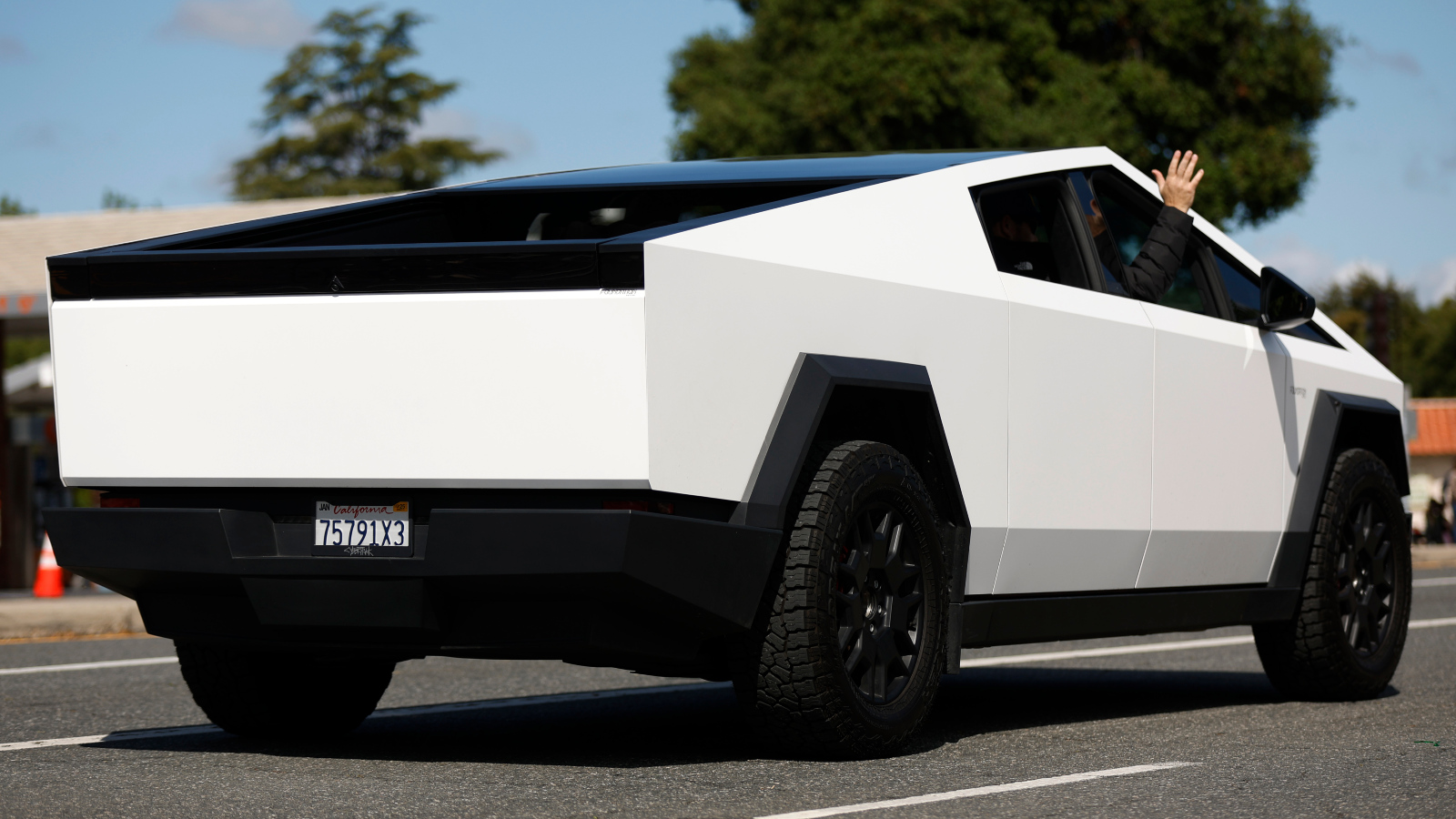
One Cybertruck owner towed a camper 6,000 miles and unhitched just once, but realized pushing 70 mph actually made his trip slower than cruising at 55 mph, and why he told a Silverado driver not to sell his gas truck.
Advertising
After logging 6,000 miles towing a travel trailer across North America behind his Tesla Cybertruck, one owner discovered that electric road-tripping flips conventional highway math upside down. Instead of saving time on the interstate, pushing 70 mph actually added minutes to his total travel clock.
Fred, sharing his trip log on an owner forum, documented two major journeys pulling his Safari Condo Alto A2124 camper: a 1,000-mile run from Quebec City to Richmond, Virginia, followed by a 5,000-mile loop through Yellowstone and Grand Teton National Parks in Wyoming.
To make the trip work without turning every
To make the trip work without turning every day into a marathon at charging stations, Fred had to break a deeply ingrained highway habit.
https://www.cybertruckownersclub.com/forum/threads/towed-camper-6-000-miles-w-cybertruck-here-is-what-i-learned.25024/
“Charging takes time so if you drive 70 instead of 60, in an hour you have gone 10 minutes further but added 15 minutes to your charging time. Interstates suck life and range. Back roads and secondary roads give way more range and scenery.”
For EV towing, that tradeoff matters because every extra mile per hour increases aerodynamic drag while also increasing how often you will need to stop and charge.
Why Aerodynamics Matter More Than Weight
In real-world EV towing, trailer height and frontal area punish range far harder than raw pounds. While Fred’s combined truck-and-trailer rig tipped a commercial scale at just over 10,000 pounds while he dialed in his Fastway e2 weight-distribution hitch, the Cybertruck itself accounts for roughly 6,800 pounds of that figure. His Alto A2124 camper carries a factory dry weight of around 2,550 pounds (weighing just over 3,000 pounds loaded with water and gear) and uses a sloped, retractable roofline that keeps the trailer tucked close to the truck’s aerodynamic wake.
Independent benchmarks show sleek low-profile trailers like
Independent benchmarks show sleek low-profile trailers like a 4,500-pound Airstream Sport averaging around 521 Wh/mile behind a Cybertruck, whereas blunt-nosed, full-height travel trailers regularly burn 780 to 1,000+ Wh/mile at highway speeds. In the same forum thread, other Cybertruck owners pulling boxy enclosed cargo trailers at 65 to 85 mph reported burning 900 to 1,100 Wh/mile, and even more on steep mountain passes.
6,000-Mile Cybertruck Towing Snapshot
-
Total Distance: 6,000 miles (1,000 mi Quebec to Virginia; 5,000 mi Yellowstone and Grand Teton)
- Advertising
Combined Scale Weight: 10,000+ lbs (Cybertruck plus ~3,000-lb loaded Alto A2124 camper)
-
Average Efficiency: 602 Wh/mile (1.66 miles per kWh) across both trips
-
Usable Range Math: ~195 to 204 miles (100% to 0%), or 140 to 150 miles between typical charging stops
-
Longest Single-Charge Leg: 180 miles (reached three times on non-interstate routes in KY, WV, and WY)
-
Unhitching Count: 1 time in 6,000 miles (Sheridan, Wyoming)
To keep his consumption locked at 602 Wh/mile across two vastly different routes, Fred followed a strict efficiency routine:
-
Chill Mode and Zero-Brake Driving: He kept the truck in Chill Mode, aired up all truck and trailer tires to lower rolling resistance, and avoided touching the brake pedal unless necessary so regenerative braking captured maximum energy.
-
Wind Checks and Drafting: Using the Cybertruck’s onboard weather readout to monitor wind direction, he slowed to 55 mph during crosswinds. In straight headwinds or tailwinds, he occasionally drafted three to five car lengths behind box trucks or fifth-wheel RVs, dropping consumption from 700 to 800 Wh/mile down to under 600 Wh/mile (a tactic he noted requires caution since other drivers rarely appreciate tailgating).
-
Mountain Grade Recovery: Crossing Wyoming’s Big Horn Mountains from Shell (3,000 feet) to over 9,000 feet in 40 miles, the rig used 30% of its battery on the climb. On the 40-mile descent, regenerative braking put 10% back into the pack, leaving a net loss of 20% across 80 miles of mountain towing.
I have seen something similar while towing a Jayco camper with a RiMaverick. Trailer shape mattered far more than trailer weight, and keeping highway speeds near 60 mph had a larger impact on range between chargers than many first-time EV towers expect, cutting my Rided to 1.12 miles per kWh (about 893 Wh/mile) even at modest speeds
Unhitching Once, and Why He Told a Silverado Owner Not to Sell
Despite widespread concern over trailer-unfriendly charging stalls, Fred
Despite widespread concern over trailer-unfriendly charging stalls, Fred unhitched his camper only once across 6,000 miles, at a tight four-stall Supercharger lot in Sheridan, Wyoming, where three other Tesla drivers moved their vehicles to help him fit. When he did need to unhook, he raised the Cybertruck’s air suspension to its Highest Ride Level, which relieved tension on his weight-distribution bars so he could pop them off by hand in seconds.
Still, Fred did not sugarcoat the compromises that come with long-haul EV truck towing:
-
Campgrounds Did Heavy Lifting: Overnight charging at RV sites using Tesla’s Mobile Connector supplied more than one-third of his total energy during the 5,000-mile Western trip.
-
Non-Tesla Chargers Failed: Outside of Superchargers and campground outlets, Fred called third-party charging apps and public stations unreliable during his trip, noting that multiple stations failed to activate or cut off after a minute, while an incompatible adapter setup at a rural Wyoming station nearly melted his extension cable.
-
No FSD and Two Stops a Day: Full Self-Driving (FSD) is completely disabled while towing, leaving only standard Traffic-Aware Cruise Control. Even with a modest goal of 300 miles per day, charger gaps in the rural West (many capped at 150 kW) forced two charging stops on most travel days.
While Tesla’s V4 Supercharger rollout and expanded NACS access have added more pull-through stalls and charging options since Fred logged his trip in late 2024, the underlying physics of electric towing remain unchanged. When another forum member asked whether to sell a gas Chevy Silverado after receiving a Cybertruck order invite, Fred gave a blunt answer:
“If you like to roll and get there, keep it.”
That single line captures the real divide in electric truck towing today. Pushing 70 mph down an interstate turns a road trip into a game of charger leapfrog where every extra mile per hour costs more time at the plug than it saves on the asphalt. Dropping to 55 or 60 mph on two-lane highways and treating overnight RV hookups as your fuel station turns the Cybertruck into a capable cross-country camper hauler, but only if your trailer cuts through the wind and your schedule has room to breathe.
Would you slow down to 55 or 60
Would you slow down to 55 or 60 mph on two-lane back roads to make EV camper towing work, or would you rather keep a gas or diesel truck for long-haul highway trips? Share your towing setup and thoughts in the comments below.
Blake Lowry is a tech forward automotive enthusiast with a background in software development and animation working with clients such as Car & Driver, Hot Wheels, Google, Microsoft and the History Channel where he contributed on various interactive experiences. Blake’s automotive passion is centered around his hands-on experience with electric cars and trucks, alternative/green energy and practical applications in the real world. At Torque News, Blake’s articles focus on Ford F-150 Lightning, Chevrolet Silverado EV, GMC Sierra EV, Rivian R1T, Ford F-150 PowerBoost, Ford Maverick hybrid, Chevy Bolt and Slate Truck coverage.
Read more of Blake’s work on his author profile page.
You can also follow Blake here:
Renders by Blake Lowry.
Automotive News
Electric Vehicle News and Reviews
Pickup Trucks
Tesla
Tesla Cybertruck