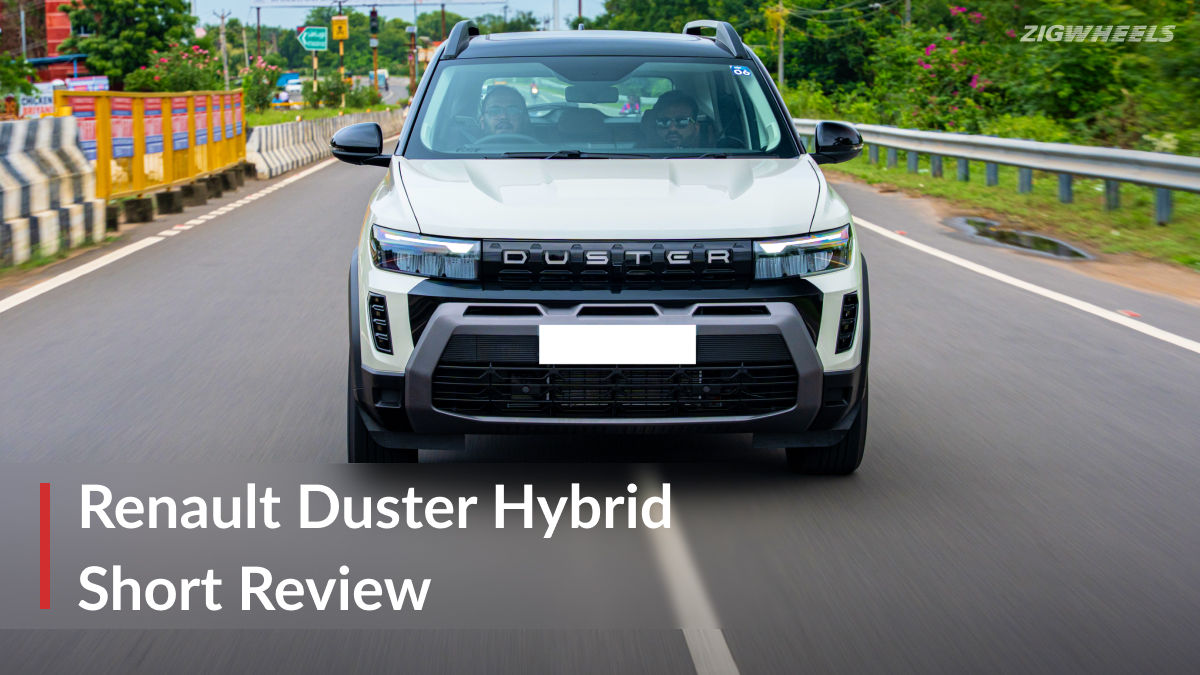
- Published October 28, 2026
- Views : 333
- 4 min read
A hybrid powertrain aims to plug the void left behind by the diesel. Is this the best Duster?
The Duster hasn’t particularly set sales charts ablaze as Renault would’ve hoped. While there’s no denying that the Duster is a phenomenal package for those who love to drive, the Hybrid seems to have started on a diametrically opposite note.
What The Tech?
The tech isn’t as simple as what Suzuki-Toyota or Honda deploy in their mass market hybrid cars. Renault’s globally acclaimed ‘E-Tech’ hybrid makes its India debut with the Duster. The battery pack is substantially larger at 1.4kWh (compared to ~0.7 kWh on the Grand Vitara/Hyryder), which allows the Duster to be in electric-only mode for longer. Also, unlike the other hybrids that have just the traction motor, the Duster E Tech has an integrated starter generator (ISG) and a traction motor.
Another difference is the gearbox. While most hybrids use an eCVT, Renault has developed a unique ‘DHT’ or dedicated hybrid transmission that pairs a 4-speed gearbox (controlled on the engine side with a 2-speed gearbox on the motor’s side to give you a virtual ‘8-speed’ gearbox
On paper, the numbers seem almost paradoxical: 160PS and 29kmpl. How?
Drive Easy!
The Duster Hybrid does have a split personality. It can be punchy and fun or sensible and efficient, depending on what you want. Fire it up, and the Duster starts in pure electric mode. While there’s no fixed pure-electric range, the 1.8-litre petrol engine comes to life very rarely (and very seamlessly at that). When it’s driving on electric horsepower, the Duster feels as quick as any small EV, letting you pick tiny gaps in traffic if needed.
But, surprisingly, the four-cylinder petrol engine is vocal when it powers on. There’s a fair bit of vibration on the floorboard too. These are not unusual for a hybrid powertrain, but Renault could’ve tackled this easily with better insulation.
In the city, I did see dizzying efficiency numbers at the start. However, as I drove through the heart of Chennai city traffic towards the East Coast Road (ECR), the fuel efficiency settled around the 19kmpl mark. When we got 70 odd kilometres under the belt on the ECR itself, the fuel efficiency dropped to around 17kmpl. It is reasonable for you to expect the Duster Hybrid to do anywhere between 700-900 km on a full tank (city efficiency being the higher figure).
This is the true benefit, since a turbo petrol with equivalent performance will struggle to reach even 10kmpl in similar conditions.
For highway runs, there’s no real dearth of power. But under hard acceleration, you can feel the gearbox kick down and also an ‘upshift’ around at 120 kmph. The drivetrain performs best when the electric motor is in play, giving you instant torque for those overtakes.
Renault has introduced FDD (frequency-dependent damping) with the hybrid, and softened the overall setup to be more comfortable than sporty. Overall, the setup continues to be on the firmer side, and remains unfazed by pretty much any surface. The Duster, even in its Hybrid avatar, is among the best riding/most comfortable SUVs over a variety of terrains.
The steering remains quick and predictable, and you could enjoy pushing the Hybrid on a set of twisties if needed. I didn’t get a chance to go corner carving this time round, but my experience with the Duster Turbo in the hills of Dehradun gives me enough confidence in the chassis and its mechanical grip to assume the Hybrid is unlikely to be much different.
Quick Notes:
-
The Hybrid version is 80-110 kg heavier compared to the regular Duster.
-
There’s an ‘E-SAVE’ function that lets you preserve battery charge for later. Good to save battery for city crawls instead of having the engine kick in to charge it up.
The Misses
The pricing is a positive shock. At Rs 19.49 lakh for the top-spec, the Duster Hybrid is only Rs 1 lakh over the top-spec Duster 1.3 Turbo. It seems like a super sweet deal on paper, but go digging through the brochure, and you realise there are a few misses.
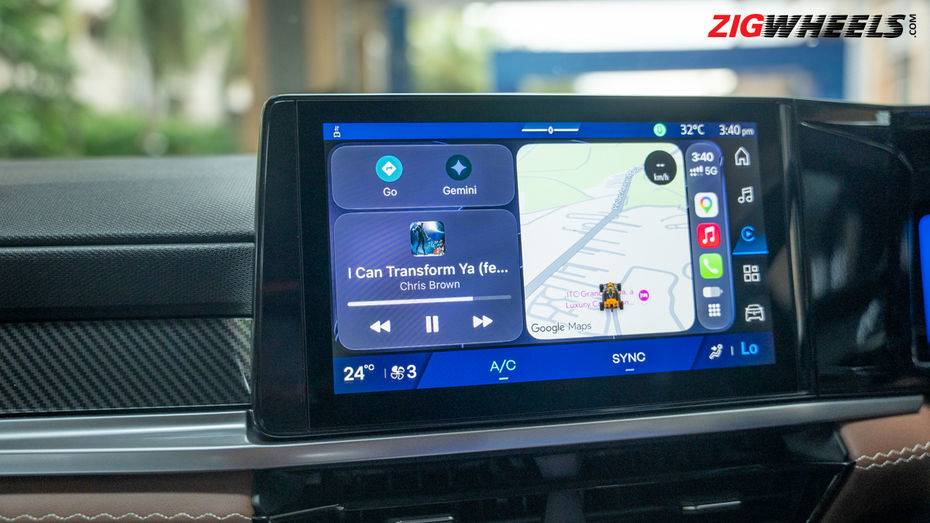
Here’s a list of features that have been deleted on the Duster Hybrid:
-
Lumbar adjustment on front seats
You also take a minor hit on boot space, and have 372 litres of space as opposed to 518 litres. That’s still enough for 4 cabin-sized trolley bags and a couple of backpacks.
Feature highlights include a panoramic sunroof, twin displays, dual-zone climate control, wireless charging, a powered driver’s seat and a powered tailgate.
Buy One?
The hybrid is simply all the goodness and the quirks of a Duster rolled into a more fuel-efficient package. Full stop. That’s to say, space is not its forte, and the interior quality feels a rung lower than its rivals. The upside is the performance and its comfort. Should you get one? Well, if you want nothing but a fuel-efficient Duster, absolutely.
Renault Duster Video Review
Was this article helpfulYesNo
Sorry about that
Any suggestions – Ideas to improve the quality
feedback cannot be left blank
Submit
Thanks for your feedback!
Add Your Comments
Your comment should contain at least 5 characters
Submit
Incorrect word(s) in your text, please rectify
Submit

Thanks for reporting this. The reported comment will be shortly removed from Zigwheels &
will be sent for moderation.
Images| Colours
Renault Duster4.54 user reviews
Starts at ₹ 10.49 Lakh
View October Offers