
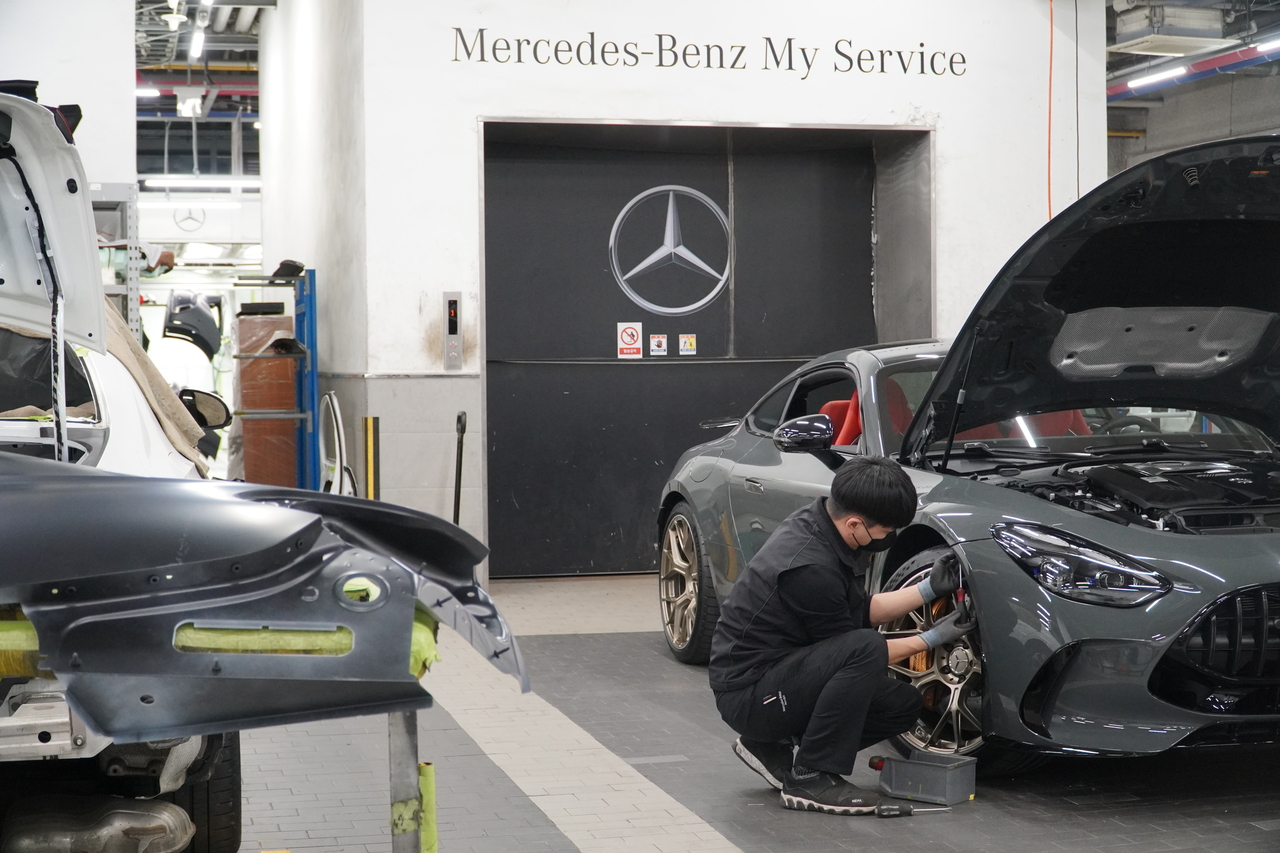
AET and Ausbildung training programs help German automaker maintain a skilled technician workforce
YONGIN, Gyeonggi Province — Emerging automakers, particularly Chinese electric vehicle brands, are rapidly expanding their presence in South Korea.
But Mercedes-Benz Korea bets on its two decades of technician training and rigorous German certification standards to defend its position in the market.
Establishing retail networks may be relatively straightforward, but building a reliable after-sales service infrastructure is a far greater challenge for newcomers.
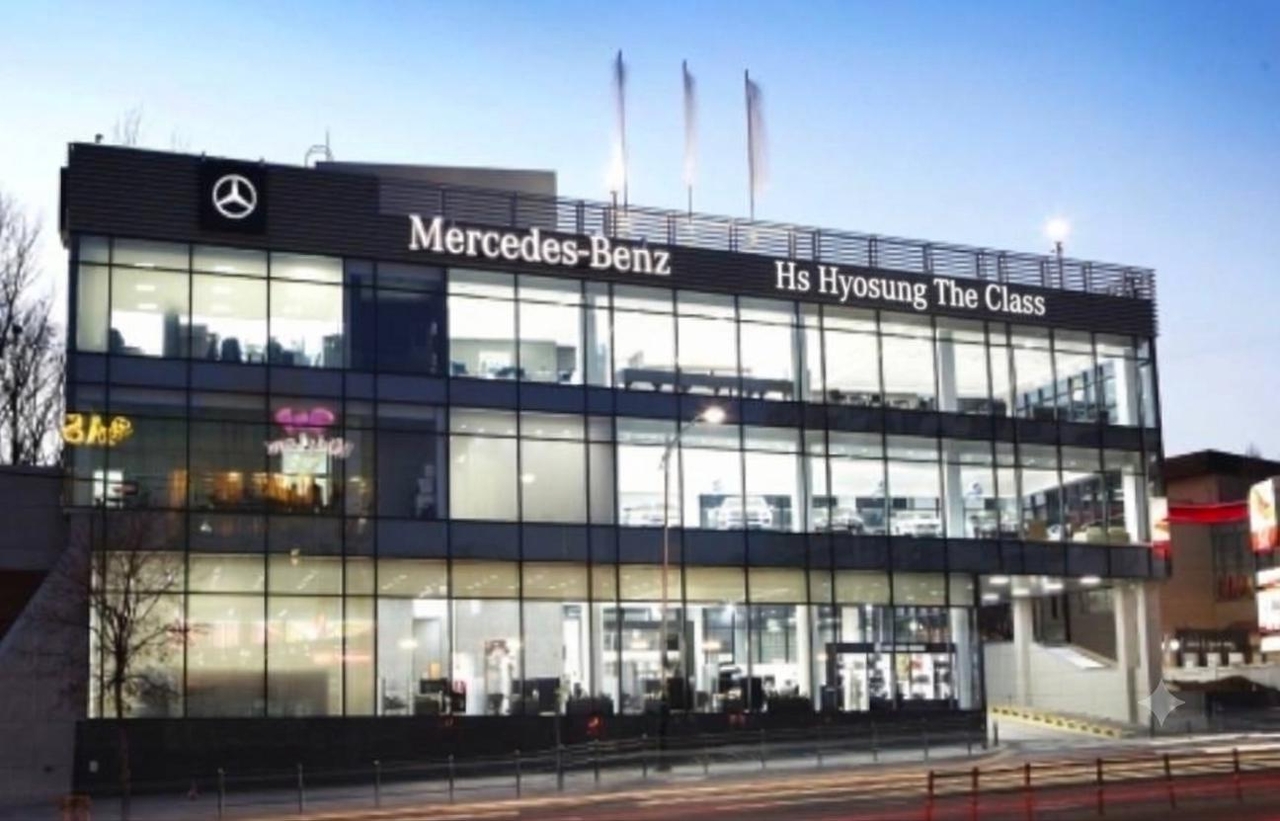
At the HS Hyosung Jukjeon Service Center, operated
At the HS Hyosung Jukjeon Service Center, operated by one of the German automaker’s authorized dealers, Mercedes-Benz Korea Training Academy Director Kong Hyun-sang identified after-sales capabilities as a critical competitive advantage during a media tour organized by the Korean-German Chamber of Commerce and Industry on Tuesday.
“What emerging brands struggle with most right now isn’t sales strategy, but building a service network and sourcing qualified personnel,” Kong said.
He stressed that the company’s greatest strength lies in the training ecosystem it has developed over decades.
The deep know-how passed down by our experienced
“The deep know-how passed down by our experienced trainers creates a vast knowledge base across our network that simply cannot be replicated in a year or two.”
As the automotive industry shifts toward electrification and autonomous driving, Mercedes-Benz Korea is updating its training curriculum to cover emerging technologies, including high-voltage battery safety, introduced in 2021, and advanced driver-assistance systems.
Kim Chang-ho, head of technical training at the academy, emphasized the growing importance of after-sales service in retaining customers, particularly as automakers compete on increasingly sophisticated vehicle technologies.
The first car is sold by sales,
“The first car is sold by sales, but the second car is sold by after-sales,” Kim said, adding that Mercedes-Benz Korea’s strategy centers on delivering a premium customer experience through sustained investment in employee training.
According to Kong, the company’s service technicians are recruited through two main channels: its in-house Automotive Electric Technician program and Ausbildung, a German-style vocational training initiative.
Established in 2006, the AET program offers intensive, accelerated training for graduates of vocational colleges and technical universities, preparing them for careers in automotive maintenance and repair.
Ausbildung, launched in 2017 in partnership with BMW
Ausbildung, launched in 2017 in partnership with BMW and the KGCCI, takes a different approach. The 36-month work-study program targets vocational high school graduates, combining classroom instruction with practical experience to bridge the gap between academic training and industry requirements.
The initiative now operates across seven German automotive brands, including Volkswagen, Audi, Porsche, MAN Truck & Bus Korea, and Star Truck Korea. Originally focused on general automotive repair, it has expanded into four specialized tracks: body repair, paintwork, service advising and general maintenance. More than 800 trainees have participated in the program to date.
Once graduates of either program enter Mercedes-Benz workshops, they undergo a rigorous certification process aligned with standards set by the company’s German headquarters, Kim explained.
The qualification system begins with Qualified Maintenance Technicians,
The qualification system begins with Qualified Maintenance Technicians, who handle routine tasks such as engine fluid changes. Technicians can then advance to Qualified System Technicians, who work on more complex vehicle systems, before pursuing the highest-level Certified Diagnosis Professional qualification, which requires expertise in advanced electrical diagnostics and troubleshooting.
A distinguishing feature of the process is its strict practical assessment. During hands-on examinations, the academy applies what it calls the “4-Eyes Rule,” requiring two experienced trainers to observe and evaluate each candidate to ensure that procedures are performed correctly and consistently.
The system is designed not only to maintain service quality across dealerships but also to ensure that technicians can keep pace with increasingly complex vehicles, particularly as electrification and software-driven technologies reshape automotive maintenance.
Kim said more than 500 trainees have graduated
Kim said more than 500 trainees have graduated from Mercedes-Benz Korea’s training programs over the past two decades, with more than half remaining employed within its authorized dealer network.
For Mercedes-Benz Korea, that accumulated expertise and workforce stability represent a competitive advantage that cannot be built simply by opening new showrooms or expanding sales operations.


1 Comment