The US electric SUV and broader electric car market experienced a sharp contraction in the first quarter of 2026. This marks a dramatic change from the rapid, policy-led growth of previous years. Heavily inspired by the end of Federal $7,500 EV Tax Credit On September 30, 2025. It is also influenced by persistently high financing rates and a growing affordability gap. This resulted in new EV sales falling 27 percent year-on-year to about 216,000 units. Cox AutomotiveMarket analysis report of.
This rapid decline in consumer demand has caused new EV market share to decline from its peak of 10.6 percent to just 5.8 percent by the end of 2025. This was linked to a massive supply-side decline, with older automakers taking more than $53 billion in combined clean-vehicle write-downs, delaying the programs. Simultaneous explosion in demand for used EVs And online shopping increased in the last quarter The traffic was triggered by geopolitical fuel price shocks. This shows that core consumer interest remains intact. However, Q1 2026 results confirm that the US mass market has entered a difficult transitional phase dependent on price recovery and infrastructure development rather than government incentives.
Why are EV SUVs so much smarter than gasoline models?
Electric SUVs are inherently smarter Compared to their internal combustion engine counterparts because they are built from the ground up as software-defined vehicles. This includes dedicated skateboard platforms. Traditional ICE SUVs have mechanical components that dictate the size. An electric SUV integrates its battery pack directly into the floor structure, significantly lowering the center of gravity while maximizing passenger numbers. This flat architecture allows a centralized electronic control unit to manage thermal systems, advanced driver assistance systems and electric all-wheel-drive torque vectoring in real time.

However, this structural and technical intelligence comes with excessive upfront engineering overhead. Automakers are completely changing their manufacturing footprints to build dedicated EV assembly lines instead of sharing platforms with gas cars. Specialized software architectures also require massive research and investment that increases the initial window sticker.
Additionally, electric SUVs are significantly more expensive today due to the physical scaling required for larger family vehicles. A heavy SUV requires a much larger battery pack often ranging from 90 to 120 kilowatt-hours. This is done to achieve an acceptable highway driving range under real-world aerodynamic loads.

These larger packs require extensive aluminum crash structures, complex liquid cooling systems, and advanced battery management controllers to ensure thermal protection and high-speed charging capabilities. Automakers are paying premium prices for the raw materials needed to make these huge packs. This means that the basic manufacturing cost of an electric SUV is fundamentally tied to its physical scale.
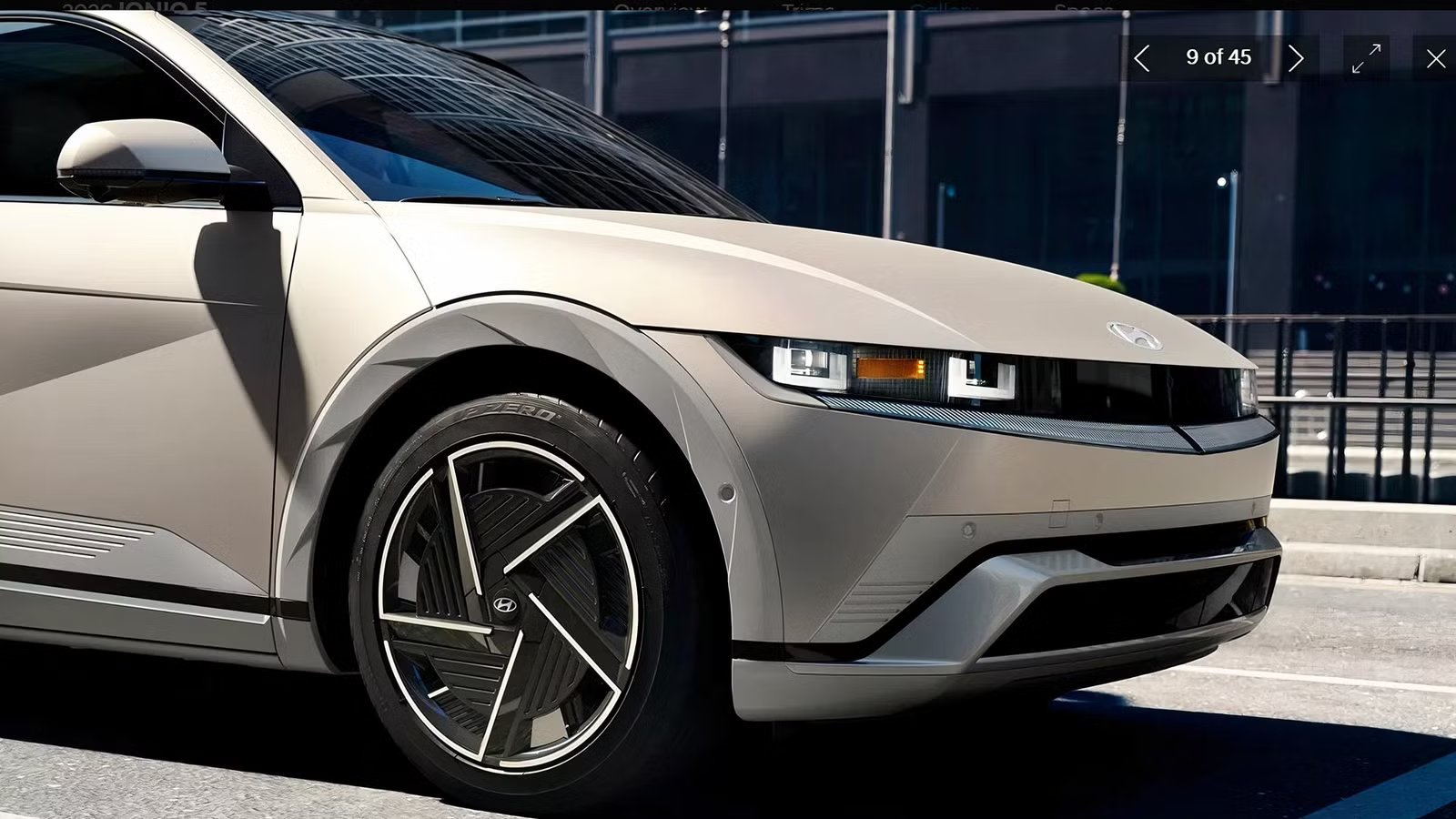
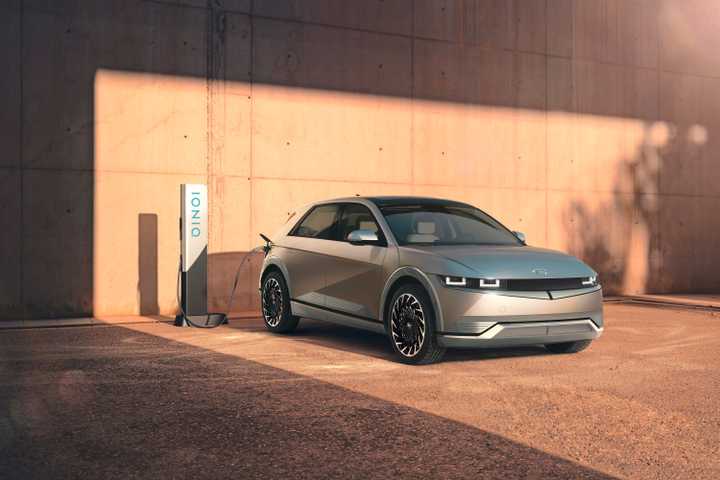
Ioniq 5 – Hyundai’s budget-beating smart EV SUV

2026 hyundai ionic 5 Enters the model year with a significantly changed starting MSRP. Thanks to the new tax deduction, you can choose the base SE standard range up to $35,000. This represents an aggressive price drop of several thousand dollars compared to previous years to better align with changing market dynamics. Within Hyundai’s US lineup, this all-electric compact crossover serves as the foundation and volume leader for the brand’s dedicated Ioniq EV sub-brand.
The retro-futuristic model slots right in the middle subcompact kona electric and the three-row Ioniq 9 flagship SUV. In terms of market performance, Ioniq 5 defied broader industry trends by delivering a strong performance in the first quarter of 2026, with US deliveries reaching 9,790 units. This represents a notable growth of 14 percent compared to 8,611 units sold during Q1 2025, strengthening its position as a resilient pillar of growth within the manufacturer’s domestic portfolio.
Ioniq 5’s incredible market reception

according to JD PowerThe Hyundai Ioniq 5 sits with a 75/100 consumer-verified overall score, which 75/100 for quality and reliability83/100 for driving experience, 70/100 for handling, and 71/100 for dealership experience.
iSeeCars has not released the model with a full evaluation, but it shows a 7.0/10 intact value and a 10/10 safety score. In five years and 60,000 miles, you can expect the model to depreciate by $20,042, or 57.3 percent of its value, which is on par with the rest of the midsize EV segment.
A balanced set of motor options

The 2026 Hyundai Ioniq 5 range is structurally divided into two battery sizes, including a 63.0-kWh standard range pack and a larger 84.0-kWh extended range pack. The single-motor, rear-wheel-drive base setup paired with the small battery produces 168 horsepower and 258 pound-feet of torque. This configuration accelerates from 0 to 60 MPH in 8.5 seconds and its top speed is electronically limited to 115 MPH. This entry-level variant is not rated for towing.

Upgrading to a larger 84.0-kWh Extended Range battery increases power output to 225 hp while retaining rear-wheel drive, while peak torque remains constant at 258 lb-ft. This mechanical upgrade reduces the 0 to 60 MPH acceleration time to 7.4 seconds. However, top speed in the standard lineup remains electronically controlled at 115 MPH to manage battery thermal efficiency. This version is rated to tow up to 2,300 pounds when properly equipped.
Opting for the dual-motor, all-wheel-drive configuration adds an electric motor to the front axle. This brings its combined system output to 320 hp and a whopping 446 lb-ft. This layout reduces the 0 to 60 MPH sprint time to 4.4 seconds. Like the single-motor Extended Range model, top speed remains limited to 115 MPH, and maximum towing capacity remains constant at 2,300 pounds.
Comprehensive features across the range

If you’re looking to purchase the fresh 2026 Hyundai Ioniq 5, you’ll be happy to know that, Because it’s made in America now This purchase qualifies for a $3,750 federal tax credit. When leasing, this increases to $7,500. The base SE Standard range starts at $42,500. It comes standard with cloth seat upholstery, an eight-way power-adjust driver seat, front seat heating, and a redesigned 12.3-inch touchscreen infotainment system that finally supports wireless Android Auto and Apple CarPlay.

You also get dual-zone climate control and LED interior lighting. The extended SE Long Range raises the price of this trim to $46,550. Upgrading to the $49,500 SEL trim adds a heated steering wheel, Hyundai’s Digital Key 2 system, rear HVAC vents, H-Tex synthetic leather seat upholstery, a wireless smartphone charger, and an auto-dimming rearview mirror.

brand new Off-roading-focused XRT derivative Starts at $55,400, but it’s based on equipment found in the SEL trim, including functional exterior modifications like all-terrain tires, a suspension lift, and front tow hooks. Hyundai applies a $1,475 destination charge on all derivatives.
Budget-beating energy consumption results

According to EPA estimates, the Ioniq 5 is one of the most efficient EV midsize SUVs you can consider today. The base Standard Range model achieves a 29 kWh per 100-mile combined energy consumption estimate, but the smaller battery pack means it’s only likely to go about 245 miles on a single charge. The EPA also estimates that this model will save you up to $8,750 in fuel costs over five years. You’ll also find it spending $650 on electricity each year to keep it recharged, and $1.09 to drive 25 miles.
Upgrading to the extended battery pack increases consumption by 30 kWh per 100-miles, but the trade-off is a more attractive 318-mile range estimate. You can expect to save $8,500 in fuel costs over five years, spend $700 on electricity each year, and save $1.12 for driving 25 miles.

The dual-motor configuration with 19-inch wheels returns 32 kWh per 100 miles and a range of 290 miles on a single charge. It features similar fuel economy and annual energy costs, but will cost you $1.19 to drive 25 miles. Adding 20-inch wheels has a big impact on these returns, with a 34 kWh-per-100-mile energy consumption average and a 269-mile range estimate. You can expect to save $8,000 on fuel every five years and $800 on electricity every year. This model costs $1.29 to drive 25 miles.
The XRT is the least efficient model, which should really be no surprise. This model returns 34 kWh per 100 miles on the combined cycle and has a range of 259 miles on a single charge. Expect to spend $1.34 to drive 25 miles. All battery packs take 18 minutes to recharge from 10 to 80 percent via DC level three fast charging.

- base trim engine
-
E.V
- base trim transmission
-
automatic
- base trim drivetrain
-
Rear-wheel Drive
- Base Trim Horsepower
-
168 hp
- base trim torque
-
258 lb-ft.
- Base Trim Fuel Economy Equivalent (City/Highway/Combined)
-
127/94/110 mpg
- base trim battery type
-
Lithium Ion (Li-ion)
- Make
-
Hyundai
- Sample
-
ionic 5
Source: Hyundai, Cox Automotive, JD Power, iSeeCarsand this EPA.