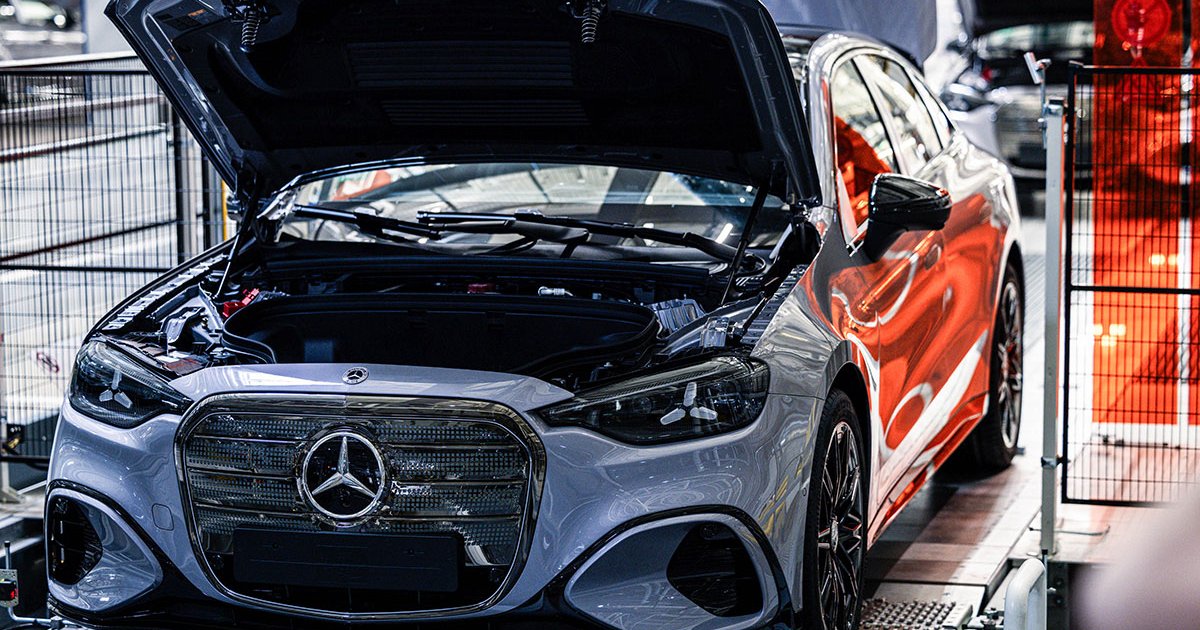
The production line of a C-Class sedan in the new expansion of the Mercedes-Benz plant in Kécskemét, Hungary on July 13. (Akos Stiller/Bloomberg)
key takeaways:
- The Senate Commerce Committee on July 22 unanimously advanced the Connected Vehicle Security Act, sending a proposal to ban certain Chinese-owned connected vehicle manufacturers to the full Senate.
- Mercedes exceeds the proposed 15% limit because BAIC Motor and Geely founder Li Shu Fu each hold about a 10% stake.
- Cruz said the bill could not become law if the limit remained in place, while Moreno said Mercedes could comply by 2030 or seek a waiver from the Commerce Department.
A Senate panel advanced legislation that could eventually ban the sale of Mercedes-Benz Group AG vehicles in the U.S. over partial Chinese ownership of the German automaker, raising a potential conflict if the proposal moves through Congress.
Members of the Senate Committee on Commerce, Science and Transportation voted unanimously on July 22 to send the Connected Vehicle Security Act to the full Senate floor for consideration. But the discussions in the hearing revealed such differences that the chances of the bill becoming a law were bleak.
The bill would ban the sale of connected vehicles by automakers that are more than 15% owned by Chinese entities. Mercedes, which has lobbied for changes to the bill, is about 10% owned by China’s state-owned carmaker BAIC Motor Corp.
Li Shu Fu, the billionaire founder and chairman of Chinese carmaker Geely, also owns about 10% of Mercedes’ shares, putting the company above the bill’s 15% limit.
A representative for Mercedes did not immediately respond to a request for comment.
The ownership provision was a major sticking point as the panel considered the legislation on July 22. Senator Ted Cruz (R-Texas), who chairs the Senate Commerce Committee, criticized the 15% rule, and called for replacing it with a more qualitative assessment of national security risks based on an assessment conducted by the Committee on Foreign Investment in the US.

Alex Fraser from Cox Fleet discusses how fleets should respond when a roadside breakdown occurs, testing their safety, compliance and customer service systems simultaneously. Tune in by going above or RoadSigns.ttnews.com.
Cruz dismantled the 15% limit as a ploy to benefit General Motors Co.’s Cadillac brand by jeopardizing a competitor. He also called the provision “a very direct shot at inflicting pain” on Mercedes by the United Auto Workers after factory workers in Alabama voted against joining a union in 2024.
“I want this bill to pass,” Cruz said. However, “this bill will not become law,” he said, if the 15% Chinese ownership limit remains in law.
Senator Bernie Moreno (R-Ohio), who co-sponsored the bill, disputed that the measure was intended to single out the German carmaker.
Moreno said that if it becomes law, Mercedes will have until 2030 to comply with the bill. He also said companies could seek a waiver from the Commerce Department if they don’t meet the measure’s requirements.
“What we certainly would never do, nor would anyone intend to do, is to ban the sale of Mercedes-Benz automobiles in the US,” said Moreno, a former Mercedes dealer whose son still operates a Mercedes franchise.
Bloomberg has reported that Mercedes has pushed for changes to the bill, including raising the limit of permitted Chinese ownership to 25%.