| Update:
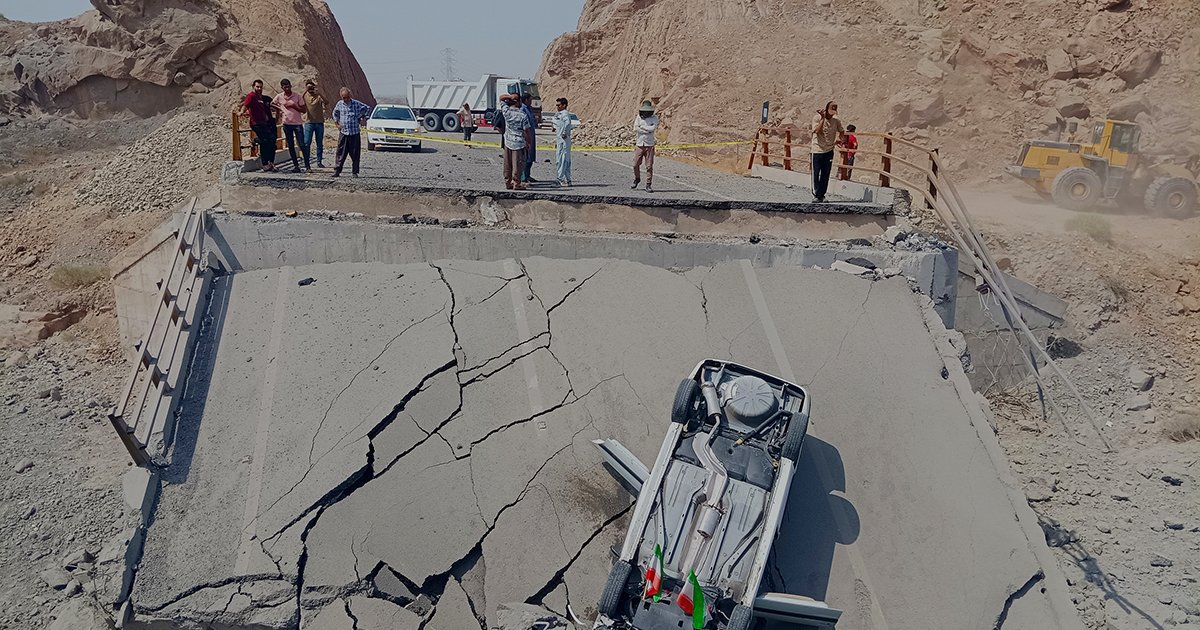
An overturned car rests on a section of a bridge destroyed after an attack in Hormozgan province in southern Iran on July 18. (Mahdi Negahban/Mehr News Agency via AP)
key takeaways:
- Oil prices steadied after rising earlier, as the US announced more strikes for the ninth consecutive night.
- “If this escalation remains unchecked, we could return to an environment of large-scale attacks in the Persian Gulf.”
- Tanker traffic in the Strait of Hormuz has almost stopped.
NEW YORK – Wall Street remained steady July 20, as shares of chipmakers and other winners of the artificial intelligence boom pared some of their recent losses.
Oil prices steadied after rising earlier in the day as the US and Iran moved closer to resuming all-out war. Early on July 20, the US announced more attacks for the ninth consecutive night. Iran is responding to US attacks by attacking US allies in the Middle East.
The price of a barrel of Brent crude oil fell below $72 earlier this month, roughly the same level as before the start of the war with Iran. But it is surging as fighting continues in the Middle East.
On July 20, the price rose sharply between $86 and $91. It was recently up 0.9% at $88.90.
“The US and Iran continue to engage in attacks that are proving fatal for both sides,” ING commodity strategists Warren Patterson and Eva Manthey wrote in a July 20 note.
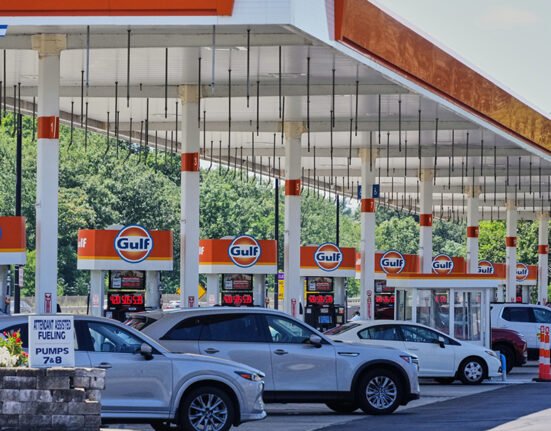
He said tanker traffic in the Strait of Hormuz, a vital waterway for global oil transport, has almost stopped, increasing pressure on supplies. On July 20, US gas prices rose again to an average of $4 per gallon.
Hormuz traffic remains disrupted
The latest maritime risk data shows that Strait of Hormuz crossings remained low with only 30 verified transits between 17 and 19 July and fragmentation in route selection continued, reflecting ongoing uncertainty. While IMO Event Tracker… pic.twitter.com/cPJjRUd7bM
– Kepler (@Kpler) 20 July 2026
The S&P 500 rose 0.2%, its first losing week in the last three and only its third decline since the end of March. As of 1:57 p.m. Eastern time, the Dow Jones Industrial Average was down 186 points, or 0.4%, and the Nasdaq Composite was 0.5% higher.
Nvidia added 0.9% and helped the market recover some of its losses, swinging back up after a July 17 decline that weighed heaviest on the S&P 500. Sandisk climbed 6.1% after falling 29% last week.
Advanced Micro Devices rose 3.5% after it announced a new partnership where Microsoft will use its products for AI, including a new Helios product launching in the second half of the year.
Such stocks have been under pressure for weeks due to concerns that their prices have risen too high amid AI enthusiasm. On one hand, companies are making billions of dollars in revenue as customers pour money into AI chips and data centers. But all that spending could be in vain if AI doesn’t deliver as much profit and productivity as promised.
Wall Street may soon get some clues on this as some of the biggest spenders on AI report their latest quarterly results. On July 22, Alphabet will tell investors how much it earned during the spring and give an update on its AI efforts.
Companies of all types are under pressure to report strong profit growth in the spring. They will need to justify large moves made in their stock prices. Despite the recent volatility of AI stocks, the indices are still near their records.
AMC Entertainment jumped 24.7% after the movie-theater operator reported stronger-than-expected revenue in the latest quarter. It also said some of its theaters in Los Angeles and other cities played “The Odyssey” for more than 85 hours continuously from July 16-19 to meet demand.
Domino’s Pizza climbed 1.9% after delivering stronger-than-expected revenue. CEO Russell Weiner said the company has seen orders growth for both its carryout and delivery businesses, even as the broader industry “faces pressure on consumer demand.”
Another restaurant chain, Jersey Mike’s, is launching its own road show to drum up interest in its stock, which it plans to sell on the New York Stock Exchange in an initial public offering for between $21 and $25 per share.
Concerns about expensive oil and higher inflation have pushed Treasury yields higher in the bond market, threatening a slowing economy and cutting prices of stocks and other investments.

Alex Fraser from Cox Fleet discusses how fleets should respond when a roadside breakdown occurs, testing their safety, compliance and customer service systems simultaneously. Tune in by going above or RoadSigns.ttnews.com.
The yield on 10-year Treasuries rose to 4.60% from 4.55% at the end of July 17 and was only 3.97% before the war with Iran. Higher yields have already sent the average 30-year mortgage rate to its highest level in nearly a year.
In stock markets abroad, indices in Europe were mixed.
Moves were sharper in Asia, where South Korea’s Kospi fell 4.5%. It has been at the center of huge fluctuations for AI stocks as it is dominated by two tech companies, Samsung Electronics and SK Hynix.
Stocks were stronger in China, where indices rose 2.4% in Hong Kong and 0.9% in Shanghai.
AP Business Writers Chan Ho-Him and Matt Ott contributed to this report.