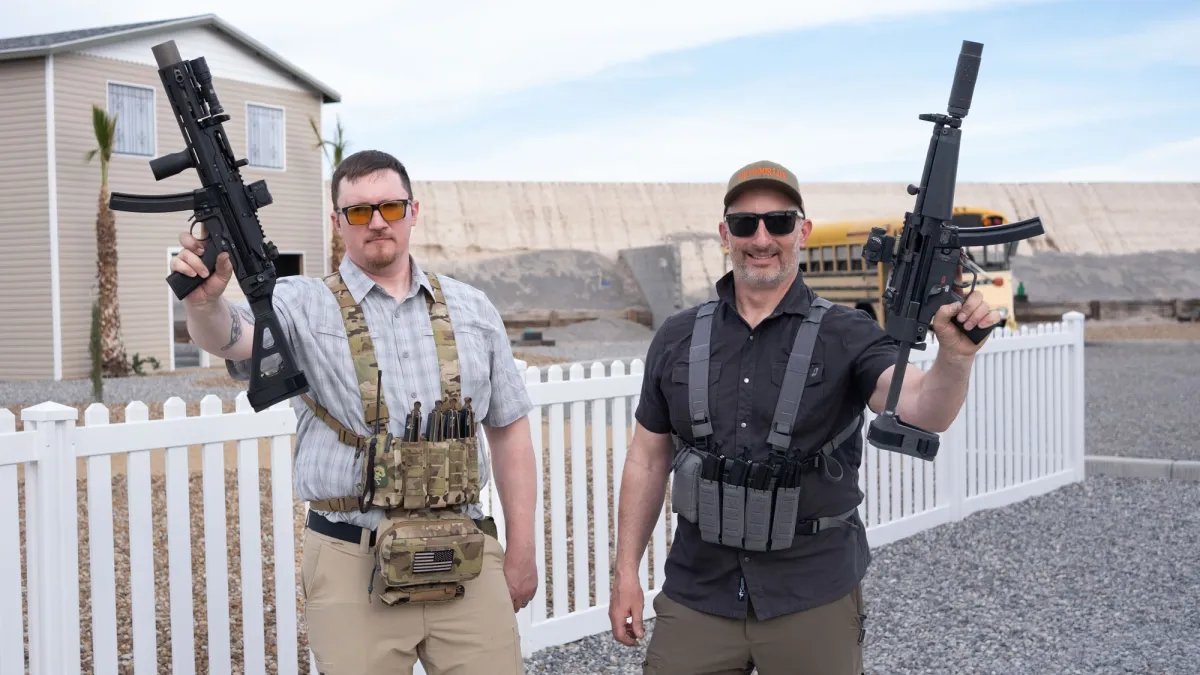
The most iconic PCC in history is the H&K MP5 and, by extension, its civilian version the H&K SP5. Few firearms, and certainly no other PCC, can match the global impact of the MP5. Its worldwide acceptance by military and police units, reputation for excellent performance and quality, and immense cultural influence on films, television and video games make it the undisputed king of PCCs.
While the MP5 is now over 60 years old, it rose to prominence in the 1980s due to its central role in dramatic rescue missions and other operations by the British SAS, Navy SEALs, FBI Hostage Rescue Team, Secret Service, Germany’s GSG 9, and other elite military and police units. 1988 film die Hard Cementing its position as the finest submachine gun ever made.
rise of the clones
While true H&K SP5s still say “Made in Germany” on their stamped sheet metal receivers, a large number of MP5/SP5 clones are produced by companies in Turkey and elsewhere. These clones address the main drawback of the German-made originals – their enormous cost.
Although most PCC fans aspire to own an H&K, not everyone can afford the price of admission. MP5 clones are a boon for these shooters.
For about half the price, one can obtain Turkish knock-offs that have the same operating system and feature set as H&K and, for this reason, firearms sold by Century Arms and MAC are extremely popular. (The domestic H&K MP5 clones produced by Zenith and PTR are also worth checking out.)
H&K SP5 shortage?
Clones may also get a boost from H&K recent letter Dealers, distributors and sales teams have been told that the company is temporarily pausing SP5 orders in 2026. While the company will fulfill existing SP5 orders on the books, H&K said they are declining to take more orders for MR556 and SP5 products “due to unprecedented customer demand in global markets, the ongoing impact of international conflicts and the resulting pressure on production capacity and supply chains.”
Although there’s no reason to think this will be permanent, it could make it more difficult and expensive to get a new SP5 in the near future.
OG SP5 vs Turkish clone
Comparing the H&K SP5 to its knock-offs comes down to price versus quality and performance. Is the German-made original superior enough to justify the cost, or are the Turkish versions comparable despite the difference in price?
The video above goes into depth on this, but the answer depends on one’s perspective.
H&K SP5
check this out
Pros
- Iconic Design
- Excellent performance and reliability
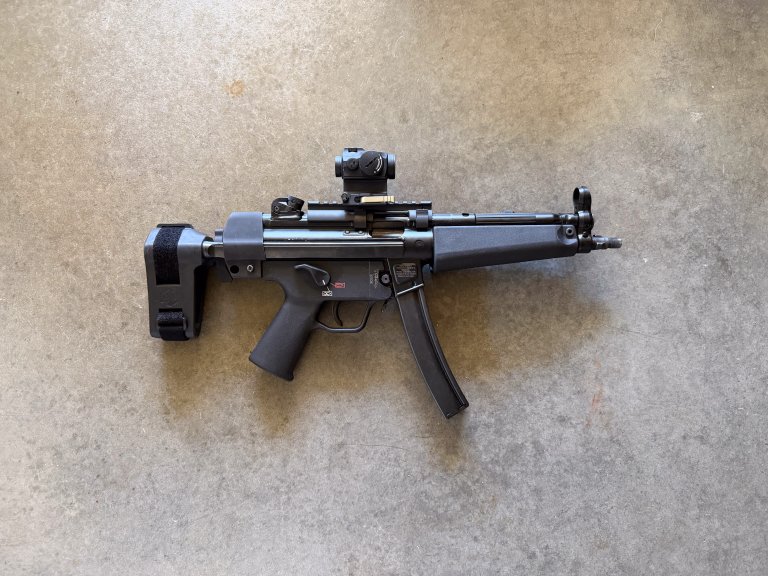
The German-made SP5 is the civilian semi-auto version of the famous MP5 submachine gun, prized for its smooth roller-delayed blowback action and top-tier build quality.
Out of the box, the SP5 is clearly a better firearm than the Mach 5 or the Century Arms AP5-P that we tested during our big PCC evaluations this year.
It runs more smoothly, has better fit and finish, and gets high marks for its reliability and ergonomics. A good example of the latter is the pronounced curve in the safety switch which is designed to work better with the shooter’s thumb.
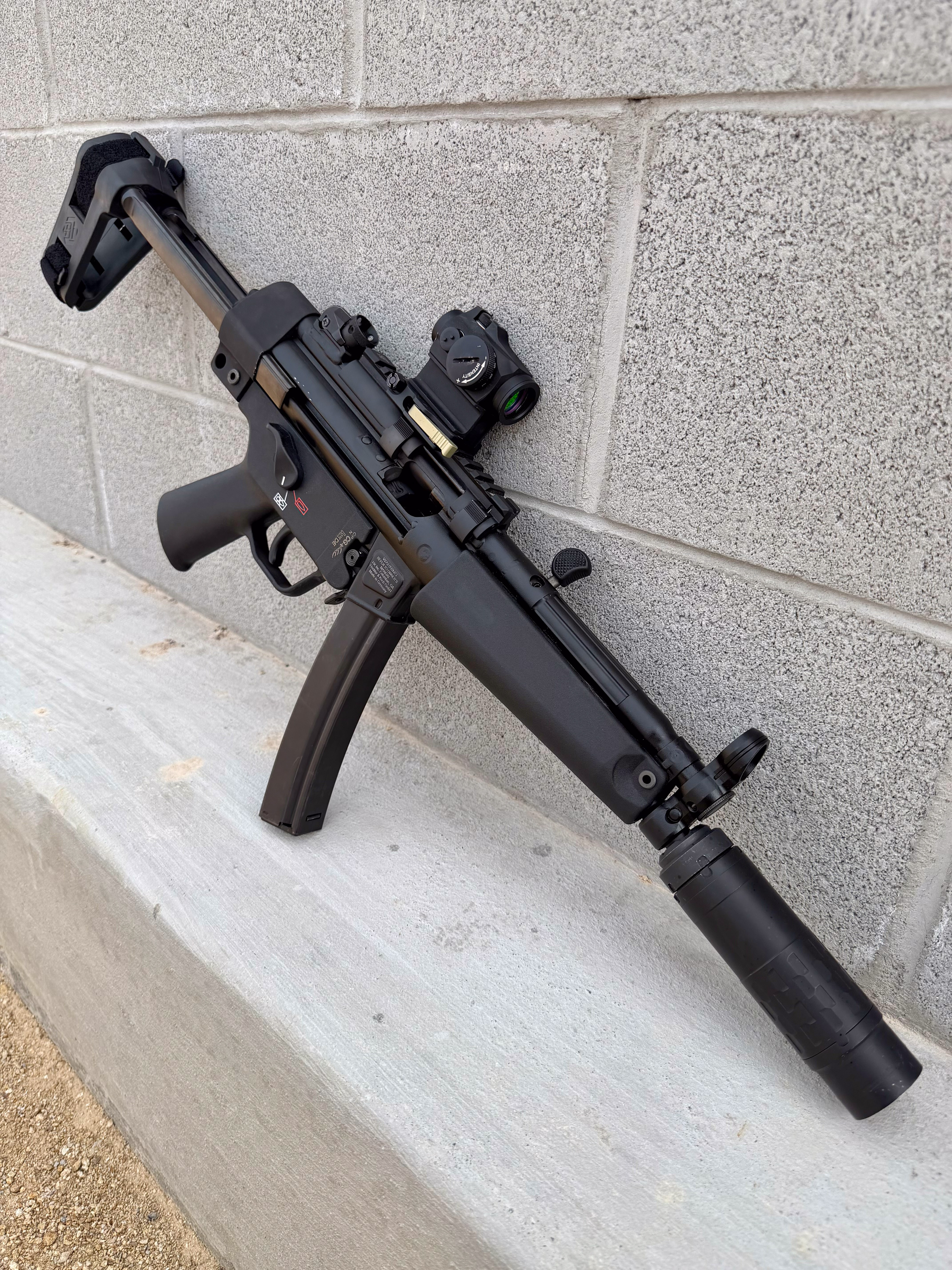
Upgrading to SP5 is also easy. We removed the butt cap that came with it and installed a Collapsible Brace from SB Tactical. we also added one H&K Optics Rail Mount So we can run a red dot sight – in my case an Aimpoint Micro T-2 MOA with an AR elevation mount.
Century Arms AP5-P
check this out
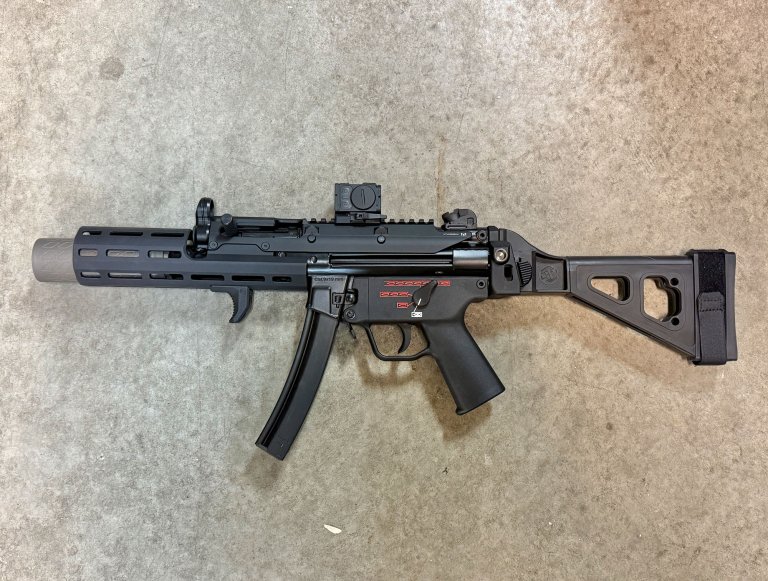
This is a good alternative to the H&K SP5 for those who want to get into the MP5 ecosystem on a budget.
Certainly the fit and finish is more rugged than the H&K. But it’s also a great platform for incremental upgrades. This specific gun we tested is owned by outdoor Life Senior staff writer Tyler Freel sports an aftermarket handguard, fire-control group, and brace.
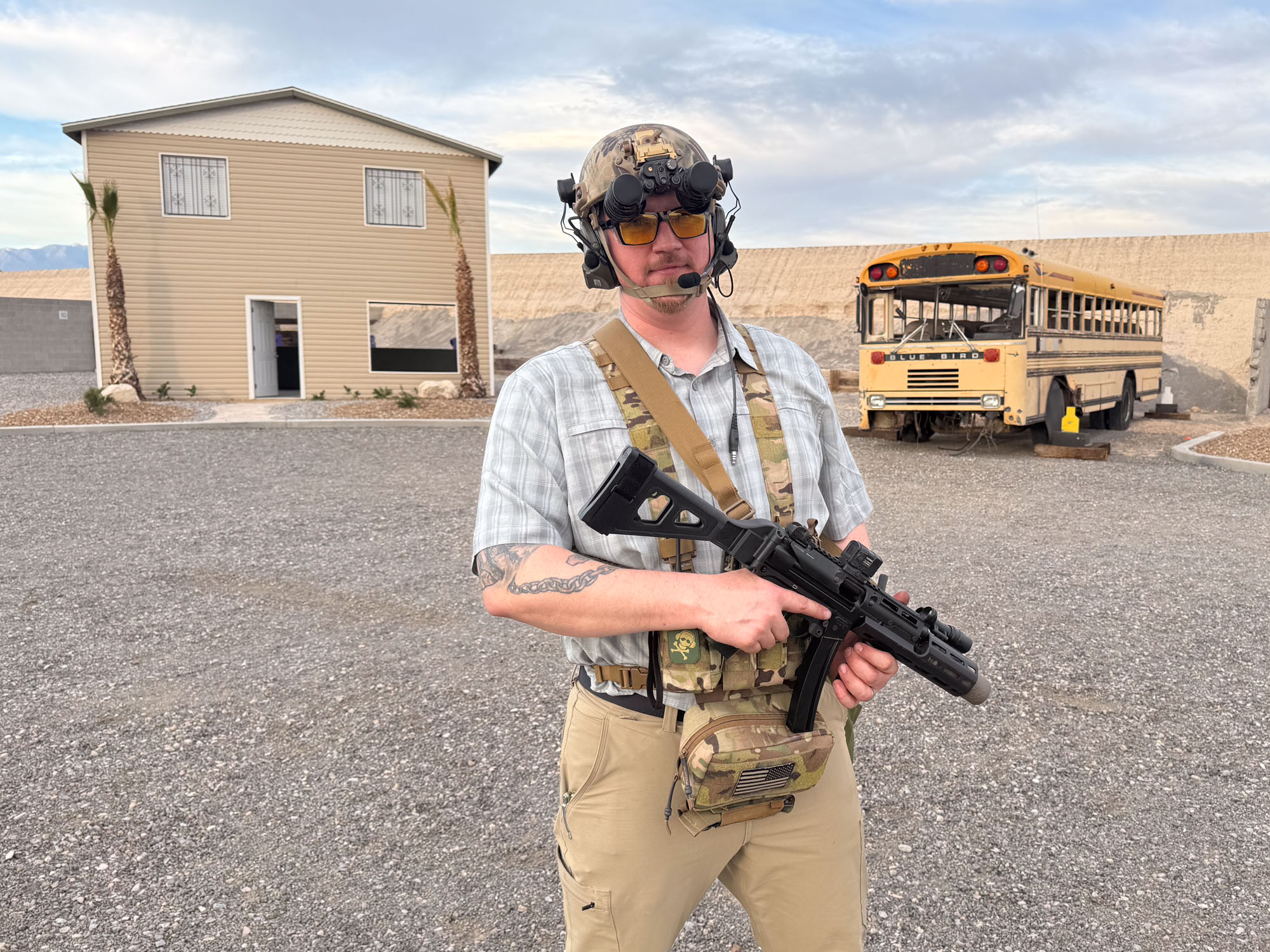
Overall, we were very pleased with the performance of the AP5-P. It was reliable and we had no problems running it with the various MP5 magazines and 9mm loads we had available.
Compared to many of the direct blowback PCCs we tested, which are around the same price, the AP5-P was shooting flatter and directing less gas back toward the shooter’s face.
mac 5
check this out
Shortcoming
- Worked only with supplied magazines
- couldn’t get it to run with brace
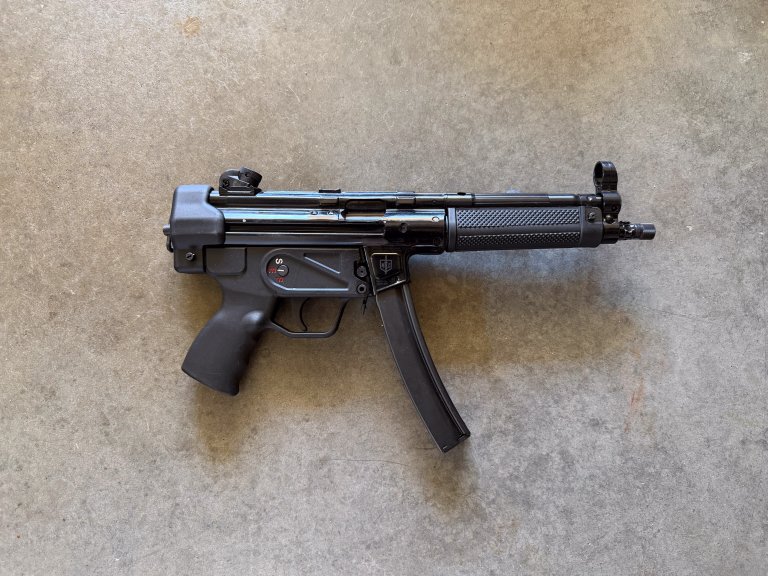
We also enjoyed shooting this H&K MP5 clone, although our experience was hampered by the fact that we were not able to upgrade it with a SP5-pattern brace, nor were we able to run it with magazines other than the one that shipped with it.
When we tried to attach the brace, the pistol locked up and would not cycle. I doubt we could have fixed this problem using a Dremel and some elbow grease, but it was a useful demonstration of the problems you can encounter with clones.
Roller-delayed blowback action explained
The defining feature of the H&K MP5/SP5 is the roller-delayed blowback operating system. This design is noticeably smoother with a lighter recoil impulse than the more common and basic blowback action – and is the main reason why the MP5 and its variants are so popular.
The only thing that counters the recoil force generated by a cartridge with a regular blowback action is the mass of the bolt and slide assembly and the strength of the recoil spring. While simple and economical to produce, it adds bulk to the gun and produces a stiffer, more rigid recoil impulse.
The roller-delayed blowback action uses two rollers that protrude from the bolt and sit in recesses in the action when the bolt is in battery. The rollers prevent the bolt from retracting for a slight fraction of a second when the cartridge is fired. By the time the rollers separate from the grooves the chamber pressure has dropped from its peak, and the bolt cycles. This allows for a lower mass bolt and lighter recoil spring.
In addition to soft shooting, roller-delayed blowback actions are also known for their reliability and durability.
History of roller-delayed blowback actions
The first roller-delayed blowback action was used by the German Army in World War II with the MG 42 machine gun. Known as Hitler’s buzz saw for the sound produced by its rapid rate of fire, the MG 42 was known for being relatively soft-recoiling, reliable, and less expensive than the MG 34 it replaced. Using stamped and spot-welded parts, it set the stage for the MP5 which was developed two decades later.
H&K MP5 Vintage Quality
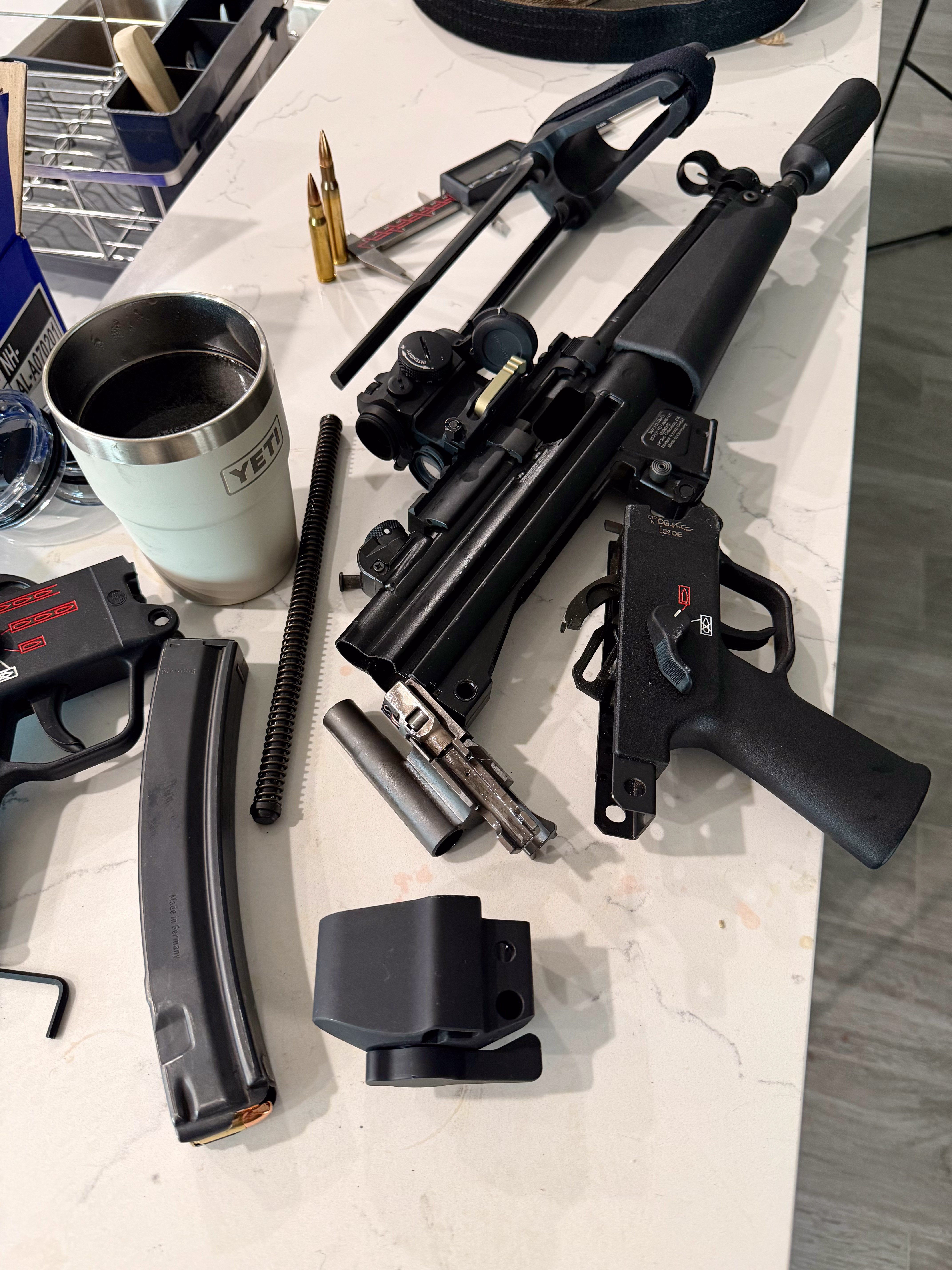
Although MP5/SP5 is easy to discuss, it also has some shortcomings. The platform is now 60 years old, and shows its age.
The lack of integrated pickup rail for optics is one of its biggest drawbacks. While the receiver has indents to accommodate an aftermarket rail, that type of connection will never be as secure as a rail that is an integral part of the firearm. Also, like other H&K accessories, they are expensive.
One of the most fun things about firing the SP5 is squeezing the bolt to chamber a round – but the fact that you have to manually lock the bolt from the rear to insert a new magazine is anachronistic. It doesn’t take much training to gain proficiency with the MP5 weapon manual, but the feature is reminiscent of another era of firearms design.
Final thoughts on the H&K SP5 and its clones
Yes, the MP5 platform is a bit old, but it is still the most prominent PCC made today. However, it is not for everyone. Those looking for the most affordable PCC can find bargain-basement direct blowback models that cost significantly less than even the Turkish clones. Shooters who prefer to compete at a higher level with PCC will be better served with other systems optimized for those formats as well.
That said, the H&K MP5 and its semi-auto variants have a cool factor that is unmatched. Its legacy is also beyond reproach. Nearly every top-tier Army and LE unit over the past half century has fielded the MP5 – and many continue to do so. Only a select few other firearms can boast that impressive resume.
Read further: We Tested the Top 18 Pistol Caliber Carbines
The desire to harness that heritage and experience the magic of the MP5/SP5 continues to attract people to the gun. Whether you want to buy a one-off, cry for an official German H&K or get a clone that you can upgrade as your budget and imagination allow, it’s up to you.