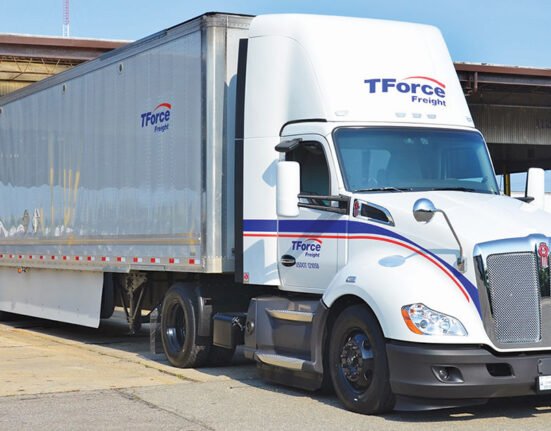
LTL capacity is now being absorbed, and weight per shipment is increasing. (John Tetzlaff/Getty Images)
key takeaways:
- The second quarter saw strong demand from less-than-truckload carriers as truckload capacity tightened, with executives reporting rising shipment loads and sequential improvement during the period.
- This shift reflects a lack of structural capacity from CDL enforcement and fewer drivers, leading to approximately 6%-7% increases in LTL pricing and higher revenues per shipment.
- Competition is expected to intensify in late 2026 as FedEx Freight targets new segments, Amazon expands LTL services and carriers add terminals to meet demand.
The shortage of truckload capacity saw greater demand from shippers from less-than-truckload carriers in the second quarter of 2026 and is expected to continue, perhaps increase, in the back half of the year.
During lean times, truckload carriers try to operate multiple stops and parcel carriers take on more shipments than usual, but when demand increases or capacity declines, that flexibility evaporates. As a result, LTL capacity is now being absorbed, and weight per shipment is increasing.
Webb Estes, president and chief operating officer of Estes Express Lines, said, “We’re like the meat of the sandwich in the trucking industry. You have the huge truckloads. And then you have the other side, the parcel guys who are really handling the smaller stuff.”
Demand improved sequentially as the second quarter progressed, as did weight levels, according to executives including Old Dominion Freight Line CEO Marty Freeman.
ODFL loading dock in Montgomery, Illinois (Old Dominion Freight Line via YouTube)
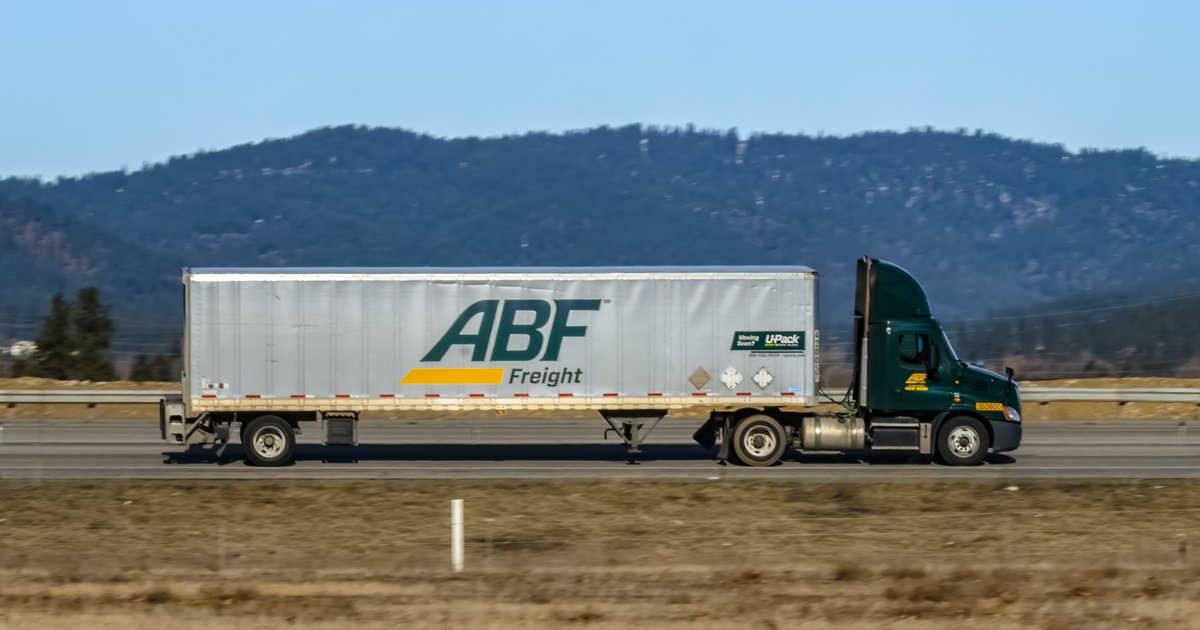
ArcBest’s asset-based unit saw a 5% increase in weight per shipment in May compared with April, the carrier said in a Securities and Exchange Commission filing June 4. This resulted in an approximately 5% improvement in ABF Freight’s revenue per shipment.
Capacity in the truckload sector has tightened from the beginning of 2026 as a result of the federal government’s enforcement initiative on non-domiciled commercial driver licenses, the closure of some driving schools and visas for foreign drivers.
No short-term underlying growth
“Growths that reduce capacity in our industry are not short-term things,” Estes told Transportation Topics in late June, adding that it was a “double whammy” with fewer driving schools looking to remove CDL owners and fill the already shrinking ranks.
FedEx Freight — the largest player in the LTL segment of the freight market — saw particular gains in backhaul lanes, CEO John Smith told analysts during the company’s first earnings call as a stand-alone unit on June 25.
Memphis, Tennessee-based FedEx Freight was acquired by FedEx Corp. It was separated on 1 June. FedEx Freight debuted at No. 4 on Transport Topics Top 100 list of the largest for-hire carriers in North America. FedEx Corp. Remained the number 2 ranked carrier.
“(LTL) is like the meat of the sandwich in the trucking industry,” Estes said. (DakotaSmith/Getty Images)
Contract rates are rising after spot rates climbed in early 2026, as demand and shipment loads increase.
Rates for ArcBest and ABF Freight’s LTL customers increased an average of 5.9% on June 22. ArcBest For-Hire is ranked No. 14 on the TT100, and ABF Freight is ranked No. 7 in the LTL segment.
Saaya said July 6 that Saaya LTL Freight is implementing a general rate increase of 7.1% on LTL and truckload shipments, effective immediately.
The rate increase will also help offset rising operating costs, said Saiya, which is ranked No. 18 on the market’s For-Hire TT100 and No. 6 in the LTL segment.
Earlier this month, Saya announced a 7.1% GRI on LTL and truckload shipments. (Ablokhin/Getty Images)
FedEx Freight’s Smith told TT in an exclusive interview before the carrier went public that carriers and shippers can expect some bounce back on the road to recovery in the freight market, even as rates continue to rise.
“We’re seeing green signals, but with everything going on from a geopolitical perspective, I think there’s really an opportunity for a turnaround in the market,” Smith said, but he told TT: “We don’t expect a straight line recovery.”
A more concentrated FedEx freight?
But LTL competition will become even more intense in the second half of 2026, with a stand-alone FedEx Freight looking to chase down rivals in areas in which it has historically underperformed from its lofty pedigree, and a major new player entering the market.
FedEx Freight aims to increase its share in the small to medium-sized business, grocery, healthcare and data center and energy sectors.
FedEx Freight – the largest LTL carrier – has seen particular gains in backhaul lanes. (John Tetzlaff/Getty Images)
The carrier has only minimal exposure to the $9 billion small to medium-sized business segment of the LTL market, Chief Specialty Services and Commercial Officer Mike Lyons told analysts and investors during the carrier’s first investor day in April.
“Basically, we are doing zero business in the food and beverage market,” Smith told TT in late May. “We feel like this is one of those markets that performs well, whether the market is good or the market is down due to the fact that people are going to eat and people are going to drink.”
Meanwhile, there is a new player in the LTL arena, and it also boasts a proud pedigree.
Amazon arrives
Amazon formally unveiled an LTL arm for its Amazon Supply Chain Services division on June 10, expanding its operations into the LTL segment beyond the e-commerce giant’s own marketplace.
The announcement comes after ASCS’s Amazon freight unit came out of the shadows on May 4. The unit will make Amazon’s transportation, fulfillment and parcel delivery networks available to other businesses.
Amazon unveiled its ASCS LTL division in June. (Trevor Srednick/Getty Images)
Amazon already has LTL experience. In 2019, Amazon LTL began serving Amazon selling partners and sellers. Amazon LTL will offer next-day live pickup for orders placed by 5 p.m., same-day pickup through Amazon’s drop-trailer solution, and daily pickup for high-volume shippers.
However, analysts noted a relatively low number of service terminals compared to existing players, indicating a more asset-light model for the enterprise than is typical in the sector. The company’s cross-dock facilities are estimated at less than 100, while the average of the top five players in the sector is around 300.
Terminal construction continues
Existing players opened additional terminals to meet the growing demand and increase their strong profits.
Saya opened two terminals in the Midwest in June, its fourth and fifth service centers since early 2026. Saaya now operates 218 terminals.
Johns Creek, Ga. Saia’s Duluth, Minn., terminal opened in early June, and the Columbia, Mo., facility began operations the week beginning June 22. The carrier launched operations in Marysville, Washington and Edinburg, Ind. in May. It also opened terminals in the U.S. and opened a 74-door terminal in York, PA in April.
Terminals require a lot of land – not easy to find near metropolitan areas – and are expensive to build. Marysville, for example, is part of the Seattle metropolitan area. Scale and density are important in the LTL sector.
Everitt has recently begun construction of new regional campuses. (Photosweet/Getty Images)
Everitt Express began construction of two new regional campuses in Charlotte, N.C., and Louisville, Ky., in May as part of an upgrade of facilities in prime locations for the carrier.
Both locations were identified by a senior executive in March as potential “pinch points” as the freight industry boomed. Everitt is ranked 29th in the for-hire TT100 and 12th in the LTL segment.
Looking ahead, the prospects for the LTL segment are positive, according to Smith. “We believe the long-term fundamentals of this industry, the LTL industry, remain attractive,” he told TT.