The American cruiser market has always been about spectacle. There’s chrome upon chrome, cubic inches climbing every model year, and a V-twin exhaust note loud enough to command attention. It’s a formula designed to sell upgrades, and for decades it worked exactly as intended. However, lately, there has been a different story playing out in the corner of the showroom where no one takes photos for brochures.
A growing number of experienced riders – those who have already owned big-inch American iron, have already dealt with oil spills and unexpected repair bills – are quietly moving away from that lifestyle. Not by ride. Just from the maintenance drama. They’re going back to something small, simple and almost completely reliable. And once they buy it, they don’t want anything else.
Cruisers are built for business, not for luxury
Ask any dealership finance manager, and they’ll tell you the same thing: Cruiser buyers rarely stop by. The first bike is considered a starter home. Riders come in wanting something manageable, then within two to four years they’re back chasing more displacement, more chrome, more presence on the road. This is a predictable cycle, and the used market reflects it. Search listings for a Kawasaki Vulcan 900, Suzuki Boulevard C50, or Yamaha Bolt R-Spec, and you’ll find a steady churn of low-mileage examples, often traded in well before their odometers reach five figures. That churn is ideal but not universal.

However, if you look deeper there are exceptions. Search for used examples of such cruisers, and inventory seems low for a bike that has been in continuous production for over a decade. The lists that pop up tend to discount the older and higher mileage ones, which is really just another way of saying the same thing: people don’t let these go. You ask, what are we talking about? Well, it’s a Honda.
Honda Shadow Phantom does not change hands frequently
Base price: $8,699

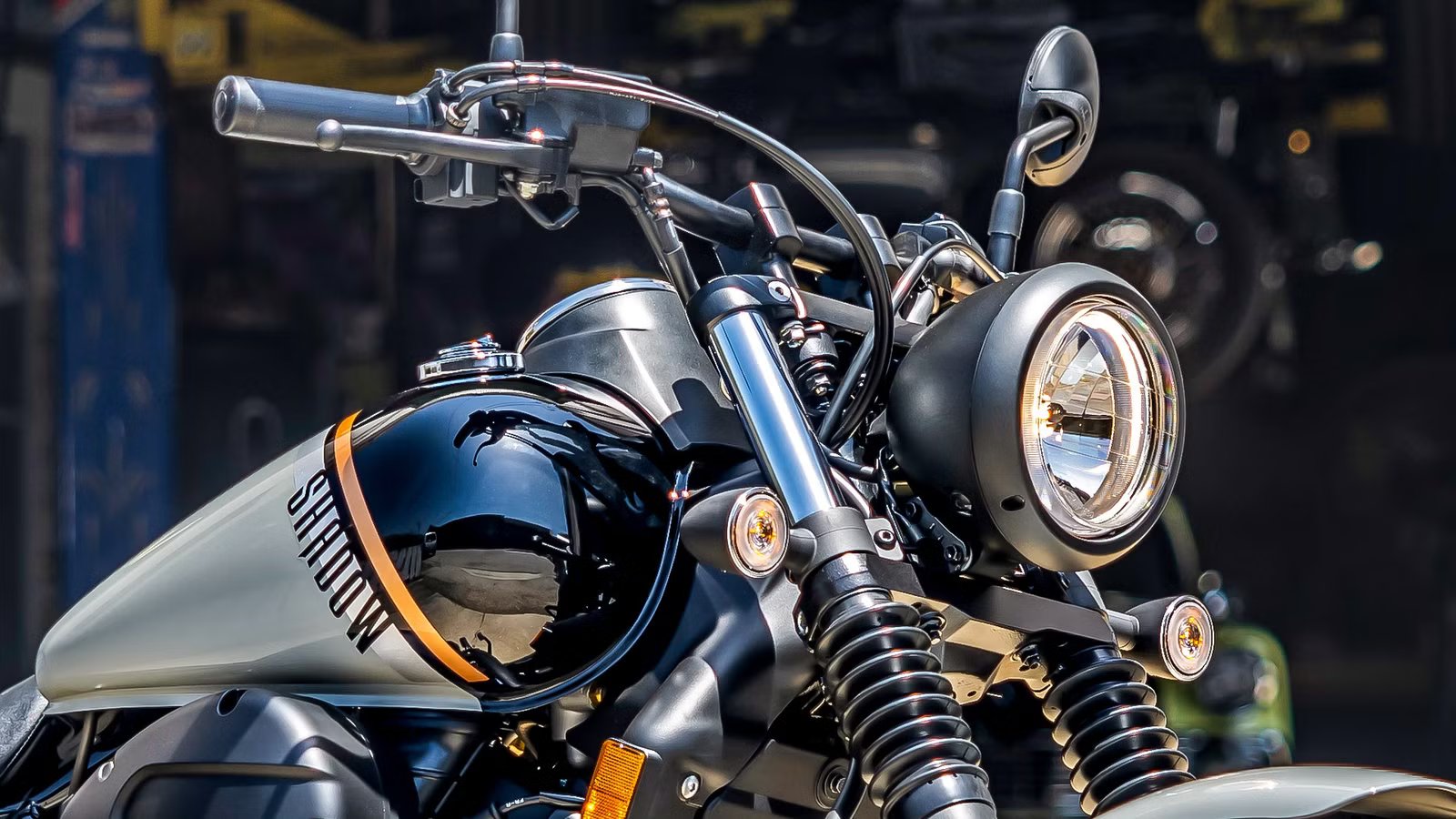
Specifically, the Honda Shadow Phantom. Part of its appeal is clear as soon as you look at the sticker. At $8,699, the Phantom is priced lower than almost every other full-size V-twin cruiser sold in America, and it does so without looking cheap. Honda leaned into the factory-built bobber look – blacked-out engine cover, a de-chrome frame and wheels, small front and rear fenders, and a single solo seat that ditches the usual two-up cruiser silhouette. It is currently available only in Phantom trim which comes standard with ABS. This alone puts it ahead of many competitors who still consider anti-lock brakes an expensive add-on.
Kumamoto lineage

Here’s the detail that surprises people: The Phantom isn’t assembled in one of Honda’s budget overseas plants. It originates from the Kumamoto factory in Japan – the same facility that is responsible for building Honda’s flagship touring machine, the Gold Wing, whose price starts at $25,000. A motorcycle built on the same lines, laid down to the same tolerances, as a bike costing three times as much that leaves the factory slightly more buttoned-down than its price tag suggests. Riders who have ridden thousands of miles together will often say the same thing: nothing is loose, nothing looks like it was price-engineered under a budget.
A 745cc V-twin tuned for longevity, not bragging rights

At the heart of the Phantom is a 745 cc, liquid-cooled 52-degree V-twin, with a 79.0 mm bore and 76.0 mm stroke and a comfortable 9.6:1 compression ratio. Programmed fuel injection through the 34mm throttle body keeps starts clean in cold weather, and the SOHC three-valve-per-cylinder heads aren’t chasing a horsepower number anyone will brag about at a bar. This is a short-stroke engine tuned for low-end torque – the kind of grunt that makes passing through stop-and-go traffic and quick highway mergers feel effortless rather than frantic. It’s not going to win a stoplight drag race against a litre-class naked bike, and it was never intended to. This means starting every time, idling smoothly, and continuing to do so for a very long time.
Shaft drive eliminates frequent maintenance work

Then there’s the shaft final drive, which quietly eliminates one of the most annoying and recurring costs of cruiser ownership. No chain to lube every few hundred miles, no sprockets to wear out, no mid-ride adjustments as the chain gets stretched again. Riders who have owned chain-drive Rivals know this work well.
Power moves through a wide-ratio five-speed manual gearbox – no dual-clutch trickery, no assist-and-slipper clutch that eventually wears out, just straightforward mechanical parts doing a straightforward job. Add 56 mpg EPA estimates and a 3.9-gallon tank (with about 0.9 gallons in reserve), and the Phantom becomes one of those bikes you can ride for weeks without thinking much about fuel stops or wrench time.
Ergonomics that don’t spoil their welcome

The 25.6-inch seat height puts the Phantom at the bottom of its class, allowing smaller or newer riders to plant both feet flat at a stoplight without a second thought. Combined with a 64.5-inch wheelbase and a thin seat-to-tank junction that keeps the center of gravity low, the entire bike feels smaller and more manageable than its full-size V-twin billing. With a curb weight of 553 pounds, it’s easy to muscle around in parking spots or tight U-turns – something that can’t be said for many large American cruisers. The riding position remains upright and comfortable rather than stretched and aggressive.
Simple hardware that doesn’t cause any hassle

Modern motorcycles are increasingly relying on electronic rider aids, multiple riding modes, and increasingly sophisticated software. The Honda Shadow Phantom takes the opposite approach. Its steel double-cradle frame, traditional 41mm telescopic fork and twin rear shock have been proven by decades of real-world use. The braking system consists of a 296 mm front disc and 276 mm rear disc, both backed by standard ABS for added confidence on wet pavement or loose surfaces. There are no electronically adjustable suspension components to fail after the warranty expires, no riding modes to scroll through, and no complicated menus to navigate. Everything serves a purpose, and everything is designed to last.
Bobber Styling That Doesn’t Chase Trends

Honda gave the Phantom a real visual refresh a few model years ago, and it’s been kept largely unchanged since then. The bobber-inspired silhouette leans into a matte black finish on the engine, frame and wheels, with a machine-cut cylinder head fin that catches enough light to look deliberate rather than casual. Chrome-heavy cruisers can start looking dated within a few seasons, while a blacked-out bobber will mostly look like a blacked-out bobber year after year.
That minimalism also does something clever: It invites owners to personalize rather than change. A stock Phantom has plenty of room for lower fender trim, an aftermarket seat, or a different set of pipes without first having to deal with years of chrome trim. Instead of buying a new bike, riders gradually make the bike their own. The tank-mounted analog gauges and overall clean layout maintain that factory-custom feel even before anyone touches a wrench.
True Cost of Long Term Ownership

However, the real reason so few Phantoms hit the used market is probably money – or the lack of it – out of someone’s pocket. Operating costs are negligible by cruiser standards. Honda’s dealer network is huge, so parts are cheap and easy to obtain, and independent mechanics know this engine inside and out after two decades of almost identical variants.
The bike comes with a one-year transferable warranty, and Honda offers an optional HondaCare protection plan for owners who want peace of mind. When a bike rarely breaks and costs almost nothing to run, there’s no financial hassle pushing the owner toward the next listing. Expensive cruisers scratch that itch through expensive services and dealer-recommended upgrades. The Phantom mostly sits in the garage, gets ridden, and is completely ignored in trade-in negotiations.
Source: Honda Powersports