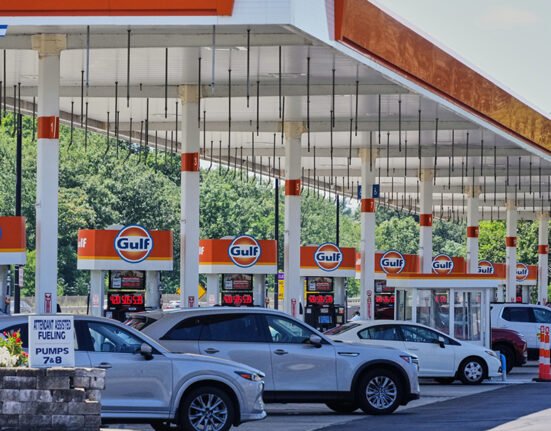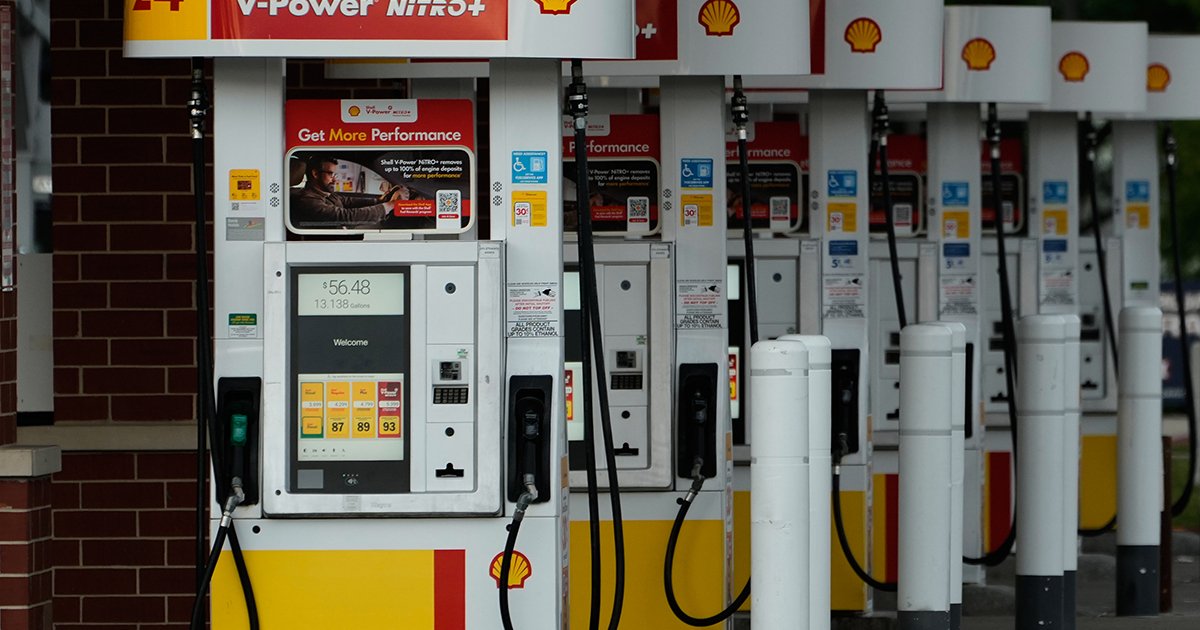
Gas pump in Buffalo Grove, Illinois on June 25. (Nam Y Huh/AP)
key takeaways:
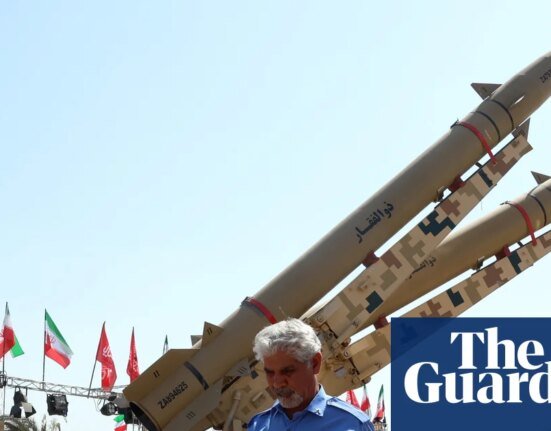
- Oil prices rose after President Donald Trump ended the US armistice with Iran following tanker and military attacks near the Strait of Hormuz.
- Rising crude oil costs threaten to push gasoline and diesel prices higher, with AAA projecting US gas prices at $3.80 a gallon on July 8 and analysts citing tanker traffic halts.
- Shipping risks and limited strategic reserves add uncertainty, as officials urge avoidance of tensions and companies warn that renewed conflict could again disrupt global trade routes.
NEW YORK – The tentative resolution of a fragile ceasefire between Iran and the United States has reignited concerns over whether fuel prices will rise again if continued fighting prevents oil tankers from traveling through the Persian Gulf.
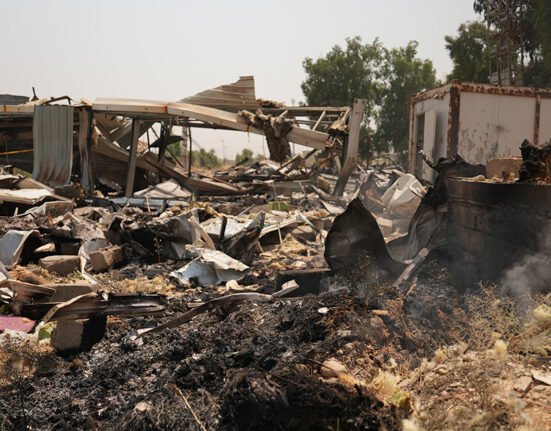
Oil prices rose to their highest point in weeks after President Donald Trump announced a US armistice with Iran, in response to Iranian attacks on commercial vessels in the Strait of Hormuz and US military sites in other Gulf countries. Filling up at a gas station could become expensive as crude oil became more expensive as drivers in many countries were seeking relief from increased prices caused by the war.
“Tanker traffic through the Strait of Hormuz has essentially stopped, which tells you more about risk perception right now than any statement from Washington or Tehran,” George Lyon, head of geopolitical analysis at Rystad Energy, said in an email. “Oil markets reacted quickly to renewed geopolitical risks.”
According to motor club federation AAA, U.S. gasoline prices rose marginally to an average of $3.80 per gallon on July 8, up from $3.79 a day earlier, but still well below the average of $4.16 a month earlier.
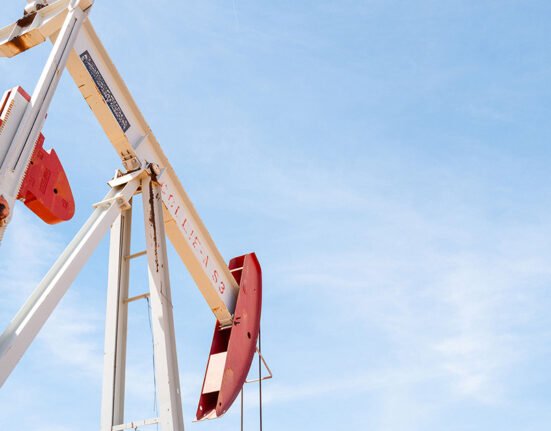
Crude oil is a large contributor to the price of gasoline, so when oil prices go up, eventually gasoline goes up too. But it may take several weeks for consumers to feel the full effects. This is because refiners make gasoline from already purchased oil. The finished product then has to travel through a system of pipelines and trucks to reach gas station pumps.
Spot gasoline prices are currently rising 14-20c/gal, diesel prices rising 30-43c/gal in most areas – these increases will impact wholesale prices later today, and today’s surge may begin to pass tomorrow and in the days ahead. https://t.co/SFL6Mj3CY7
– Patrick de Haan (@GasBuddyGuy) 8 July 2026
Gas station owners set prices at the pump, and to remain competitive, they sometimes absorb the impact of higher oil prices rather than immediately passing it on to customers.
To suppress high oil prices during the war, the US and other countries released oil from their emergency reserves since March. But those reserves won’t last forever.
As of July 3, the US Strategic Petroleum Reserve stood at 319.5 million barrels. The last time inventories were this low was in 1983, when reserves were initially being filled.
“Unfortunately, the decline in strategic shares means Trump has a lot less ammunition in his holster,” said Michael Lynch, a distinguished fellow at the Energy Policy Research Institute in Amherst, Massachusetts.
On July 8, a barrel of US benchmark crude was selling for $75.80, the highest price in more than two weeks. Brent crude, the international benchmark, reached near $79 a barrel, its highest level since June 19.
“The market reaction highlights how sensitive prices remain to any increases around the strait, given its role as a vital transit route for global oil flows,” Lyons said.
Uncertainty over shipping after latest attacks
A day after the US accused Iran of attacking three commercial ships and revoking the country’s ability to openly sell crude on the world market, some are advising the shipping industry to reconsider whether it is safe to send crewed vessels through the Strait of Hormuz and the wider Middle East.
Hormuz recovery faces new pressure
Traffic through the monitored Strait of Hormuz area was strengthened on 7 July, with 41 verified crossings compared to 36 the previous day. Commercial west-to-east movement continued to dominate, while sanctioned vessel activity eased and… pic.twitter.com/4dIwg8WQoZ
– Kepler (@Kpler) 8 July 2026
Arsenio Dominguez, Secretary-General of the International Maritime Organization, condemned the attacks on ships in the strait.
Dominguez said on July 8, “Until the safety of the crew can be ensured, I urge flag states, shipowners, operators and all relevant authorities to avoid putting seafarers in unnecessary danger by transiting the strait.” The situation in the area remains unstable.
Fewer traffic crossed the strait on July 7, according to data and analytics company Kpler, which verified 41 crossings, compared with 36 on July 6. It was not clear whether the crossing occurred before or after the strike. Some ships are also going “dark” to pass through the strait and not broadcasting their locations, making the overall count even more complicated.
With the central route through the strait unable to pass due to mines, ships are using two other routes, the shorter northern route, which goes through Iranian waters, and the southern route, which goes through Omani waters. It appears that the three ships attacked on 7 July were using the Omani route.
An economist at consulting firm Oxford Economics said the ceasefire would probably continue intermittently and Washington and Tehran could still ease the latest tensions rather than return to war.
“The question is whether the latest developments merely represent a bump in the road or whether we are emerging from the ‘eye of the storm,'” Ben May, the firm’s director of global macroeconomic research, wrote in a research note. “While Trump said talks with Iran were a ‘waste of time,’ he maintained an off-ramp, saying U.S. negotiators would continue talks with Iran, suggesting the ceasefire has not been irreversibly broken.”
New doubts about the Strait of Hormuz came when the two largest shipping companies, Maersk and Hapag-Lloyd, announced on July 6 that their Gemini Corp joint partnership would gradually resume service to the Suez Canal, which had been halted due to attacks in the Red Sea by Yemen’s Houthis.

Alex Fraser from Cox Fleet discusses how fleets should respond when a roadside breakdown occurs, testing their safety, compliance and customer service systems simultaneously. Tune in by going above or RoadSigns.ttnews.com.
Recent stability in the Middle East created conditions for the companies’ decision, but “the recent downturn could once again jeopardize this recovery,” said Judah Levin, head of research at freight booking platform Freightos. “Said.
Hapag-Lloyd said in a July 8 statement that it took the joint decision after a “thorough assessment of the security situation in the Red Sea region” and that “if the situation changes or worsens, contingency plans are in place.”
Maersk and Hapag-Lloyd are ranked 7th and 17th respectively in Transport Topics Top 50 list of the largest global freight companies.