Ships continued to move through the Strait of Hormuz despite an attack on a loaded supertanker over the weekend. (Bloomberg)
key takeaways:
- Ships continued transiting the Strait of Hormuz on 29 June, although fewer ships broadcast their routes.
- Some tanker owners said recent attacks had made navigation through the waterway less safe.
- Despite a slight decline in traffic, American aided navigation has not been disrupted.
Ships continued to transit the Strait of Hormuz on 29 June, although the number transiting their route declined, as some companies said ship attacks over the weekend had made them less confident about navigation.
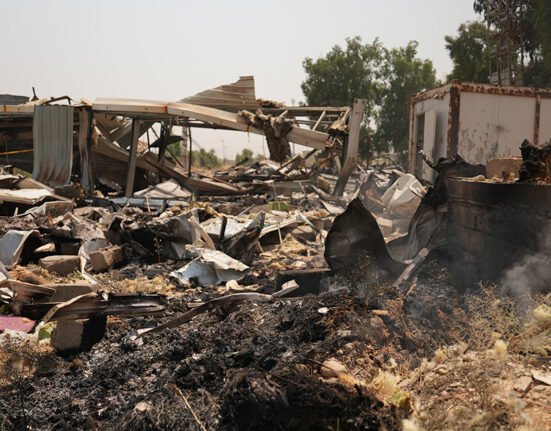
Iran attacked an oil tanker on June 27, just days after the US said a container ship was attacked with a projectile. The incidents occurred in a stretch of waters off the coast of Oman where US forces are coordinating the transit. A military contact with shipping said on 28 June that there had been no interruption to American-aided navigation, even though traffic had reduced “slightly”.
The risk tolerance of tanker companies and their employees is critical to normalizing the global oil market and unlocking millions of barrels of supply. Speaking privately, executives at five owners said they considered transit less safe after the two recent attacks – though others said there had been no significant change in their analysis.
The US and Iran also agreed to stop attacking each other while peace talks continued, raising hopes that the ships might also remain safe.
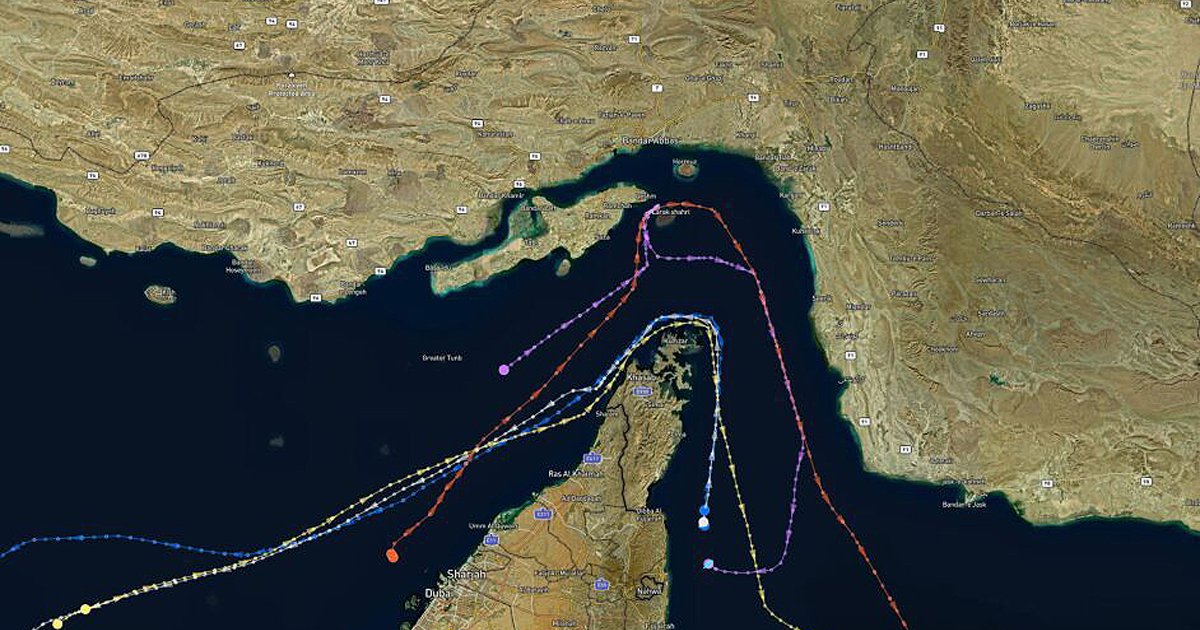
The drop in traffic is in the visual stream where ships’ transponders are turned on, showing their locations. But a Saudi Arabian supertanker and three of the country’s bulk commodity carriers appeared in the Gulf of Oman early on June 29, a sign they had passed through Hormuz after turning off their signals in recent hours, vessel-tracking data showed.
Over the weekend, a handful of ships made the open transit, including two empty supertankers and a French-flagged container ship entering the Persian Gulf. This includes what happened after the latest tanker attack. Despite the decline in signals, visual traffic is still higher than during most of the US–Iran war.
Since the entry into force of the interim peace agreement, two transit routes have emerged – one in Iranian waters and the other off the coast of Oman, which has been recommended by Western navies. The International Maritime Organization said Friday that there are currently about 80 mines in the main transit corridor commonly used by ships.
Iran has repeatedly said ships cannot transit without its permission, and the country’s media said ships violating Tehran’s conditions would be dealt with more harshly than before.
US assistance in transiting the Strait of Hormuz means more shipowners are willing to transit, including millions of barrels of oil per day, before the interim peace agreement comes into force. This accelerated after the agreement came into effect and some owners who had not previously transited did so after last week’s attack on a container ship.
The departure of the Saudi supertanker marks the first cargo to be loaded at the giant Ras Tanura terminal since the ceasefire came into force. The state currently owns three other ships, docked at the export establishment’s facilities, or simply moved there.
great danger
Following the recent attacks, the Joint Maritime Information Center – which liaises between navies and merchant shipping – has raised its threat level in the area to “substantial”, having recently reduced it to “moderate”. It said that traffic has reduced slightly but has not been disrupted.
Some ships that have recently left the crossing, including two laden VLCCs and an inbound Qatar-owned gas carrier, have not made new attempts following the attacks.
Another key description of the market is incoming traffic. That’s because the ability to bring empty tankers into the Persian Gulf via Hormuz will be crucial for regional energy producers as they look to restart output after months of shutdowns.
In addition to the two inbound VLCCs, a Norwegian-flagged product tanker, a US-sanctioned tanker and a liquefied-petroleum-gas carrier made their way into the gulf following the attack on Kikuyu. Meanwhile, in the other direction, in addition to the three ships, a product tanker and a US-sanctioned crude oil tanker departed.
Some incoming ships are not signaling until they reach their loading terminals, another example of how it has become difficult to track the true scale of traffic flowing.