- The new Hyundai Elantra (Avante in South Korea) is longer and wider than its predecessor.
- It has more powerful 2.0-liter gas and 1.6-liter hybrid engines.
- The revised Elantra features Hyundai’s new Plios infotainment system.
Korean brands are known to change the design of their cars when new models come out and the new Elantra is no exception. Unveiled today at the 2026 Busan Auto Show in South Korea, where the compact sedan is sold as the Avante, the eighth-generation model looks completely different from its predecessor. We’re not just talking about the exterior, but also the cabin, which bears very little resemblance to the current car.
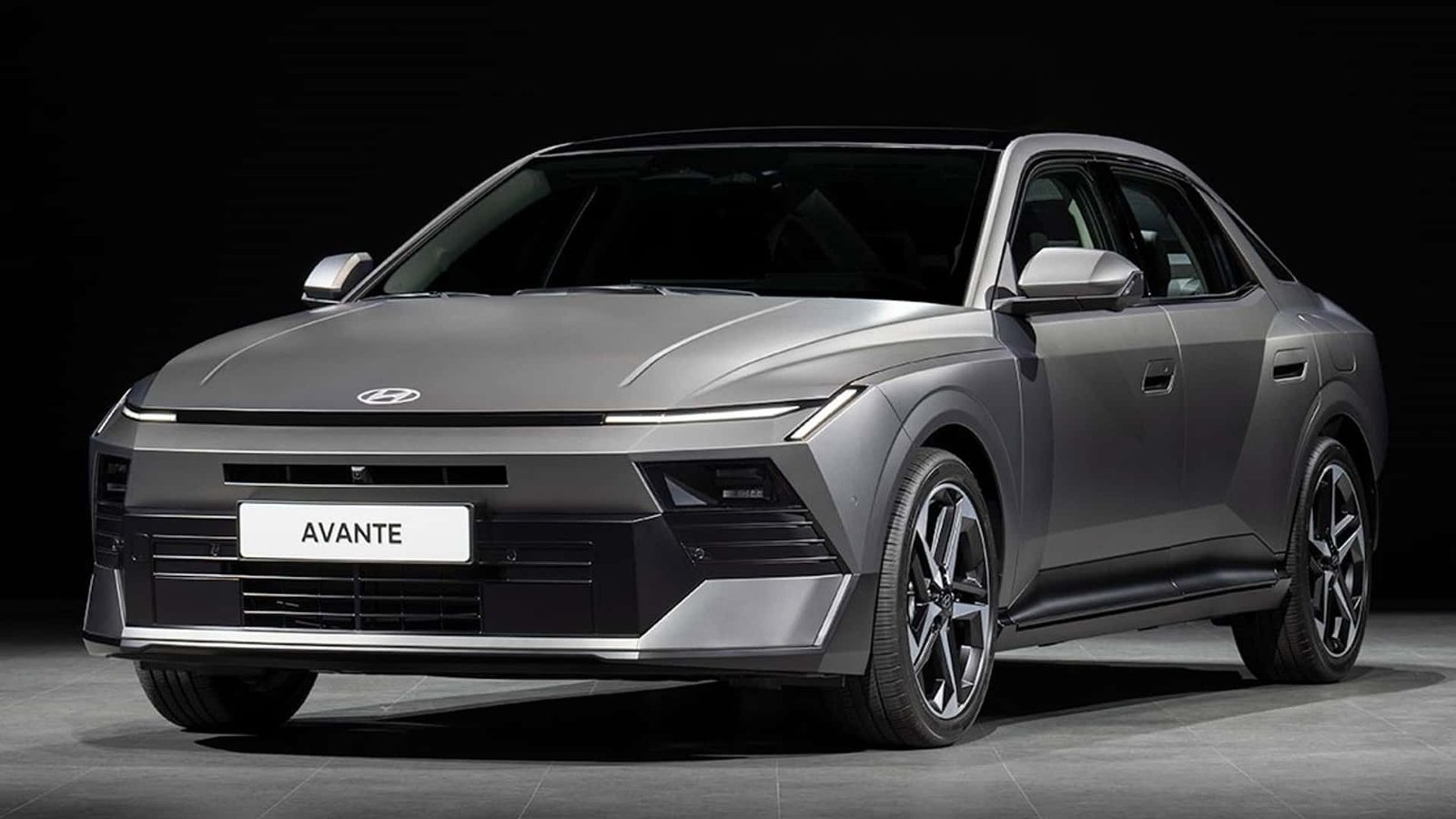
Evoking the Iron Man vibe, the new Elantra features strikingly raised wheel arches and flush door handles. Even without looking at the technical specifications, you can already tell that this is a big car because of the quarter window. The triangle-shaped glass behind the rear doors gives the profile an interesting look, emphasizing the pace of the car’s evolution. At 4765 millimeters (187.6 in), it is 55 mm (2.16 in) longer than its predecessor, with 30 mm (1.18 in) of the increase going to the wheelbase for a more spacious cabin. The revised sedan now has an axle distance of 2750 mm (108.2 in).
Hyundai even says that the new Elantra is a midsize sedan and as spacious as the Sonata. In addition to the increase in length, the next generation model is 30 mm (1.18 in) wider, measuring 1855 mm (73 in). It is slightly longer than before at 1,425 mm (56 in), although it is unclear whether this translates into additional headroom. It appears to have a slightly flatter roofline, which may provide more headroom for rear passengers.
Photo by: Hyundai
Weight of new Hyundai Elantra increased
We’re told the next-generation Elantra adopts Hyundai’s “Art of Steel” design language, which translates to lots of edges and sharp lines. The headlights and taillights form an “H” motif, and we can’t help but notice the large ducktail spoiler that spans the entire width of the rear end. Those two-tone wheels measure 18 inches and have a five-spoke design that mirrors the angular styling of the body.
The interior looks like it belongs to a higher-segment car and comes with Hyundai’s next-generation Android-based Plios infotainment system. As standard, the touchscreen size is 12.9 inches, but customers can upgrade it to a larger 14.6-inch display, which thankfully doesn’t involve all the physical controls. There are fewer buttons than before, but we’re glad to see traditional switchgear below the screen.
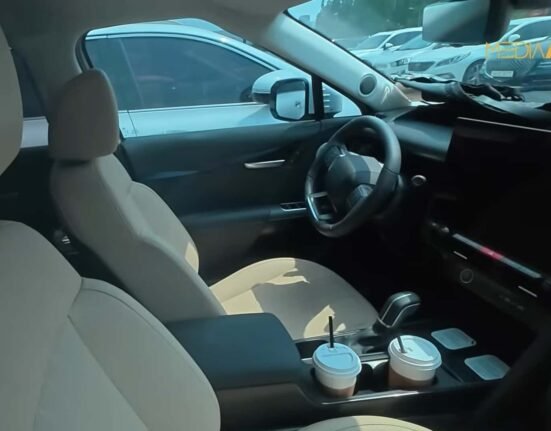
A small, horizontal digital instrument cluster is located on the dashboard directly in the driver’s line of sight. The Hyundai logo on the steering wheel is gone, replaced by four dots representing Morse code for the letter H, a design detail we’ve already seen on several other models. The gear selector has moved behind the steering wheel, freeing up the lower part of the center console, where two wireless charging pads are now located.

Photo by: Hyundai
Interior moves upmarket
Elsewhere, there’s extensive lighting in the door panels and dashboard, two large cupholders ahead of the center armrest, and conventional buttons on both the steering wheel and driver’s door. The passenger side of the dashboard probably has a soft, cushion-like pattern that gives the impression that you are sitting in a much nicer car than the Elantra.
In South Korea, Hyundai plans to sell the Avante with a naturally aspirated 2.0-liter gasoline engine producing 147 hp, 25 hp more than before. There’s also a more efficient 1.6-liter hybrid with a slight power bump to 155 hp. The latter gets the company’s latest regenerative braking technology and a new function called Stay Mode. This allows passengers to use the battery’s energy to power the air conditioning and infotainment system, just like in a fully electric vehicle.
The new Avante will go on sale domestically in the third quarter of the year, with global Elantra sales expected in 2027.
10
Source: Hyundai
Motor1’s Opinion: Hyundai is known for its bold designs, and the eighth-generation Elantra does not disappoint. No matter what the badge, any new sedan is good news, and we’re certainly happy to see that the mainstream segment isn’t being neglected.
There’s even more reason to be excited about the future, as a high-performance N version with a larger engine has already been announced. However, we will have to wait for a few years before it hits the market as the regular versions will be the ones to take over.