Last year, the world experienced a tsunami that was nearly the largest in recorded history. Yet, there was no one to actually experience it. Honestly, that’s probably for the best, because the 1,500-foot wall of water that resulted from the tsunami in Tracy Arm Fjord in remote Alaska would have killed everything in its path.
In fact, the entire earth shook for several days after the event, as the tsunami completely reshaped the fjord as it became “trapped” within the fjord itself. But it’s difficult to understand the scale of a tsunami and its destructive power when you’re just telling people about it. And thankfully no one was there to witness the tsunami, we only have the results to help show that natural devastation.
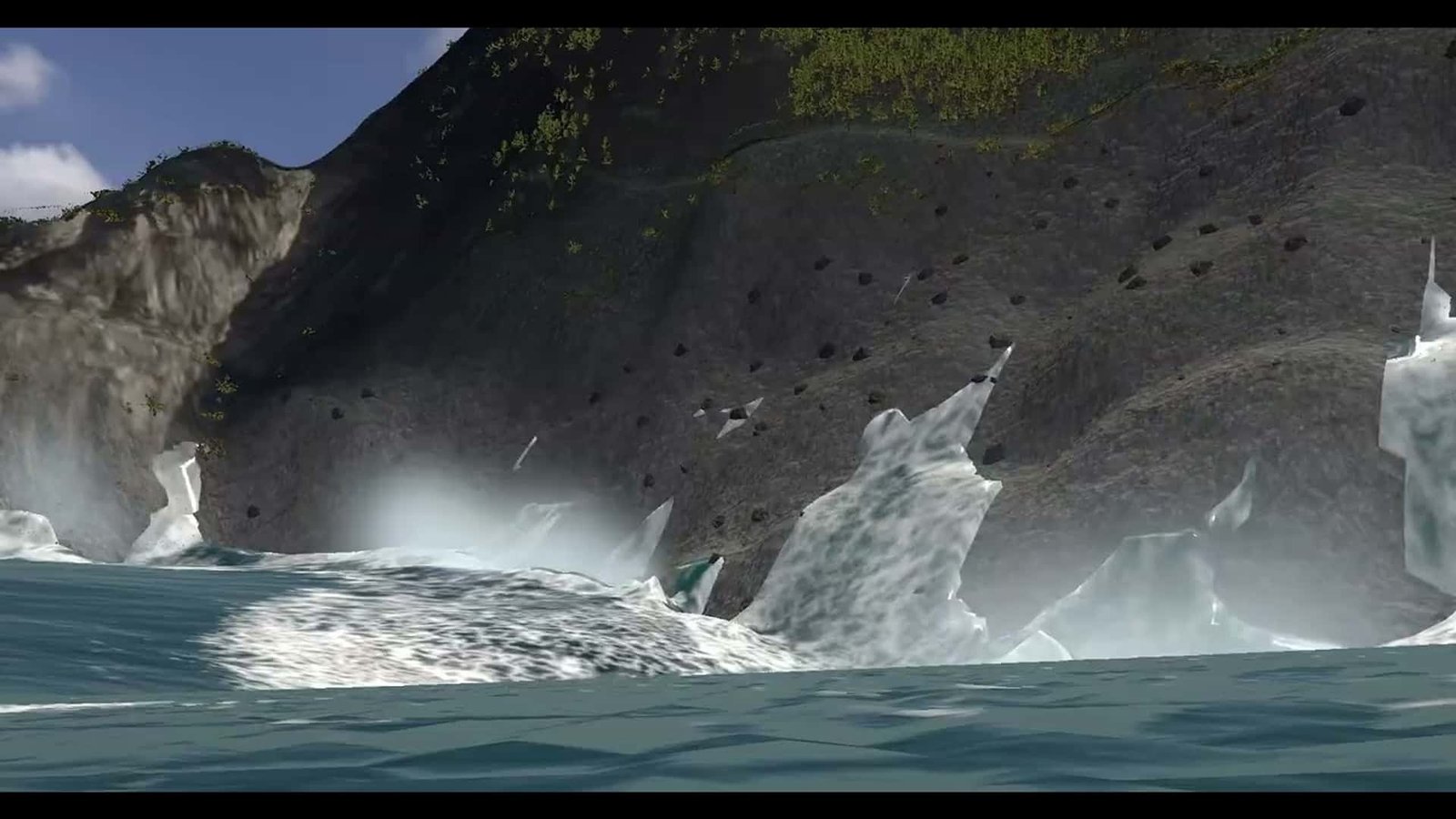
However, scientists are smart people. And they want to show the world exactly what this tsunami would have looked and felt like, with real-world consequences. That is to say, to show how big and bad this tsunami was, they created a video game where the gamer is driving a ‘jet ski’ and attempting to outrun a 1,500 foot column of water while moving at 70 mph.
However, it is an unwinnable game where you die almost instantly. And this is the point.
according to cnn“In the months since the tsunami, a dozen scientists from the US, Canada and Europe have been doing ‘detective’ work, attempting to ‘re-create this threat cascade,’ said Daniel Sugar, a geomorphologist and professor at the University of Calgary. The group published their findings in the journal Science On Wednesday.”
However, in recreating a tsunami to show the scale, researchers created a video game where you are traveling at full speed behind the bars of a PWC as the column of water rushes towards you from behind. “If you can make them experience that disaster digitally, they will remember it as close to the real event,” said Professor Patrick Linnett of the University of Southern California. cnnAdding, “Much better than reading about it.”
The idea behind the inevitable death toll is to give people a reason why they should be wary of riding glaciers on PWC-type craft or cruise ships docking nearby, as well as to demonstrate the power of climate change on our ecosystems.
“I certainly hope we don’t see an incident like this again this summer, but it’s entirely possible,” Lynette said. As hazard scientists, as disaster scientists, we want to reduce the risks to people and infrastructure from these events. That “entirely possible” warning is real, as the world warms, the oceans warm, and that warming can cause glaciers to collapse or mountains like the Tracy Arm Fjord Mountains to break apart and fall into the ocean.
But as a result of the science, it’s a great way to learn about the dangers of tsunamis, the dangers of our warming world, and the dangers of riding a PWC through it all. He actually studied it scientifically.