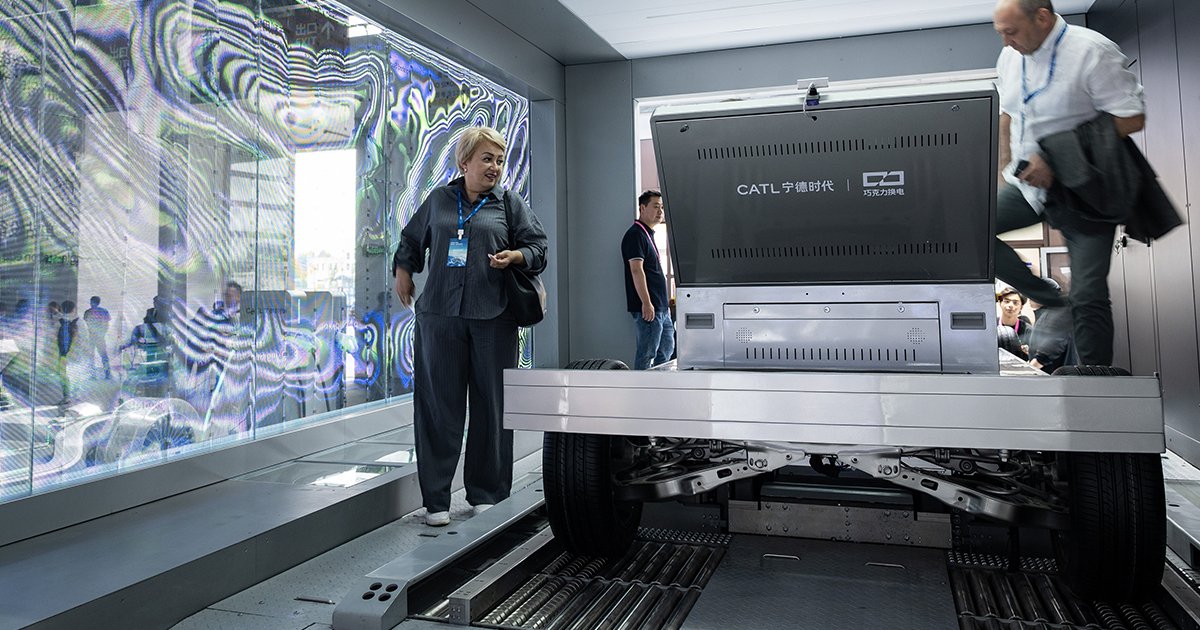
Visitors learn about CATL’s battery swapping technology during the 2026 Beijing International Automotive Exhibition in Beijing. (Hou Yu/China News Service/VCG/Getty Images)
key takeaways:
- Octopus Energy and CATL said on June 22 they will create a European network of battery-swapping hubs for trucks, to be launched in the UK next year.
- The plan aims to address the slow electrification of heavy trucks by enabling minute-long battery swaps, with a network of more than 30 sites by 2035.
- The companies will expand the network across Europe using CATL’s existing technology developed at 1,600 stations in China as emissions regulations tighten.
U.K. energy supplier Octopus Energy Group Ltd. and Chinese battery maker Contemporary Amperex Technology Co., or CATL, will create a European network of battery-swapping hubs for trucks, both companies said June 22.
According to a press statement, the network will launch in the UK next year and is expected to have more than 30 locations across Europe by 2035, each capable of serving thousands of vehicles a day.
The joint venture was also announced on stage by Octopus Energy CEO Greg Jackson at the company’s Energy Tech Summit in London.
The press release says users will be able to replace dead batteries in minutes rather than waiting for them to recharge – a key hurdle in decarbonizing heavy transportation.
The battery-electric heavy truck sector has grown more slowly than the electric passenger car market. Around 4% of new vehicles across the EU are electric trucks and around 1% in the UK are electric trucks. China leads the world in deploying electric trucks, with about 20% of new trucks sold with a plug.
first head #OctopusETS26 Announcement 🔋🚚
Swaptopus helps solve the toughest electrification battle – heavy electric lorries – by replacing empty batteries on the road with fully charged ones. pic.twitter.com/vVJe0SaVQl
– Octopus Energy (@OctopusEnergy) 22 June 2026
“We developed this technology in China over five years and we have a network of 1,600 stations,” Jiang Li, vice president of CATL, said in an interview.
European emissions standards for heavy-duty vehicles require manufacturers to reduce emissions from their fleets by 43% by 2030.
“Electric trucks already outperform diesel in running costs,” Jackson said. “The challenge is to keep them moving forward.”