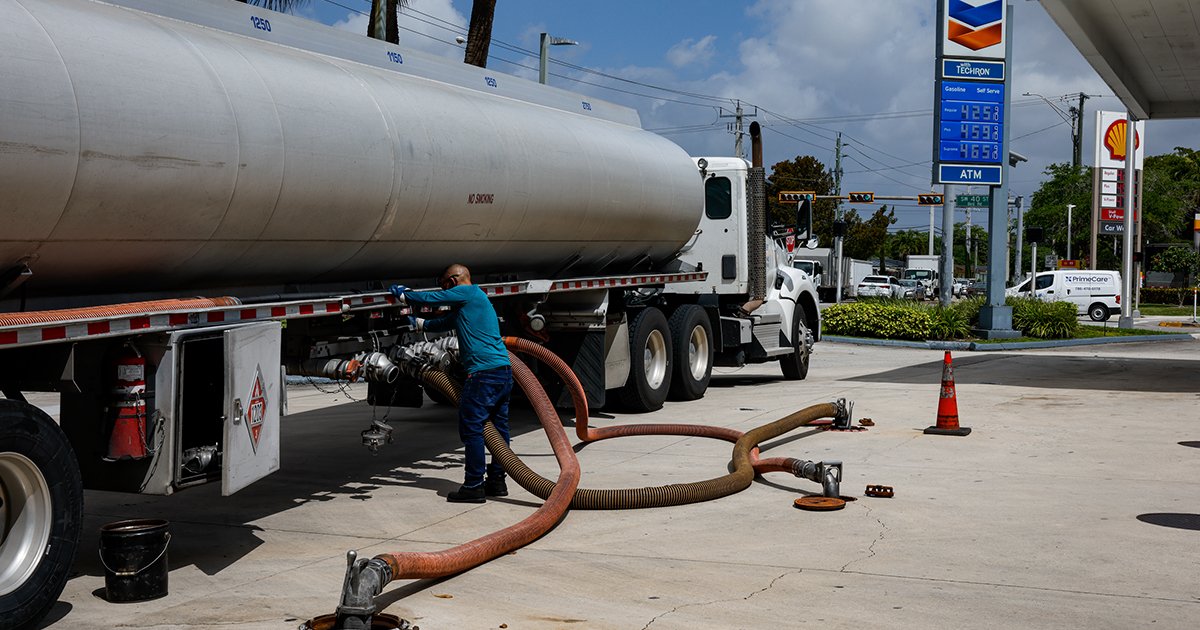
A tanker delivers fuel to a gas station in Miami. (Eva Marie Uzcategui/Bloomberg)
key takeaways:
- US gas prices fell below $4 a gallon on June 18 for the first time since March after geopolitical tensions eased following the US-Iran agreement.
- AAA said prices nationally averaged $3.999 after crude fell 15%, although regional differences persist, with $5.64 in California and $3.58 in South Carolina.
- Lower oil and fuel costs may take weeks or months to reach consumers as supply chains recover, shipping through the Strait of Hormuz resumes and refineries process cheaper crude.
New York – U.S. gas prices fell below $4 a gallon on average on June 18, but by little.
This is the first time since March that the average cost of a regular gallon has been this low. Prices fell overnight after President Donald Trump signed a deal with Iran that calls for Tehran to reduce its stockpile of highly enriched uranium and waive US-backed sanctions on the country.
According to motor club AAA, gas prices in the US average $3.999. The drop below $4 follows a 15% decline in the price of US crude oil this month.
But gas prices continue to fluctuate across the country. In California, gas prices average $5.64 per gallon, while in South Carolina it is $3.58 per gallon.
The agreement between the US and Iran calls for a permanent end to hostilities and sets a 60-day negotiating clock to reach a final agreement on the future of Iran’s nuclear program, although Trump has left the door open to resuming strikes. It appears to provide Iran with many benefits while extracting little in return.
On June 15, oil prices fell to around $80 per barrel of US benchmark crude. This compares with $67 per barrel before the war and prices reaching more than $120 per barrel during the conflict.
The national average price of gasoline is $3.96/gallon and should move toward $3.70/gallon now that a deal has been signed with Iran and movement is beginning again across the strait. Good news for drivers. Diesel will soon fall below $5 per gallon. – Patrick de Haan (@GasBuddyGuy) 18 June 2026
Even if gas prices have begun to decline, it is still expected to take weeks or months for oil to resume flowing through the Strait of Hormuz.
Before the war, the strait carried one-fifth of the world’s crude oil. Now hundreds of ships stranded in the Persian Gulf will take time to get out of the narrow strait. And Gulf oil producers who have reduced production will need time to get oil going again. Analysts also say it may take time for ship captains to decide whether the route is safe and whether the threat of attack from Iran has truly passed.
Furthermore, refineries typically get paid for crude oil a month or more in advance, so even after oil prices fall, they will not immediately be processing cheaper products.
The fighting over the Strait of Hormuz disrupted not only the supply of crude and refined fuel, but also the supply chains of fertilizer, food and even shoes. Businesses expect higher costs to persist, which means their customers may need to prepare for this as well.