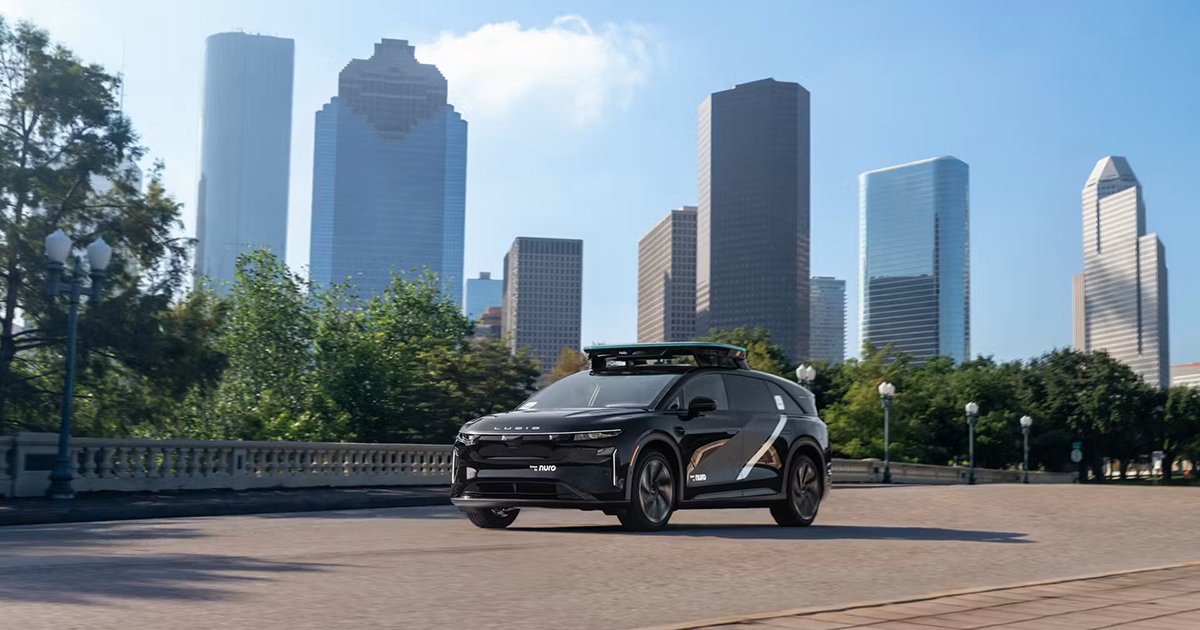
Uber, Nuro and Lucid announced Houston as the second planned market for its robotaxi program. (neuro.ai)
key takeaways:
- Uber will offer driverless robotaxi rides in Houston using Lucid and Nuro vehicles, with service starting in mid-2027.
- The move prepares Uber to challenge Waymo as it expands partnerships, invests hundreds of millions and commits to at least 35,000 robotaxis across markets.
- Testing continues while Uber expands the fleet and plans a 50,000-square-foot Houston depot in early 2027, with more details to be announced later.
Uber will offer driverless robotaxi rides in Houston in vehicles developed by Technologies Inc., Lucid Group Inc. and Nuro Inc., setting it up to challenge Waymo in the fourth-largest U.S. city.
Nuro is already testing vehicles in Houston, but the service won’t launch until mid-2027, Uber said in a statement June 17. An Uber spokesperson declined to say how many cars would be available in Houston, saying more information would be shared closer to the launch. Lucid is expected to expand its fleet of test vehicles produced at its Arizona factory in the coming weeks for further safety verification and to obtain the necessary certification to get driverless vehicles on the roads.
The move is a move by Uber to challenge Alphabet Inc’s Waymo, which has also been a ride-hailer partner. Uber and Waymo currently work together to provide Waymo rides on the Uber app in Austin, Atlanta, and Phoenix, but Waymo offers its service independently in major urban markets such as San Francisco, Los Angeles, Houston, and Dallas.
Uber has distanced itself from building its own driverless vehicles after selling its in-house research team in 2020. Instead it has focused on setting up the infrastructure and providing services needed to stand up commercial robotaxi operations. As part of this effort, it has struck more than a dozen deals with robotaxi developers in recent years — a bet on a future where it could become a preferred platform for autonomous vehicles and human drivers in the US and abroad.
Uber has invested millions of dollars in Lucid and Nuro, and plans to provide robotaxi service in the San Francisco Bay Area as part of a broader partnership with both companies announced last year. In April, Uber expanded a purchase commitment with Lucid to at least 35,000 robotaxis, which it said would be made available in dozens of markets in the coming years.
Houston, we’re on our way!
Our robotaxi fleet is already testing every day across the city. You will be able to experience this yourself in 2027.
The future of mobility is coming, and we are building it together.
produced by @lucidmotors. Powered by @neuro. Exclusively available… pic.twitter.com/C4Q7vnhoLx
– Nuro (@nuro) 17 June 2026
The rideshare giant said it still hopes to launch robotaxi service in the Bay Area this year, now that Nuro — which develops self-driving technology — has received a California permit to conduct driverless testing and transport passengers with a safety driver. (It will still require additional approval for paid rides and driverless passenger trips.)
In Houston, Uber said it has signed a multiyear lease for a 50,000-square-foot depot and dedicated charging pitstop for Lucid-Neuro vehicles. It added that the facility will be equipped with 40 fast chargers and 15 maintenance bays. Construction is expected to begin in early 2027.
“These facilities will serve as the operational backbone for Uber’s autonomous robotaxi program with Lucid and Nuro, and will enable Uber and its fleet partners to manage charging, maintenance, repairs, cleaning, as well as other daily fleet operations,” the company said. Uber said it will share more details about its fleet partner in Houston at a later date.