
Due to record-low snowpack and widespread drought, the Oregon Department of Fish and Wildlife is urging anglers to fish wisely, fish early and know where the fish are.
Oregon is headed for one of its toughest summers of fishing in years. Snowpack reached record low levels across much of the state. Drought conditions range from moderate to extreme in most areas. That combination means less, warmer water across the state, and that’s bad news for cold-water fish.
Oregon Department of Fish and Wildlife There is no waiting for problems to escalate. The agency has issued detailed guidance covering regulatory changes, regional fishing conditions, warm water alternatives and best practices for safely releasing fish in the summer.
What effect does warm, low water have on fish?
Salmon and steelhead are made for cold, fast-moving water. When rivers slow down and temperatures rise, fish experience physiological stress. Their immune system becomes weak. The disease spreads more easily.
ODFW is particularly concerned about Columnaris disease, a bacterial infection that becomes far more deadly in warm waters. The agency cited one sobering data point: During the 2015 drought, 95 percent of sockeye salmon died between dams on the Columbia River from heat-related stress and disease. Managers don’t want to repeat that.
Lost Creek Reservoir in southern Oregon was at only 74 percent capacity in May. Shallow, warm reservoirs create conditions in which fish can die quickly.
What’s changed: Rules to know
ODFW has made several rule changes to protect stressed fish populations and maximize opportunities where fisheries are performing well.
- Thief Valley, Pilcher Creek, and Wolf Creek Reservoirs: The bag limit has been lifted. These warm water fish can handle pressure. Fishermen are encouraged to harvest independently.
- Klamath Basin: Only catch and release of redband trout is not permitted from June 15 to October 31.
- Columbia River Sockeye: The season begins on June 23 and runs through July 5, 2026. ODFW is monitoring the situation closely.
- Several tributaries of the Columbia River, Eagle Creek, including Herman Creek, Lower Deschutes and Lower John Day, are closed as thermal sanctuaries. Fish require shelter in cold water areas, and those areas are barred.
- Snake River/Brownlee Reservoir: Spring Chinook fishing is closed. Crappie, bass and catfish remain fair game and are performing well.
ODFW is not planning to close the “hoot owl” statewide, using the morning-only rule in extreme heat years, but that could change. Keep an eye on the agency’s regulation updates page myodfw.com Throughout the summer.
where fishing is good now
Warm water species are thriving. Bass, crappie, bluegill, perch and walleye are not bothered by the summer heat like trout and salmon. ODFW is pointing fishermen to these fisheries as major alternatives.
- Siltcoos Lake: Bluegill run up to 8 inches, bass 1 to 4 pounds.
- Tenmile Lake: Bass up to 6 pounds. One of the better bass lakes in the state right now.
- Phillips Reservoir: Tiger Musky up to 3 feet tall. Catch and release only for those fish, but they are there and big.
- Prineville Reservoir: Excellent crappie fishing in the central area.
- Wallowa Lake: Kokanee are reliable in the Northeast region while other fisheries slow down.
High-elevation lakes in the Willamette Zone remain cool and open until mid-August. If you want trout, go higher.
How to Handle Fish Safely in Summer
If you are fishing and releasing in the water or just opting to release fish, the heat makes proper management important. A fish that appears to be swimming fine may die hours later if mistreated.
- Fish early in the morning when the water is coldest. Avoid midday and afternoon.
- Use rubberized net. The dry knotted net tears the mud from the fish.
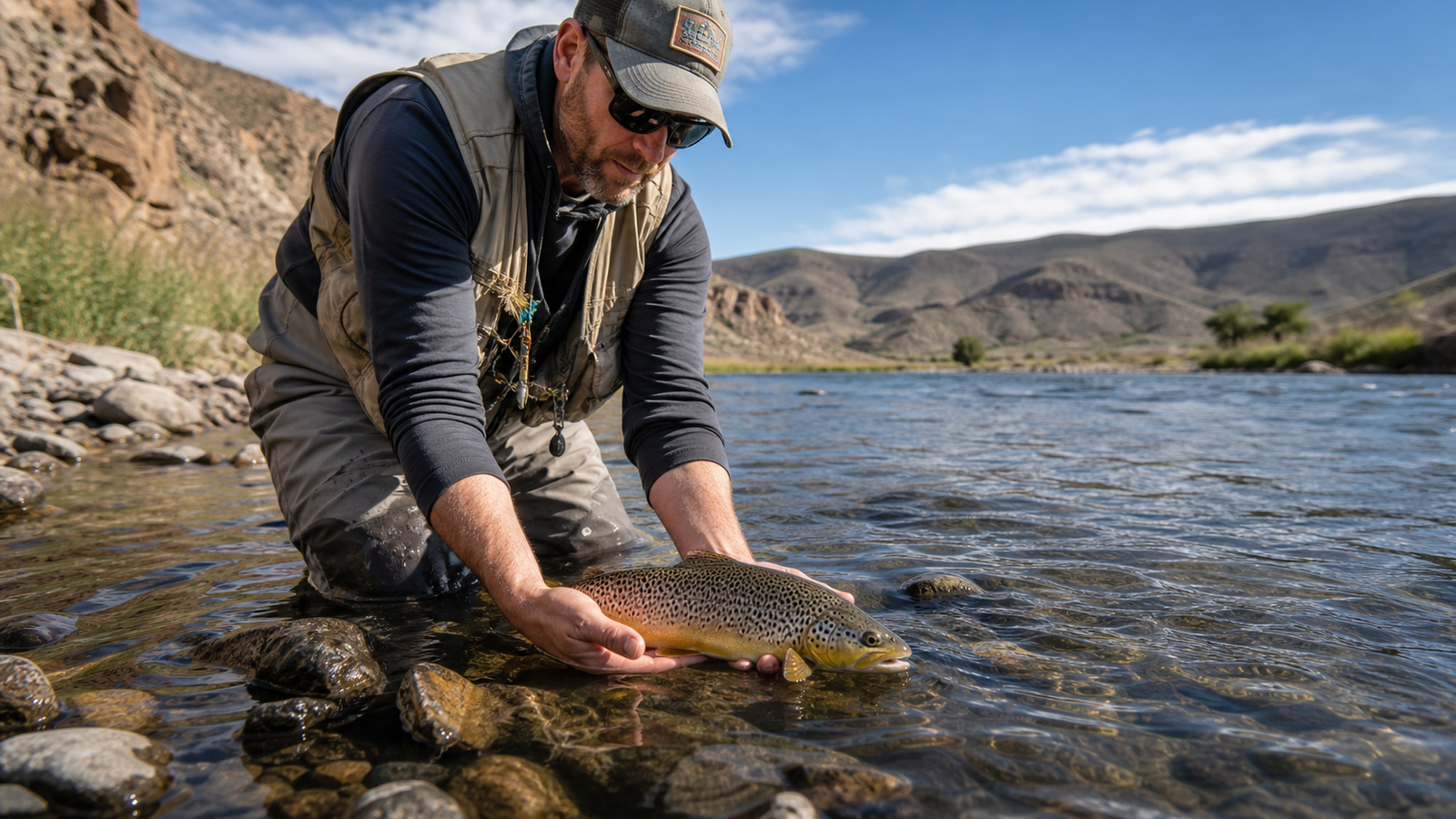
- Keep the fish in water while removing the hook. Don’t hold it in the air for photos.
- Wet your hands before touching any fish. Dry skin strips away the protective mud layer.
- Use barbless hooks. They come out faster and cause less damage.
- Support the fish completely in the stream until it swims out of your hand on its own.
If a fish rolls over after being released or struggles to stay upright, hold it gently until it recovers. Don’t throw it back in and walk away.
Keep an eye on harmful algae
Less, warmer water also means harmful algae blooms. ODFW and Oregon Health Authority Fishermen are being warned to be wary of water that appears foamy, cloudy, or has an unusual color, including pea-green, blue-green, or brownish-red. Do not allow dogs to wade in or drink water that looks dirty. The toxins from the algae can kill a dog in a matter of hours.
Report suspected fish kills to ODFW at odfw.info@odfw.oregon.gov.
Summer fishing is not wasted. It just takes more planning. Target warm-water species when the sun is bright, catch cold-water streams at first light, and pay attention to closures before loading into the truck.
sources say

to Mr
Tom is a former Navy corpsman who spent some time in the deserts of Iraq with a Marine Recon unit, kicking in tent flaps and tending sheep. Before that, he was a paramedic somewhere in DFW, also doing some executive security work between shifts. Now that those adventure days are behind him, he’s embraced his inner “warrior hippie” and tackles 14er in his sandals, taking on adventure challenges while drinking copious amounts of water. To finance these adventures, he writes all kinds of content (has also held editor positions at several publications) and teaches wilderness medicine and off-road skills. He hopes his post will help you find gear that will survive whatever you throw at it (and the training to use it). Learn from your mistakes – He is known (in some circles) for his curse…ahem, ability…to find the breaking point of anything. You can follow him here https://linktr.ee/docrader.